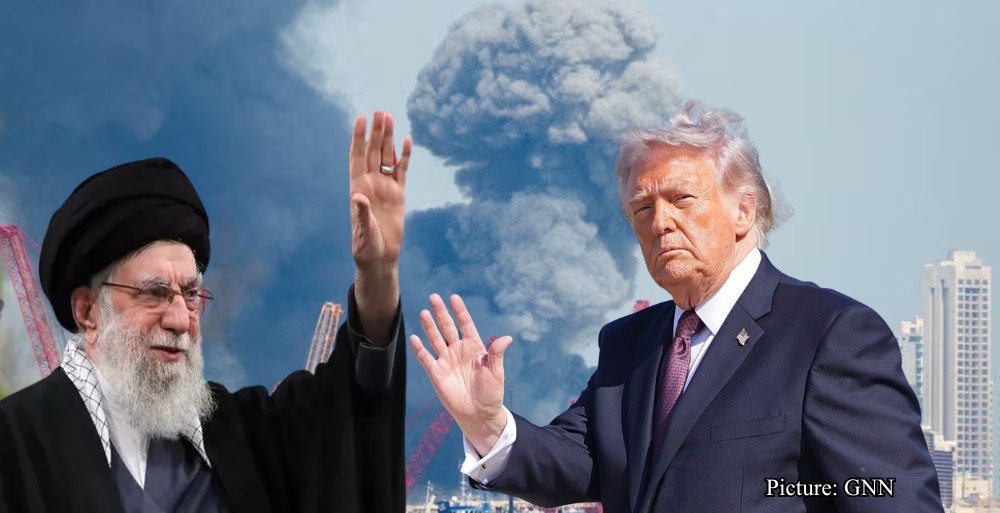







Here’s a deep-down, structural analysis of what Iran might actually look like if the United States managed to engineer a successful regime change and install a government loyal to Washington — not in high-level slogans, but in real political, economic, and social terms grounded in what experts, analysts, and current events are indicating.
1. “Friendly” Government ≠ Stable Government
Most assessments — including U.S. intelligence — have concluded that if Iran’s top leadership were decapitated, the power vacuum wouldn’t automatically produce a U.S. ally; it’s much more likely to be filled by hardline elements within the Islamic Revolutionary Guard Corps (IRGC) or other nationalist forces, not pro-U.S. democrats. 
The structure of Iranian power isn’t fragile or top-heavy like a Western state. It’s institutional: the clergy, the IRGC, and a web of security networks have deep roots in society and the economy. Decapitating the leadership doesn’t uproot the entire system; it just unsettles it. 
Even if a leadership change happened, the U.S. installing a loyal government would likely face:
•No credible internal power base: Polling and think-tank analysis suggest there’s not a unified, organized, moderate or democratic opposition ready to govern such a diverse, populous country. 
•Fragmented factions: Reformists, moderates, nationalists, ethnic minorities (Kurds, Baluch, Azeris) all have different visions — none necessarily Washington’s. 
So the idea that Washington could just pick a government like picking a corporate board member is fantasy.
2. The Public Reaction Would Be Determinative
Iran’s collective political memory is a massive weight. The 1953 CIA-backed coup that ousted the democratic prime minister and empowered the Shah is a foundational trauma in Iranian politics — one that helped fuel the 1979 Islamic Revolution and decades of anti-Western ideology. 
If the U.S. overthrew the government:
•Nationalism would surge, likely bonding many Iranians around resistance rather than cooperation. 
•Even Iranians who dislike the theocracy might see an outside government as illegitimate. The enemy-of-my-enemy dynamic doesn’t magically produce allies.
This isn’t abstract — people rally around identity and sovereignty. A U.S. intervention risks strengthening anti-American nationalism.
3. Economy Won’t Bounce Back Like a Press Release
Even if a friendly government were in place, Iran’s economy is already deeply fractured:
•Hyperinflation and currency collapse have been ripping through daily life. 
•Sanctions — especially post-nuclear deal collapse — have hollowed out foreign investment and trade. 
•Iran has developed a “resistance economy” mindset to survive sanctions and pressures. 
A “friendly” Iran doesn’t automatically open up to U.S. trade and capital. Investors want rule of law, stable institutions, property protections — and those don’t materialize overnight in a post-intervention environment. There would likely be years of stagnation, inflation, and structural uncertainty even with a Washington-aligned government.
4. Regional Dynamics Would Shift — Not Settle
Iran doesn’t operate in isolation. Its influence reaches:
•Proxy networks like Hezbollah in Lebanon, militias in Iraq, and groups in Yemen.
•Rivalries with Gulf states and Israel that aren’t strictly about regime leadership but about power balances.
A regime change could:
•Trigger proxy wars or intensified conflict as neighboring states react. 
•Create opportunities for other powers — China or Russia — to fill any security or economic vacuum.
In other words: you might get a “friendly” government, but the region wouldn’t just flip; it would rearrange, with unpredictable consequences.
5. Worst-Case Tabloid Scenarios Are Not the Most Likely — But Real Risks Remain
There’s a broad spectrum of outcomes:
•Best case — Iran opens up, nuclear ambitions shelved, regional diplomacy improves. This has never happened historically, but it’s the theoretical ideal. 
•Middle case — short-term instability, hardline backlash, civil unrest, economic contraction. Many analysts see this as more realistic. 
•Worst case — state fragmentation, proxy escalation, regional war. This is less about fantasies like immediate total collapse and more about cascading conflicts across borders. 
There’s also the historical analogy problem: U.S.-backed regime changes in Iraq and Afghanistan didn’t yield stable, pro-U.S. outcomes. They left power vacuums and resentment — and in Iran’s case, that historical memory runs deep.
So What Would a Post-U.S. Regime Iran Look Like?
You’d likely see:
•Political instability for years as factions jockey for power.
•A government that might be more inclined toward the West, but still has to survive internally — which tempers how much it can pivot.
•Economic pain that doesn’t disappear simply because sanctions are lifted; structural reforms take time.
•Persistent regional tensions that won’t magically vanish even with a friendly government in Tehran.
If a U.S. maneuver does lead to a U.S.-aligned government, it would be after years of turmoil, not overnight. And that government would still have to earn legitimacy from its own people, not just Washington. That’s historically the decisive factor in whether a state becomes a genuine partner — legitimacy at home — not just loyalty to a foreign power.