



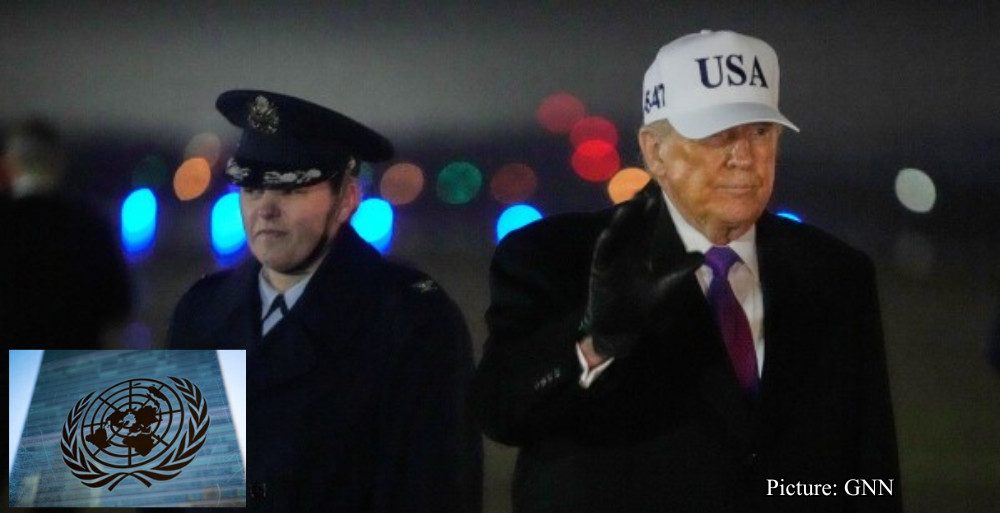
The United States has recently made a partial payment of approximately $160 million towards its outstanding dues to the United Nations, a sum that pales in comparison to the nearly $4 billion it owes. This financial gesture comes amidst President Donald Trump’s assurances of further financial contributions, as the global organization grapples with significant budgetary constraints.
The United Nations, an emblem of global cooperation and diplomacy, finds itself in a precarious financial situation, with the United States, its largest financial contributor, falling significantly behind on its dues. The recent payment of $160 million is a mere fraction of the nearly $4 billion owed by the U.S., raising concerns about the organization’s ability to maintain its extensive range of peacekeeping, humanitarian, and development initiatives worldwide.
The financial relationship between the United States and the United Nations has always been a complex one, characterized by both cooperation and contention. As one of the founding members and the largest single contributor, the U.S. has historically wielded considerable influence over the organization. However, this influence has often been accompanied by a degree of ambivalence towards the UN’s operations and its financial management. The Trump administration’s approach to international organizations, marked by skepticism and a preference for bilateral over multilateral engagements, has further complicated this relationship.
President Donald Trump has repeatedly criticized the United Nations for what he perceives as inefficiency and mismanagement. His administration has called for reforms within the organization, particularly concerning its budgetary practices and the distribution of financial responsibilities among member states. Despite these criticisms, the UN remains an essential platform for addressing global challenges, from conflict resolution and climate change to health crises and human rights advocacy.
The current financial shortfall faced by the UN is not merely a result of the U.S.’s delayed payments. It reflects a broader trend of increasing demands on the organization against a backdrop of insufficient funding. The UN’s budget is primarily funded by assessed and voluntary contributions from its 193 member states. Assessed contributions are determined based on a country’s economic capacity, with the U.S. traditionally contributing around 22% of the regular budget and 28% of the peacekeeping budget. Voluntary contributions, on the other hand, fund specific programs and agencies, such as UNICEF and the World Food Programme.
The disparity between the UN’s funding needs and the financial commitments of its member states has led to a situation where the organization is often forced to operate on a shoestring budget. This financial strain has been exacerbated by the COVID-19 pandemic, which has increased the demand for UN services while simultaneously impacting the economic capacities of contributing nations.
In response to these challenges, UN Secretary-General António Guterres has implemented a series of cost-cutting measures, including hiring freezes and reductions in non-essential travel and operations. However, these measures can only go so far in addressing the organization’s financial woes. The UN’s ability to fulfill its mandate effectively depends on the timely and full payment of contributions by its member states, particularly the largest contributors like the United States.
The implications of the U.S.’s financial arrears extend beyond the immediate operational challenges faced by the UN. They also affect the global perception of American leadership and commitment to multilateralism. At a time when global cooperation is more critical than ever, the U.S.’s reluctance to fully meet its financial obligations sends a mixed message to the international community.
Despite these challenges, there is hope that the situation may improve. President Trump has indicated a willingness to increase financial support for the UN, though it remains unclear how and when this will materialize. Additionally, there is a growing recognition within the U.S. that engagement with international organizations like the UN is crucial for addressing global issues that transcend national borders.
In conclusion, the United States’ partial payment to the United Nations is a step in the right direction, but it is far from sufficient to resolve the organization’s financial difficulties. The UN’s ability to continue its vital work depends on the full and timely payment of contributions by all member states, particularly the largest contributors. As the world faces unprecedented challenges, from pandemics and climate change to conflicts and humanitarian crises, the need for a well-funded and effective United Nations has never been more apparent. The U.S., as a global leader, has a responsibility to support and strengthen this indispensable institution.