


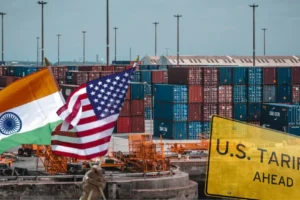






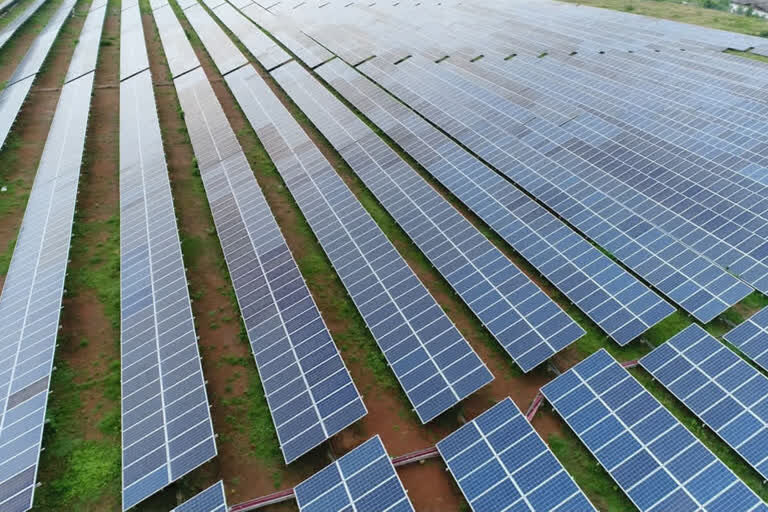
The United States has formally withdrawn from the International Solar Alliance (ISA), an India-backed multilateral platform dedicated to accelerating global solar energy deployment, as part of Washington’s broader decision to exit 66 international organisations. The move has sparked discussion around global climate cooperation, even as Indian officials stressed that the alliance’s mission and operations remain unaffected.
Officials from the Ministry of New and Renewable Energy (MNRE) confirmed that New Delhi has taken note of the U.S. decision but emphasized that the ISA continues to function with strong international support. “The ISA today represents 125 member or signatory countries,” an MNRE official said. “It remains focused on its objective of supporting member countries in collectively addressing key common challenges to scaling up solar energy, in line with their needs, to achieve universal energy access.”
According to the ministry, the withdrawal of one member does not alter the alliance’s long-term vision or its ongoing programmes. “ISA will continue to work with member countries, particularly Least Developed Countries and Small Island Developing States, in the development and deployment of solar energy, mobilising finance, building capacity, and reducing risk perceptions,” the official added.
A Major Platform for Global Solar Cooperation
Headquartered in Gurugram, the International Solar Alliance was co-founded by India and France and has steadily emerged as one of the most influential platforms for solar cooperation among countries located between the Tropic of Cancer and the Tropic of Capricorn. Over the years, the alliance has expanded well beyond its original geographic focus and now counts 125 members and signatories across Africa, Asia, Latin America, and the Pacific.
The ISA works closely with governments to tackle shared barriers to solar adoption, including access to affordable finance, policy design, technology transfer, and project risk mitigation. Its overarching goal is to support a faster transition to clean energy while ensuring universal energy access, particularly in developing and climate-vulnerable economies.
“ISA was never about one country,” a renewable energy policy expert noted. “It was designed as a collective platform where developing nations could pool resources, knowledge, and negotiating power to accelerate solar deployment.”
US Exit Part of a Wider Multilateral Pullback
The U.S. decision to leave the ISA follows a presidential memorandum directing federal agencies to withdraw from several multilateral institutions that the administration believes are not aligned with American interests. The directive affects a mix of UN-affiliated bodies and independent international organisations operating across climate, energy, labour, and development sectors.
While the ISA was not singled out individually, its inclusion reflects Washington’s broader reassessment of multilateral engagement. The move has prompted debate among climate experts and diplomats, who warn that reduced U.S. participation in global climate initiatives could complicate collective efforts to meet energy transition and emissions-reduction goals.
Despite these concerns, Indian officials were quick to downplay any immediate operational impact. “There is no disruption to ISA’s programmes or engagement with member countries,” an official said, underscoring that the alliance’s funding mechanisms and project pipelines remain intact.
From Climate Momentum to Policy Reversal
The U.S. decision marks a reversal from its earlier stance. The United States joined the International Solar Alliance as its 101st member in November 2021, with the announcement made at the COP26 climate summit. At the time, the move was framed as a commitment to accelerating the global adoption of solar energy and supporting a solar-led energy transition, particularly in developing economies.
Then, U.S. officials had highlighted the importance of international cooperation in scaling clean energy solutions. “Solar power is central to the global energy transition,” a senior climate official had said at the time, pointing to the role of alliances like ISA in mobilising finance and technical expertise.
The latest exit therefore reflects not just a policy change on ISA, but a broader recalibration of how Washington views multilateral climate platforms.
ISA’s Role Remains Crucial for Developing Economies
Launched at the COP21 climate summit in Paris in 2015, the International Solar Alliance has helped unlock billions of dollars in solar investments and provided technical and policy assistance to countries with limited access to capital. Its initiatives range from solar rooftop programmes and solar pump deployment to risk-mitigation instruments designed to attract private investment.
Energy analysts argue that ISA’s importance is only growing as developing countries face rising energy demand alongside mounting climate pressures. “For many nations, solar is the fastest and most affordable route to energy security,” said a clean-energy economist. “Platforms like ISA help bridge the gap between ambition and implementation.”
Looking Ahead
While the U.S. exit may alter the diplomatic optics surrounding global climate cooperation, India and other member countries appear determined to keep the ISA’s momentum intact. Officials insist that the alliance’s strength lies in its broad and diverse membership rather than any single participant.
As one MNRE official summed it up, “ISA was created to serve the collective needs of its members. That mission continues, with or without the participation of any one country.”