




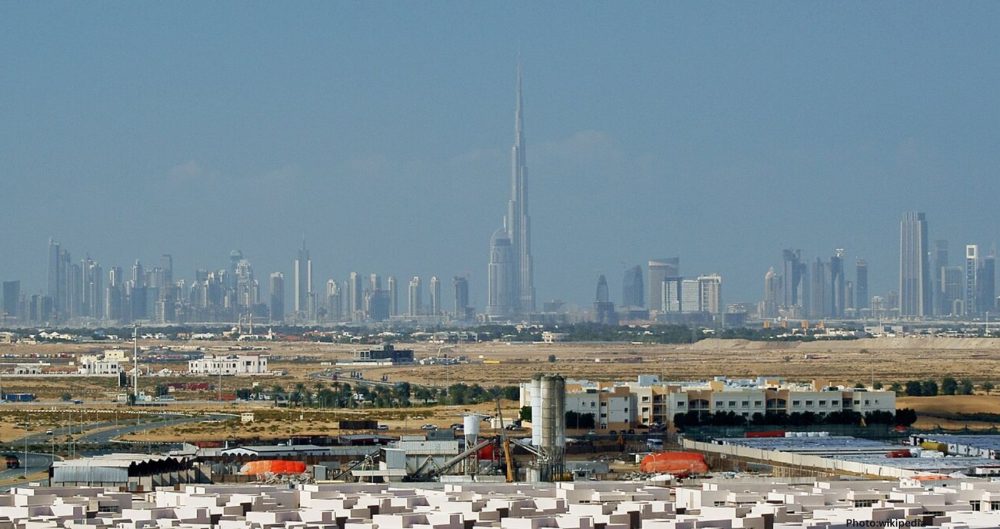
The Burj Khalifa in Dubai was evacuated following reports of multiple explosions across the city as Iran launched retaliatory missile strikes targeting United States military installations throughout the Persian Gulf region. The strikes followed a coordinated military operation by American and Israeli forces against Tehran earlier in the day, marking a significant and dangerous escalation in regional hostilities that now directly involves several Gulf Cooperation Council member states. Residents in Dubai reported hearing massive blasts that rattled windows and seeing projectiles streak across the night sky, prompting emergency protocols at the world’s tallest building and other major civilian landmarks.
The sudden surge in military activity has sent shockwaves through the global community as the long-simmering tensions between Israel and Iran spilled over into the broader Middle East. According to witnesses in Dubai and Abu Dhabi, the first wave of explosions occurred in the early evening hours, followed by a second series of blasts that lit up the horizon. The United Arab Emirates Ministry of Defence confirmed that the strikes resulted in at least one civilian casualty, identifying the victim as an individual of Asian nationality who was killed when missile debris fell into a residential neighborhood in the capital city of Abu Dhabi.
In an official statement, Emirati authorities condemned the strikes as a cowardly act that threatens the safety of non-combatants and undermines the fragile stability of the region. The ministry emphasized that targeting civilian-heavy areas constitutes a grave violation of international norms, though the primary targets appeared to be logistical and military hubs used by Western forces. The evacuation of the Burj Khalifa was described by local security officials as a precautionary measure intended to ensure the safety of thousands of tourists and residents as air defense systems were activated across the emirate.
The Iranian response was triggered by a joint military mission conducted by the United States and Israel, which the Pentagon has officially designated as Operation Epic Fury. This operation targeted high-value assets within Tehran and other strategic locations inside Iran. Israeli military officials claimed that the strikes successfully eliminated Mohammad Pakpour, a high-ranking commander of the Islamic Revolutionary Guard Corps. The loss of such a prominent military figure prompted an immediate vow of retaliation from Tehran, which materialized hours later in the form of what the Israeli Defense Forces described as a massive barrage of ballistic missiles.
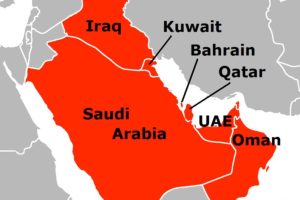
The scope of the Iranian counter-attack extended far beyond the borders of Israel, reaching into neighboring countries that host American military personnel and facilities. In addition to the strikes on the United Arab Emirates, explosions and interceptions were reported in Riyadh, Saudi Arabia, and Doha, Qatar. The geographic breadth of the attack suggests a coordinated effort by Tehran to pressure regional allies of the United States and demonstrate the reach of its missile arsenal. In Bahrain, emergency sirens were heard throughout the capital as the Interior Ministry warned of a direct threat to the headquarters of the United States Navy Fifth Fleet.
In Qatar, government officials reported that their air defense systems successfully intercepted incoming threats, preventing significant damage to infrastructure. A spokesperson for the Qatari government stated that an initial field assessment showed no casualties or material damage in residential areas. Despite the successful interceptions in some regions, the psychological impact of the strikes has been profound, leading to the temporary suspension of flights at several major international airports and a sharp spike in global oil prices as markets reacted to the instability in the world’s most critical energy corridor.
The involvement of the Burj Khalifa in the evacuation orders highlights the vulnerability of iconic civilian infrastructure in the face of modern missile warfare. As the tallest structure in the world, the tower serves as a symbol of Dubai’s global standing, and the sight of its residents fleeing amid the sound of explosions has become a defining image of this escalation. Security experts suggest that the targeting of cities like Dubai and Abu Dhabi is intended to disrupt the economic prosperity of the Gulf states, which have long attempted to balance complex diplomatic relationships with both Washington and Tehran.
The United States has reinforced its military presence in the region in response to the strikes, moving additional carrier strike groups and air defense batteries to protect its assets and allies. Domestic pressure within the United States is mounting as lawmakers debate the long-term implications of Operation Epic Fury and the subsequent Iranian response. The White House has maintained that the initial strike on Tehran was a necessary defensive action to preempt planned Iranian attacks, but the resulting regional conflagration has drawn criticism from international leaders calling for an immediate ceasefire to prevent a full-scale continental war.
Diplomatic efforts are currently underway at the United Nations, where several nations have called for an emergency session of the Security Council. Analysts point out that the current situation represents the most direct confrontation between Iran and its regional rivals in decades, bypassing the traditional use of proxy groups in favor of direct state-on-state violence. The inclusion of Saudi Arabia and Qatar in the list of targeted nations suggests that Iran no longer views these territories as neutral ground, significantly complicating the diplomatic landscape of the Middle East.
In the streets of Riyadh and Abu Dhabi, the atmosphere remains tense as local governments maintain high alert levels. The Saudi Arabian government has not yet released a full casualty count or damage assessment, but state media has broadcasted images of intercepted debris being cleared from public roads. The coordination between American and Israeli intelligence in the lead-up to Operation Epic Fury is being scrutinized by regional observers, many of whom fear that the assassination of a commander as prominent as Pakpour has closed the door on any immediate diplomatic resolution.
As the sun rose over the Gulf following the night of strikes, the extent of the geopolitical shift became clear. The traditional security architecture of the region is being tested to its limits, and the reliance on advanced missile defense systems has become the primary line of protection for millions of civilians. The international community continues to watch the escalating rhetoric from both Tehran and Jerusalem, fearing that the next phase of the conflict could involve cyber warfare or further strikes on critical energy infrastructure, such as desalination plants and oil refineries, which would have devastating humanitarian and economic consequences.
For now, the Burj Khalifa has been cleared for reentry, but the shadow of the conflict remains. The evacuation serves as a stark reminder that in a globalized world, regional conflicts can no longer be contained within the borders of the combatants. As military analysts review the effectiveness of the Iranian missile barrage and the Western defensive response, the people of the Middle East remain caught in the middle of a high-stakes power struggle that shows no signs of abating. The coming days will be critical in determining whether the region moves toward a wider war or if back-channel communications can succeed in de-escalating the most significant military crisis of the decade.