







Sheikh Hasina was once portrayed as a secular champion — the daughter of Bangladesh’s revolutionary founding father whose violent assassination in the 1970s set the course for her political life. Her dramatic rise to power has now been eclipsed by an equally dramatic collapse, driving her into self-exile in India and placing her fate in the hands of a neighboring nation she once worked closely with.
Hasina was convicted in absentia of crimes against humanity for allegedly ordering lethal force against student protesters who led the movement that toppled her government in 2024. The ruling carries a death sentence. Whether that sentence is ever carried out depends entirely on one factor: India’s willingness to send her back.
She fled to India in August last year after 15 years of increasingly authoritarian rule — seeking refuge in the capital of a country that had long been her strongest political ally. Today, she sits at the center of a tense diplomatic confrontation as Dhaka demands her extradition, insisting she must face accountability. Hasina maintains her innocence, arguing the charges are politically motivated.
Political scientist Mubashar Hasan describes her fall as nothing short of extraordinary:
“She ran from the fury of the people. Now she hides in India and faces a death penalty back home. It is a remarkable story.”
A Life Driven by Trauma and Turmoil
Hasina’s journey mirrors a Shakespearean tragedy — shaped by loss, exile, and rivalry, entwined with Bangladesh’s own painful evolution.
As the eldest child of Sheikh Mujibur Rahman, the founding leader revered as the “Father of the Nation,” Hasina grew up witnessing the struggle for Bangladesh’s independence. But her life irreversibly changed during the 1975 military coup that killed her father, mother, and three brothers. She and her sister survived only because they were abroad.
In the power vacuum that followed, Gen. Ziaur Rahman — husband of Khaleda Zia, who later became Hasina’s chief political adversary — assumed control and passed legislation protecting the assassins. Hasina spent six years in exile in India, strengthening her emotional and political connection with the Indian state.
When she returned to Bangladesh in 1981, she found a country eager to restore its secular roots — and she entered a political arena dominated by tragedy-stricken rivals. Her return marked the beginning of the infamous “Battling Begums” era — a bitter, decades-long struggle between Hasina and Khaleda Zia that shaped national politics.
From Democratic Leader to Authoritarian Figure
Leading the Awami League, Hasina navigated years of arrests, restrictions, and political battles. In 1996, she became Prime Minister for the first time and sought justice for the 1975 assassinations. After losing the next election, she returned to power in 2008 with a firmer, more uncompromising approach.
Under her leadership, Bangladesh saw rapid economic growth, improved connectivity, and deeper cooperation with India — particularly in security and intelligence. India viewed Hasina as a stabilizing partner in a region where it competes with Pakistan and China.
But these gains came with rising concerns. Human rights groups accused her government of silencing critics, attacking press freedom, and creating a near one-party environment. Opposition parties, activists, and journalists increasingly warned of shrinking democratic space.
Despite growing unrest, India remained firmly supportive, offering political and diplomatic backing without hesitation.
At home, however, Hasina’s reputation became tied to state violence.
“She spilt blood to stay in power,” analyst Hasan remarked.
A Uprising That Changed Everything
Hasina had weathered many storms — protests, assassination attempts, and political crises — but the youth-led revolt of 2024 proved impossible to suppress.
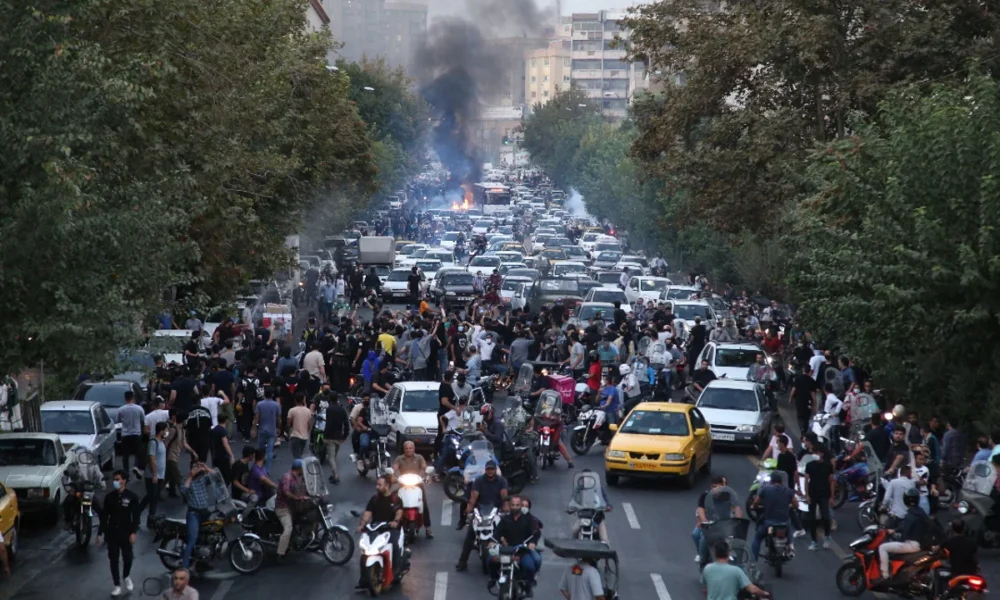
What began as demonstrations against civil service quotas escalated into nationwide demands for her resignation. According to the UN, around 1,400 people were killed in the government’s crackdown. Instead of ending the protests, the violence fueled them, igniting a nationwide movement that forced Hasina out of power.
“She had to flee,” Hasan said. “That alone shows she had lost every pillar of support.”
Sentenced to Death — and Shielded by India
Living once again in exile in New Delhi, Hasina now faces the gravest judgment of her career.
Bangladesh’s International Crimes Tribunal — a body she originally created — tried her in absentia and sentenced her to death. She was accused of ordering severe violence, including the hanging of protesters and the use of drones, firearms, and helicopters to suppress the unrest.
The verdict drew applause from the families of victims, who viewed it as long-awaited justice.
India responded cautiously, acknowledging the ruling but maintaining neutrality. Hasina’s family has openly thanked India for protecting her, crediting New Delhi with saving her life.
Given Hasina’s contributions to India’s regional security interests, analysts believe New Delhi is unlikely to extradite her. Former diplomat Anil Trigunayat says the charges bear political overtones — a crucial point because India’s extradition treaty allows refusal if crimes fall under “political offenses.”
Hasina can still appeal the verdict in Bangladesh’s Supreme Court and potentially at the International Criminal Court, giving India further grounds to delay any decision.
Bangladesh’s foreign ministry, however, is demanding her immediate return, arguing India is bound by treaty obligations.
An Uncertain Road Ahead for Bangladesh
Hasina’s absence has created a power vacuum as Bangladesh prepares for elections in February. With the Awami League banned and its leaders dispersed, the interim administration led by Nobel laureate Muhammad Yunus must navigate a deeply fractured political landscape.
The BNP — long overshadowed by Hasina — now has an open path to contest elections, but experts warn that decades of polarization will not fade easily.
“Bangladesh is nowhere close to reconciliation,” Hasan noted.
He predicts the Awami League may try to regroup — but without Hasina at the helm.
Whether Hasina’s downfall marks the close of a tumultuous era or the start of another uncertain chapter remains to be seen.