







Marking International Women’s Day with a high-profile assembly in New Delhi, the CBCI Council for Women has issued a resolute call for structural reform within the Church and society. The council’s new 2026 mandate prioritizes the integration of women into senior policy-making roles while simultaneously adopting a global resolution for immediate diplomatic intervention in international conflicts.
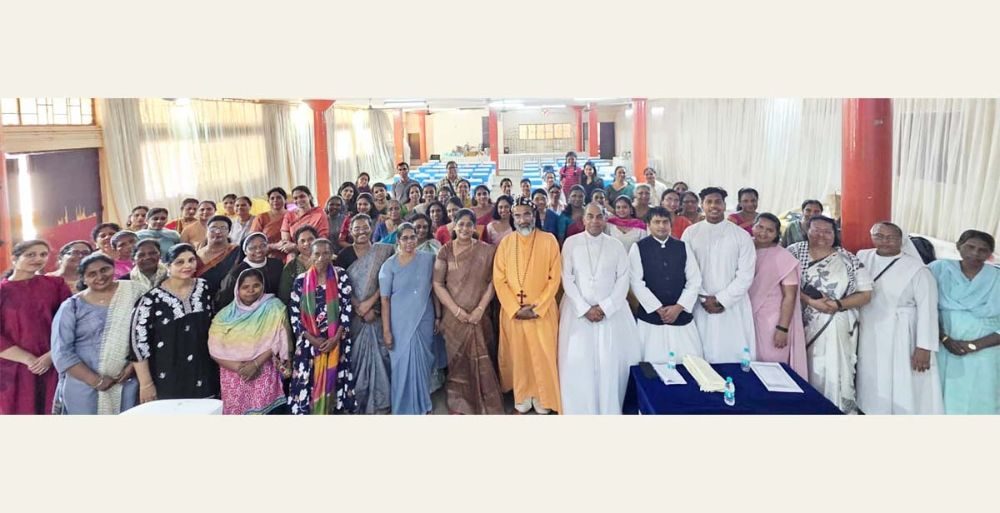
The halls of Massigarh Church in Okhla became the epicenter of a burgeoning ecclesiastical shift this weekend as the Catholic Bishops’ Conference of India (CBCI) Council for Women convened to chart a transformative course for the year ahead. What began as a traditional celebration of International Women’s Day quickly evolved into a sophisticated policy forum, where leaders from the Latin, Syro-Malabar, and Syro-Malankara Churches signaled a unified front. The central theme was unmistakable: the era of symbolic participation is over, and the era of institutional decision-making has begun.
The gathering represented a rare moment of total communion among the three ritual churches in India, a demographic that represents millions of adherents. By bringing together diverse liturgical traditions under one roof, the CBCI Council for Women demonstrated that the push for gender equity is not a fringe movement but a core priority for the modern Indian Church. Bishop Thomas Mar Anthonios, Chairman of the CBCI Council for Women and Bishop of Goregaon, officially inaugurated the proceedings, setting a tone that balanced spiritual devotion with a pragmatic demand for justice and peace.
A Mandate for Institutional Reform
The keynote address, delivered by Archbishop Mar Kuriakose Bharanikulangara of Faridabad, provided the intellectual and theological scaffolding for the council’s demands. The Archbishop argued that the flourishing of any community—religious or secular—is inextricably linked to the protection of women’s rights. He noted that “investing in women” is not merely an act of charity but a strategic necessity for building stable, resilient, and flourishing societies.
This sentiment was echoed and expanded upon by Ms. Kunjamma Mathew, the National President of the YWCA, who served as the Chief Guest. Her presence bridged the gap between purely religious discourse and the broader secular struggle for women’s empowerment in India. Mathew’s address highlighted the intersectional challenges facing Indian women, from economic disparities to the lack of representation in high-level governance.
Sr. Adv. Asha Paul, Secretary of the CBCI Council for Women, provided the tactical roadmap for the coming year. In her welcoming remarks, she emphasized that the strengthening of women’s leadership is no longer a “voluntary” endeavor for the Church; it is a moral imperative. Paul, a trained advocate, spoke with the precision of a legal scholar, framing the council’s objectives not just as aspirations, but as rights that must be codified within the Church’s administrative structures.
The 2026 Objectives: Beyond Tokenism
The council outlined a comprehensive set of objectives for 2026 that aim to dismantle the traditional barriers to female leadership. These goals include:
Ensuring proportional representation for women in policy-making and governing bodies.
Creating dedicated leadership pipelines that mentor young women for administrative roles within the Church hierarchy.
Fostering grassroots initiatives that promote solidarity and economic independence among rural and urban women alike.
During a series of presentations, legal experts and religious leaders including Sr. Adv. Mary Skaria, Sr. Adv. Sneha Ghill, and Sr. Adv. Sayujya delved into the specifics of ecclesial life. They argued that the Church’s mission is hampered when half of its population is excluded from the rooms where budgets are decided and long-term strategies are formed. Their reflections focused on the concepts of equity and inclusive leadership, suggesting that a Church that mirrors the diversity of its flock is better equipped to serve the marginalized.
A Voice for Global Stability
In a significant departure from localized administrative concerns, the council used the platform to address the escalating volatility of the global political landscape. The leaders adopted a formal resolution calling for an immediate ceasefire in ongoing international conflicts, urging world leaders to return to the negotiating table. This move underscores a growing trend within the Indian Church to position itself as a vocal advocate for human dignity on the world stage.
The resolution affirmed that women often bear the disproportionate brunt of war—through displacement, economic collapse, and the breakdown of social safety nets. By linking the struggle for domestic equality to the pursuit of global peace, the CBCI Council for Women positioned itself as a stakeholder in the international diplomatic discourse.
Economic and Social Implications
The economic subtext of the meeting was clear: justice is a prerequisite for prosperity. The speakers emphasized that when women are granted access to governance, the resulting policies tend to be more holistic and sustainable. In the context of India’s rapidly evolving economy, the Church’s push for empowerment mirrors a national shift toward recognizing women as primary drivers of growth.
As the gathering concluded, the mood was one of cautious optimism. The delegates left Massigarh Church not just with prayers, but with a specific agenda to hold institutional leaders accountable. The message to the broader society and the Vatican alike was clear: the women of the Indian Church are prepared, qualified, and resolved to lead.
The success of the 2026 mandate will likely depend on the willingness of the traditional hierarchy to cede space. However, if the energy at the New Delhi summit is any indication, the push for structural equity has reached a point of no return.