








WHO SHOULD READ THIS
• Every professional who has confused achievement with character — and every student of power who watched the Epstein files and felt something colder than scandal.
WHY SHOULD YOU READ THIS
• Power corrupts moral architecture quietly
• Achievement without virtue becomes predation
• Epstein had résumé; he lacked character
• The reckoning starts with inner reformation
Across the evolutionary history of mankind, we come across several personas who led humanity with reallife lived actions and examples more than words. A fair and genuinely interesting question. Brooks’ framework for character has several anchoring criteria: Adam II over Adam I, the willingness to surrender self-aggrandizement for something larger, the capacity to absorb failure without cynicism, and earned moral authority rather than positional authority. The leader’s inner architecture — not just their public record — is the test.
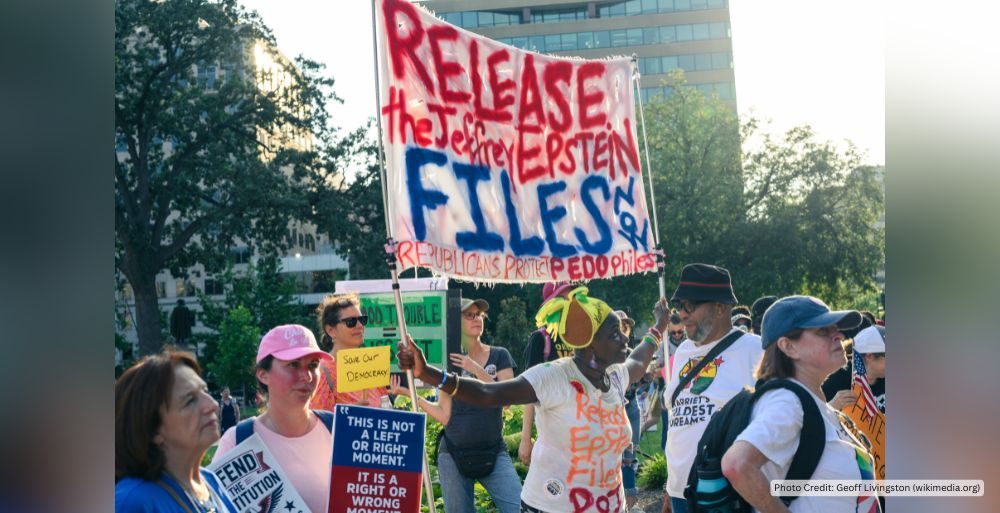
The Epstein files did something unusual. They didn’t just expose a predator. They mapped an entire ecosystem — financiers, academics, politicians, scientists — men who had, by every external metric, succeeded. Degrees. Titles. Endowments. Access. What the files revealed, beneath the institutional veneer, was a moral vacancy so complete it had become structural. These were not men who had fallen from character. They had never built it. David Brooks saw this coming. Not Epstein specifically — but the civilizational condition that made Epstein possible.
The Road to Character (2015) is, on its surface, a study of historical figures: Eisenhower, Augustine, Dorothy Day, George Marshall. But if I may propose, the deeper architecture is diagnostic. Brooks is performing a differential on the modern soul — identifying what is absent, tracing the genesis of that absence, and offering case studies of individuals who chose, against the cultural current, to build something internal and durable. He calls this the Adam II versus Adam I distinction. Adam I is the résumé self — the self that accumulates, achieves, and signals. Adam II is the eulogy self — the self that loves, sacrifices, endures, and serves. The tragedy Brooks is chronicling: we have built entire institutions to cultivate Adam I, while allowing Adam II to atrophy for want of attention.
Leaders often come across a slippery slope, of moral and ethical decisions. If I am not wrong, this is the reading that the Epstein moment demands. Not another taxonomy of predators. Not another institutional autopsy. What the moment demands is the harder question: what did we build — or fail to build — that made these men possible? Brooks is asking that question at the civilizational level. The Road to Character is an archaeological project, excavating figures who chose the Adam II path not because it was easier but because they had encountered some friction, some mentor, some tradition that demanded more from them than their resume.
The slippery slope is not, as it is sometimes framed, from good man to bad act. The slope is longer and quieter than that. It begins with the persistent privileging of Adam I over Adam II — with institutions that celebrate achievement and never ask what is being built inside the achiever. The men in the Epstein files did not become who they were overnight. They became who they were through decades of accumulation in which nobody asked the eulogy question. Nobody said: when this is over, what will remain?
The road to character is narrower than the road to success. It requires what Brooks’ subjects all required — genuine encounter with failure, with limitation, with something larger than the self that refuses to be impressed by the résumé. Most of us will not face a Fox Conner. We have to become our own.
With those criteria applied honestly to Indian public life over the past 30-40 years, two figures stand out.
Dr. A.P.J. Abdul Kalam (1931–2015)
Kalam is the easier case, and the more instructive one. He spent the bulk of his adult life in institutional obscurity — decades at ISRO and DRDO, working in organizations where individual credit is routinely absorbed by the institution. He did not maneuver for recognition. The recognition eventually found him, and when it did — in the form of the presidency — he treated it with a diffidence that is almost archaic in contemporary political culture. He kept his modest apartment habits. He used the presidential platform primarily to speak to students. He left office and returned to teaching.
Brooks would locate Kalam’s character in precisely what was absent from the Epstein network: he had no appetite for the perquisites of power. His Adam I was genuinely subordinated to his Adam II. The eulogy — which came unbidden, from an entire nation — reflected what he had actually built inside, over six decades of quiet technical service and moral consistency. His self-surrender was not performative. It was the residue of a man who had built his interior architecture early and maintained it without erosion.
The test Brooks applies is whether the character held under pressure, particularly the pressure of access and success. Kalam held. That is rare.
—— —— —— —— —— ——
Our Micro Reading Book Club – A One Minute Review of Classic Books; Shashank Heda, MD, Dallas, Texas;
https://chat.whatsapp.com/D64eTWR947j8nvb4NpVeju
—— —— —— —— —— ——
T.N. Seshan (1932–2019)
Seshan is the more difficult and more revealing case — precisely because he was not a likeable figure in the conventional sense. He was irascible, imperious, and given to truculent public confrontations with politicians who had grown accustomed to treating India’s electoral machinery as a personal instrument. He was not warm. He was not conciliatory. He made enemies with great efficiency.
And yet, by Brooks’ framework, he passes the character test more rigorously than most of his contemporaries. As Chief Election Commissioner from 1990 to 1996, Seshan identified a structural absence — the near-complete collapse of electoral governance — and filled it with personal moral authority rather than with institutional backing he didn’t initially have. Politicians despised him. Several attempted to have him removed. He held his position through sheer epistemic discipline: the law was clear, the violations were documented, the enforcement would follow.
What Brooks finds essential in figures like George Marshall is the willingness to place the mission above personal advancement — to accept institutional friction, political hostility, and professional risk in service of something the individual will not personally benefit from. Seshan knew he was burning political capital he could never recover. He did it anyway.
The Election Commission he rebuilt outlasted him. That is the Adam II signature: building something that endures beyond the builder’s tenure, funded by personal sacrifice rather than personal gain. His obduracy was not temperamental self-indulgence. It was moral architecture under pressure.
Both figures share a feature Brooks identifies across all his portraits: they were formed before they were tested. Kalam’s character was not produced by the presidency — it was revealed by it. Seshan’s moral courage was not invented at the Election Commission — it was applied there. The formation came earlier, in obscurity, in disciplines and commitments that predated the platforms.
That is the deepest crux of Brooks’ argument, and these two lives illustrate it cleanly. Character is not what you display when the world is watching. It is what survives when the world offers you every reason to abandon it.
Examples that the author shared –
Eisenhower is the book’s most instructive portrait, and the one that lands with the most force when read against the Epstein backdrop. The young Eisenhower was vainglorious, self-regarding, reckless with ambition. His commanding officer, Fox Conner, didn’t suppress those impulses through discipline. He redirected them through a sustained, multi-year intellectual and moral apprenticeship — history, philosophy, the study of great generals and their failures. Eisenhower emerged not diminished but redirected. The ambition survived; the vanity was metabolized into something more useful: accountability to something larger than himself.
—— —— —— —— —— ——
Our Micro Reading Book Club – A One Minute Review of Classic Books; Shashank Heda, MD, Dallas, Texas;
https://chat.whatsapp.com/D64eTWR947j8nvb4NpVeju
—— —— —— —— —— ——
What Epstein’s circle metabolized was the opposite. Proximity to power fed itself. The ambition grew inward, became predatory. Nobody was Fox Conner to anyone in that network. Nobody said: your success is becoming your undoing. Nobody named the structural absence where character should have been.
This is where Brooks’ argument turns clinical. He is not moralistic in the conventional, hectoring sense. He is etiological — tracing how the void formed. His diagnosis is cultural: the Big Me era, as he terms it, valorizes self-promotion, personal branding, and résumé accumulation while treating humility, self-surrender, and moral struggle as either weakness or naïveté.
The result is a generation of Eisenhowers who never encountered their Fox Conner. Men and women who achieved and achieved, who accumulated title and access and wealth, and who never once were asked — by institutions, by mentors, by cultural norms — what they were building inside.
Other examples should be read from the full-text book mentioned above.
—— —— —— —— —— ——
Our Micro Reading Book Club – A One Minute Review of Classic Books; Shashank Heda, MD, Dallas, Texas;
https://chat.whatsapp.com/D64eTWR947j8nvb4NpVeju
—— —— —— —— —— ——