









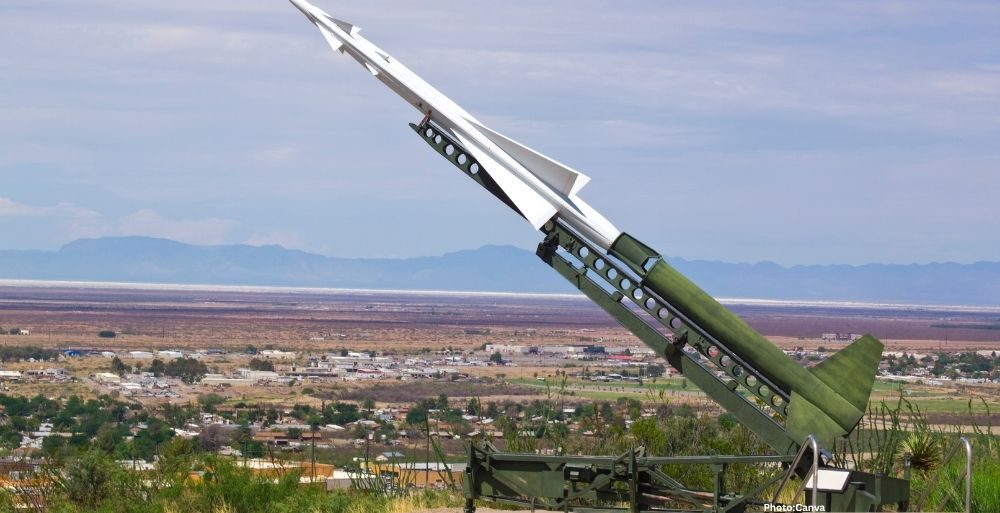
Tulsi Gabbard, Director of National Intelligence, warns that Pakistan’s advancing long-range ballistic missile program poses a potential threat to the U.S. homeland, as outlined in her presentation of the 2026 Annual Threat Assessment to Congress.
WASHINGTON, DC – In a comprehensive assessment of global missile threats, Tulsi Gabbard, the Director of National Intelligence, cautioned U.S. lawmakers that the advancement of Pakistan’s long-range ballistic missile capabilities could develop into a direct threat to the United States. This warning was part of Gabbard’s presentation of the 2026 Annual Threat Assessment, which highlights an increasingly complex and evolving missile threat landscape worldwide.
During her briefings to both the House Intelligence Committee and the Senate Select Committee on Intelligence, Gabbard stated that Pakistan is among several nations actively engaged in the research and development of advanced missile delivery systems. She elaborated that these systems could potentially include intercontinental ballistic missiles (ICBMs) capable of reaching U.S. territory. “Pakistan’s missile effort potentially could include ICBMs with a range capable of striking the homeland,” Gabbard remarked. This assertion underscores the growing apprehension among U.S. intelligence officials regarding Pakistan’s military advancements.
Projected Increase in Missile Threats
The assessment presented by Gabbard indicates a dramatic increase in missile threats directed at the U.S. homeland, projecting that the total will surpass 16,000 missiles by 2035, up from the current estimate of over 3,000. This significant escalation reflects not only the advancements made by Pakistan but also by other nations such as Russia, China, North Korea, and Iran, all of which are advancing their missile capabilities.
Gabbard specified that both Russia and China are developing sophisticated missile systems designed to penetrate U.S. missile defense systems, adding layers of complexity to the national security landscape. Furthermore, she noted that North Korea’s ICBMs can already reach U.S. soil and that the country is committed to expanding its nuclear arsenal, further illustrating the multifaceted nature of the threat.
Concerns Over Pakistan’s Missile Development
While Gabbard did not provide a specific timeline for Pakistan’s potential progression towards intercontinental missile capabilities, she indicated that the country is developing increasingly sophisticated missile technology. This advancement could enable Pakistan to target areas far beyond South Asia if current trends persist. Such developments raise alarms within the intelligence community, emphasizing the need for vigilant monitoring of Pakistan’s military capabilities.
Gabbard reiterated that the United States continues to rely on its nuclear deterrent as a safeguard against strategic threats. She stated, “The U.S. nuclear deterrent continues to ensure safety in the homeland against strategic threats.” However, she also acknowledged that emerging technologies—particularly hypersonic weapons and artificial intelligence—complicate the threat landscape by enhancing targeting precision and accelerating decision-making processes, necessitating a reevaluation of traditional deterrence strategies.
Global Risk Landscape
The 2026 Annual Threat Assessment paints a concerning picture of a rapidly evolving global risk landscape, where numerous countries are simultaneously enhancing their military capabilities. This expansion complicates traditional deterrence strategies and increases the likelihood of miscalculations or conflicts. South Asia, in particular, remains a focal point of concern, with ongoing tensions between India and Pakistan posing a significant risk of nuclear escalation.
The assessment referenced a terrorist attack that occurred last year near Pahalgam, located in the Indian Union Territory of Jammu and Kashmir, as a stark reminder of how terrorist actions can ignite conflicts in the region. It noted that while neither India nor Pakistan actively seeks open conflict, the conditions persist for terrorist actors to instigate crises that could escalate tensions.
Complex Dynamics Between Pakistan and the Taliban
Moreover, the report underscored the intricate relationships and tensions between Pakistan and the Taliban. Gabbard noted intermittent cross-border clashes and rising militant activity, which further complicate the security dynamics in the region. The army chief of Pakistan recently warned that lasting peace requires the Taliban to sever ties with militants targeting Pakistan, a statement that reflects the deep-seated security concerns in the area. However, the Taliban has publicly denied harboring anti-Pakistani militants, complicating the dialogue surrounding regional stability.
As the global military landscape continues to evolve, the implications of Pakistan’s missile development and the broader regional tensions highlight the pressing need for the United States and its allies to remain vigilant and responsive to these emerging threats. The intelligence community’s assessments not only inform policy decisions but also shape the strategic landscape in which the U.S. operates, underscoring the importance of international cooperation and proactive measures to address the complexities of modern warfare and security.