






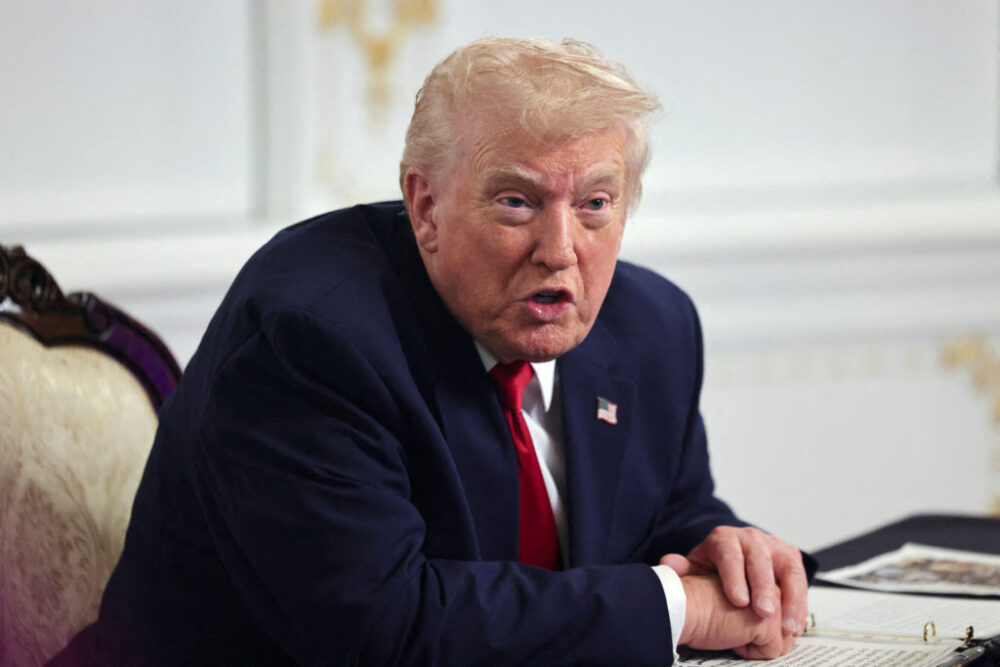
President Donald Trump indicated a potential recalibration of his administration’s enforcement tactics and economic expectations during a wide-ranging interview this week.
The Trump administration is signaling a significant shift in its approach to domestic policy, spanning the critical areas of immigration enforcement and national monetary strategy. In an interview with NBC News anchor Tom Llamas, President Trump suggested that while his core objectives remains unchanged, the methods by which they are executed may undergo a period of refinement. This potential pivot comes at a time when the administration is navigating a complex landscape of judicial rulings and regional operational challenges.
During the conversation, the President reflected on the aggressive nature of his administration’s border and interior enforcement agenda. He acknowledged the intensity of the current atmosphere and the friction generated by large-scale operations. In a notable departure from his typical hardline rhetoric, Trump suggested that a more nuanced approach might be necessary moving forward. He remarked that his administration could benefit from a softer touch while continuing to carry out its primary enforcement mandates, signaling a desire to balance security goals with public perception and logistical efficiency.
This rhetorical adjustment appears to be manifesting in real-time policy decisions. In Minneapolis, a significant operational drawdown was announced by Border Czar Tom Homan. The administration confirmed the withdrawal of 700 immigration agents from active enforcement duties within the state of Minnesota. This move follows a period of administrative instability and public outcry within the region. The local department recently underwent a leadership change following the removal of Gregory Bovino, the former head of operations. That transition occurred after a series of incidents resulted in loss of life, prompting intense scrutiny from both the public and federal legislators.
The withdrawal in Minnesota is being viewed by many political analysts as a strategic pause or a localized response to specific failures in leadership and protocol. However, when paired with the President’s recent comments, it suggests a broader internal review of how federal resources are deployed. The administration remains under pressure to deliver on its promise of robust border security while managing the humanitarian complexities that inevitably arise from such vast federal interventions. This balancing act will likely define the next phase of the administration’s domestic legacy.
Parallel to the shifts in immigration strategy, the President used the interview to address his expectations for the United States economy and the leadership of the Federal Reserve. Trump recently nominated Kevin Warsh to lead the central bank, a move that was closely watched by global markets. The President clarified that his endorsement of Warsh was built upon a specific economic worldview. He stated explicitly that his selection was contingent on a commitment to a dovish monetary policy, specifically regarding the trajectory of interest rates.
The President’s comments serves as a direct directive toward the independence of the Federal Reserve. Trump indicated that he would not have moved forward with the Warsh appointment if he believed the nominee intended to raise interest rates in the current economic climate. Expressing a firm belief that borrowing costs should be lower, the President argued that reduced rates are essential for sustained economic growth and market stability. This stance reinforces the executive branch’s desire for a more collaborative relationship with the central bank to ensure that monetary policy aligns with the administration’s broader fiscal goals.
On the judicial front, the legal landscape continues to evolve with significant implications for the balance of power in Washington. The United States Supreme Court recently issued a ruling regarding California’s congressional redistricting plans. The Court declined to block a new map that was approved by voters during the previous November election cycle. This map, which was largely championed by Democratic lawmakers in the state, is projected to have a profound impact on the makeup of the House of Representatives. Analysts suggest that the new boundaries could allow Democrats to gain as many as five additional seats, potentially altering the legislative path for the Trump administration’s upcoming agenda.
The Supreme Court’s decision to allow the California map to stand highlights the ongoing tension between state-level redistricting efforts and federal judicial oversight. For the Trump administration, the ruling represents a tactical hurdle in maintaining or expanding a Republican majority in the House. As the 2026 midterm elections approach, the implications of these new district lines will likely become a focal point for both parties as they compete for control of the legislative branch.
In addition to these policy and judicial developments, a major legal chapter concluded this week regarding the safety of the President. Ryan Routh, the man convicted in connection with the September 2024 assassination attempt on Donald Trump, has been sentenced to life in prison. The sentencing took place in a federal court following Routh’s conviction for his actions at the Trump International Golf Club in West Palm Beach. In addition to the life sentence, the judge handed down a mandatory seven-year term for a related firearm charge.
The sentencing of Ryan Routh marks the end of a high-profile legal saga that shocked the nation during the height of the previous campaign season. The incident prompted a comprehensive review of the United States Secret Service and the security protocols surrounding presidential candidates. The conclusion of the trial provides a sense of closure to a volatile period, though the President continues to emphasize the need for heightened vigilance and security in an increasingly polarized political environment.
As the administration moves forward, the combination of a recalibrated immigration tone, a firm stance on interest rates, and the reality of a changing electoral map in California suggests a period of transition. The President’s willingness to discuss a softer touch on enforcement, contrasted with his rigid expectations for the Federal Reserve, illustrates the complex nature of his current governing strategy. Whether these shifts lead to a broader policy evolution or remain localized responses to specific events will be determined in the coming months as these various initiatives and rulings take full effect.
The integration of these diverse developments reveals a White House that is actively managing multiple fronts simultaneously. From the operational restructuring in the Midwest to the long-term influence of the Supreme Court on the House of Representatives, the current political landscape remains fluid. The President’s recent commentary serves as a roadmap for his priorities, emphasizing economic stimulation through lower interest rates while attempting to navigate the controversial waters of immigration reform with a new degree of tactical flexibility.