







A forensic audit by government watchdog Open the Books reveals that the Department of Defense, under Secretary Pete Hegseth, expended $22 million on high-end luxury food items during a massive end-of-year spending blitz in September 2025. The “use-it-or-lose-it” surge saw the Pentagon commit nearly half of its monthly $93.4 billion contracting budget in the final five business days of the fiscal year.
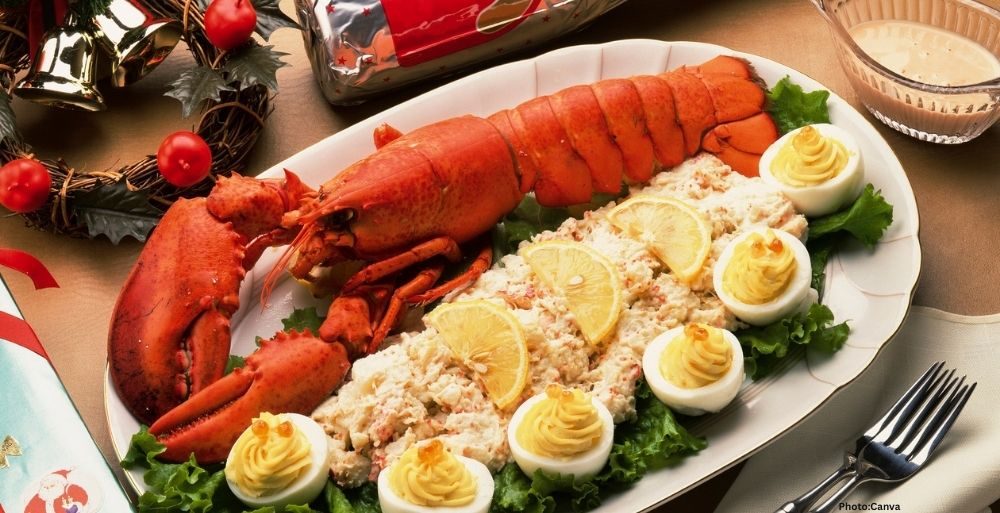
The transition from fiscal year 2025 to 2026 has brought with it a familiar, yet increasingly scrutinized, phenomenon in the American capital: the “use-it-or-lose-it” spending spree. However, according to a recent report by the nonprofit watchdog Open the Books, the Department of Defense (DoD) has pushed the boundaries of fiscal excess. Under the leadership of Defense Secretary Pete Hegseth, the Pentagon reportedly spent $22 million on premium meats and seafood in September 2025 alone, including Alaskan king crab, lobster tails, and ribeye steaks.
The timing of the expenditure is not coincidental. Federal agencies frequently engage in rapid-fire procurement as the fiscal year draws to a close on September 30. If a department fails to exhaust its congressionally allocated funds by the deadline, it risks having those funds clawed back by the Treasury, or worse, seeing its budget reduced for the following year based on a perceived lack of need. This systemic incentive structure transformed the final week of September into what the CEO of the government contracting firm Govly called “Amazon Prime Day” for the federal government.
The Anatomy of the Audit: Steak, Lobster, and Doughnuts
The analysis provided by Open the Books, a project of the American Transparency charity, offers a granular look at the Pentagon’s grocery list. In the single month of September, the DoD’s procurement officers greenlit $15.1 million for ribeye steak and $6.9 million for lobster tail. The extravagance extended to the dessert menu, with the audit uncovering $139,224 spent on 272 separate orders of doughnuts and $124,000 for new ice cream machines.
While high-end food accounted for a specific $22 million slice, the broader September surge was staggering. The Pentagon committed $93.4 billion to grants and contracts in that 30-day window, with approximately 50% of those funds outlaid in the last five business days of the month.
The report notes that this behavior is a recurring institutional habit. Beyond food, furniture remains a perennial favorite for end-of-year “burn-off.” Since 2008, the DoD has spent an average of $257.6 million on furniture every September—a 564% increase over the monthly average for the rest of the year. For critics of government waste, these figures represent a systemic failure to steward taxpayer dollars with long-term efficiency.
The Political Paradox: Hegseth and the Efficiency Mandate
The revelation of this $22 million “surf and turf” bill creates a significant political headache for Secretary Hegseth. Since taking the helm of the Pentagon in early 2025, Hegseth has positioned himself as a reformer committed to dismantling “wasteful spending.” In a high-profile interview with Maria Bartiromo in February 2025, Hegseth stated that he welcomed collaborations with outside efficiency experts to uncover “hundreds of billions” in unnecessary expenditures.
“We need to know when we spend dollars, we need to know where they’re going and why,” Hegseth said at the time, promising to bring “simple accounting” to an agency that has notoriously failed multiple audits. The “simple accounting” now being conducted by watchdogs like Open the Books, however, suggests that the Secretary’s rhetoric has yet to fundamentally alter the ingrained spending culture of the DoD’s procurement offices.
While the Pentagon is not technically required to spend every dollar, the bureaucratic pressure to do so remains immense. Proponents of the current system argue that these funds are necessary to maintain readiness and that bulk food purchases are essential for feeding millions of active-duty personnel. However, the decision to prioritize Alaskan king crab and ribeye in a final-week dash suggests a focus on budget protection rather than tactical necessity.
A Culture of Excess Under Scrutiny
The report from Open the Books highlights that the September spree was not an isolated incident in 2025. The DoD reportedly spent over $7.4 million on lobster across March, May, June, and October, indicating a consistent appetite for premium seafood throughout the year.
As the Trump administration continues to push for an overhaul of government efficiency, these specific line items—the $2.1 million for king crab and $124,000 for ice cream machines—provide potent ammunition for fiscal hawks in Congress. For Secretary Hegseth, the challenge will be to reconcile his public commitment to austerity with the reality of a department that continues to treat the final days of the fiscal year as a high-stakes luxury shopping event.