









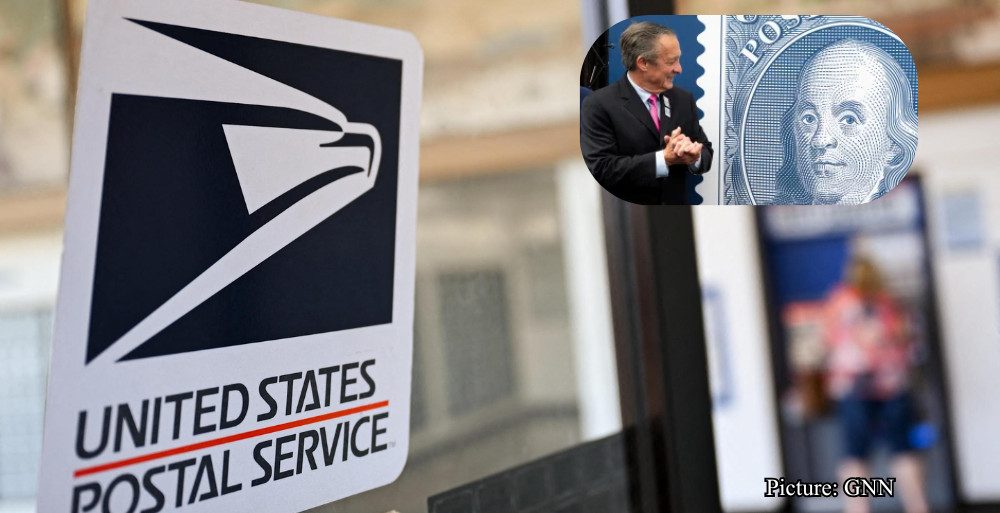
In a stark appeal to federal lawmakers, U.S. Postmaster General David Steiner testified that the United States Postal Service (USPS) is at risk of insolvency within 12 months without immediate intervention. Steiner proposed a significant hike in First-Class Mail prices—potentially raising the cost of a single stamp to 95 cents—alongside a request to lift the agency’s $15 billion borrowing limit, which has remained unchanged since 1990. The proposal follows a fiscal year 2025 that saw a $9 billion net loss, driven by a 104-billion-piece decline in mail volume since 2006. While the agency continues to implement its 10-year “Delivering for America” modernization plan, Steiner argued that current regulatory caps and outdated financial mandates are “anchors” preventing the service from reaching the stability required to maintain its universal service mandate.
WASHINGTON — Americans may soon see the sharpest single increase in the price of a postage stamp in the history of the United States Postal Service. Appearing before the House Oversight Committee on Tuesday, Postmaster General David Steiner issued a dire warning: without a fundamental shift in pricing authority and legislative relief, the nation’s primary mail carrier will run out of cash by early 2027.
Steiner’s testimony centered on a proposal to raise the price of a First-Class “Forever” stamp from the current 78 cents to a range between 90 and 95 cents. The move, he argued, is a necessary corrective for an agency that reported a staggering $9 billion net loss in fiscal year 2025. “As you all know, there are only three things that any company can do to improve financial performance—sell more products, raise prices, or cut costs,” Steiner told the committee. “On the pricing side, we need to look for higher prices on both our package and mail products.”
A Widening Financial Chasm
The financial headwinds facing the USPS are not a new phenomenon, but the scale of the current crisis has reached a “critical juncture,” according to Steiner. Since 2007, the agency has recorded total net losses exceeding $118 billion. Much of this is attributed to the precipitous decline of First-Class Mail, once the agency’s most profitable product. In 2006, the USPS handled a peak volume of 213 billion pieces of mail; by 2025, that number had plummeted to 109 billion.
Steiner noted that the 104-billion-piece loss in volume represents roughly $81 billion in unrealized revenue at current price points. To bridge this gap, the agency has leaned heavily on its 10-year “Delivering for America” plan, initiated under previous Postmaster General Louis DeJoy. While the plan has successfully reduced transportation costs by $422 million through network optimization and the introduction of “USPS Ground Advantage,” these gains have been offset by rising compensation costs and the “systemic imbalance” of the agency’s mandated cost structure.
Global Context and Pricing Disparity
In a pointed defense of the proposed 95-cent rate, Steiner compared the cost of American postage to that of other industrialized nations. He noted that France and the United Kingdom charge the equivalent of approximately $3.00 and $2.50, respectively, for similar domestic mail services.
“The longest distance that letters have to travel in those countries is about 600 miles—smaller than the state of Texas,” Steiner remarked, his tone measured but firm. “We deliver from the tip of Puerto Rico to the tip of Alaska for 78 cents. Our pricing remains the lowest in the industrialized world, yet our geographic mandate is the most expansive.”
Steiner, a former FedEx board member who took the helm in July 2025 following DeJoy’s departure, emphasized that a 95-cent stamp would “largely solve our controllable loss.” However, he cautioned that pricing is only one pillar of a three-pronged survival strategy.
Calls for Legislative Reform
Beyond the stamp price, Steiner urged Congress to address the agency’s liquidity through three specific legislative and regulatory changes:
- Raising the Borrowing Limit: The USPS is currently capped at a $15 billion debt limit, a figure established in the early 1990s. Steiner argued that this limit is functionally obsolete given the size of the modern economy and the agency’s $80.5 billion annual operating revenue.
- Pension Reform: Steiner called for a recalculation of the agency’s Civil Service Retirement System (CSRS) obligations and the authority to invest pension assets in higher-yield securities rather than exclusively in Treasury bills.
- Pricing Authority: The USPS has petitioned the Postal Regulatory Commission (PRC) to remove the current price cap system, which ties rate increases to the Consumer Price Index (CPI), in favor of a model that reflects the actual cost of the universal service mandate.
The Political Landscape and Potential Cuts
The reception on Capitol Hill was mixed. While Representative Kweisi Mfume (D-MD) likened the agency to a sinking Titanic that requires an immediate “life jacket” via a raised debt limit, other lawmakers expressed concern over the impact of higher prices on small businesses and rural residents.
If Congress fails to act, Steiner warned that more drastic measures may be unavoidable. He outlined options including the reduction of mail delivery to five days a week—a move estimated to save $3 billion annually—and the closure of low-volume rural post offices, which could save approximately $840 million. However, he admitted these steps would likely be “unpalatable” to both the public and their representatives.
“Without changes, less than a year from now, the Postal Service will be unable to deliver the mail if we maintain the status quo,” Steiner concluded. “This is not an abstract policy debate. It is a question of whether the service continues to exist as we know it.”