







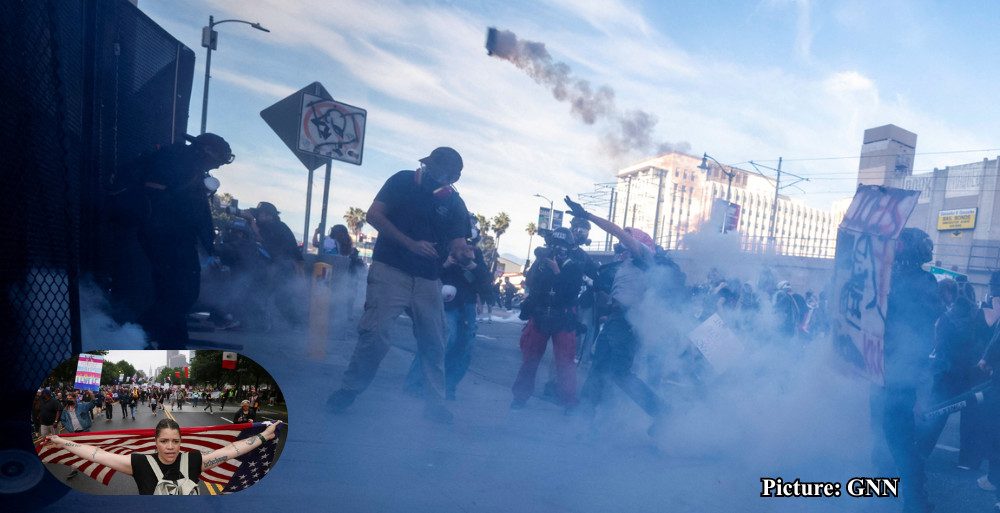
Organizers of the ‘No Kings’ protests, held across all 50 states, aim to channel large crowds into a potent political force ahead of the November midterm elections, despite concerns over the effectiveness of such movements.
March 28, 2026 — Demonstrators gathered in cities and towns across the United States on Saturday for the third round of the nationwide “No Kings” protests, aimed at voicing opposition to President Donald Trump’s policies. This series of demonstrations, which unfolded in all 50 states, sought to mobilize millions of Americans disillusioned by recent electoral outcomes and the president’s return to power.
The “No Kings” protests serve as a rallying point for those who feel their democratic rights are being undermined. As one protester, Mitch Campbell, 72, noted at a demonstration in Oxford, Mississippi, “It’s reached a point now where — how can people ignore this? They’re just trampling on the Constitution.” His sign, which read “No Kings Except Elvis,” encapsulated the lighthearted yet serious nature of the protests, which range from humorous slogans to urgent calls for action on issues like immigration and the cost of living.
Demonstration Scale and Goals
Organizers aimed for the March 28 protests to surpass prior turnout figures, which they claimed reached seven million participants across the earlier demonstrations held in October and June. However, these numbers have not been independently verified, raising questions about their accuracy.
As the protests unfolded, demonstrators highlighted a diverse array of issues. Signs varied greatly, with messages addressing topics like immigration enforcement—“ICE Needs to Melt”—and calls for peace—“We Can’t Afford the War or the Gas.” This lack of a single, unifying demand reflects a broader strategy to engage a wide range of anti-Trump sentiments, according to organizers.
The Absence of a Central Leader
Unlike prior movements, the “No Kings” protests have not coalesced around a recognizable leader or a central figure. Figures such as Bernie Sanders and Alexandria Ocasio-Cortez are acknowledged as champions of progressive causes, but they are not seen as focal points of the anti-Trump effort. Leah Greenberg, co-founder of Indivisible, a progressive organization involved in organizing the protests, stated, “You might think his consolidation of power is inevitable, but it isn’t.” This sentiment seeks to encourage broader participation from various anti-Trump factions.
Community Building and Activism
The protests featured a blend of political engagement and community building. In Washington, D.C., for instance, a live band performed as protesters gathered, while volunteers distributed care packages and gathered signatures for initiatives aimed at reducing the presence of ICE detention centers. The atmosphere in many locations fostered a sense of camaraderie among attendees, such as Bob Norberg from Gainesville, Florida, who expressed hopes that the protests would “invigorate the community” and build momentum for future activism.
However, some observers have pointed out that the lack of a clear message might dilute the impact of the protests. Dana R. Fisher, a professor at American University, noted that while the gatherings provide a sense of collective support, they risk becoming ineffective if they do not translate into actionable political organizing. “What we really need to do is the work of defending democracy in our communities,” she remarked.
Comparisons to the Tea Party Movement
Some anti-Trump organizers have drawn parallels between the “No Kings” movement and the Tea Party, which effectively mobilized conservative voters during the Obama administration. The Tea Party’s success was attributed to a strong organizational infrastructure and financial backing, a contrast that the current protests lack. Tim Phillips, a conservative activist, elaborated on the motivations behind both movements, stating that both groups feel that their respective presidents are leading the country toward a precipice.
Despite Trump’s approval rating falling to 36 percent as of March 23, from 45 percent at the beginning of his term, the efficacy of the “No Kings” protests remains a topic of debate. While the organized opposition has successfully harnessed public outrage at strategic moments, quantifying the influence of these protests on electoral outcomes is complex. Lara Putnam, a history professor at the University of Pittsburgh, noted that the number of protests has surged since Trump took office, with 80 events recorded in Pennsylvania alone last October, compared to just 27 on the day of the Women’s March in 2017.
Future Implications
As the midterm elections approach, the question remains whether the “No Kings” protests can sustain their momentum and translate their energy into electoral victories. The ambiguity of their message may resonate with a broad audience, but it also poses challenges in rallying concrete political action. Organizers and participants alike will need to navigate the delicate balance of fostering community engagement while ensuring that the protests lead to meaningful political change.