





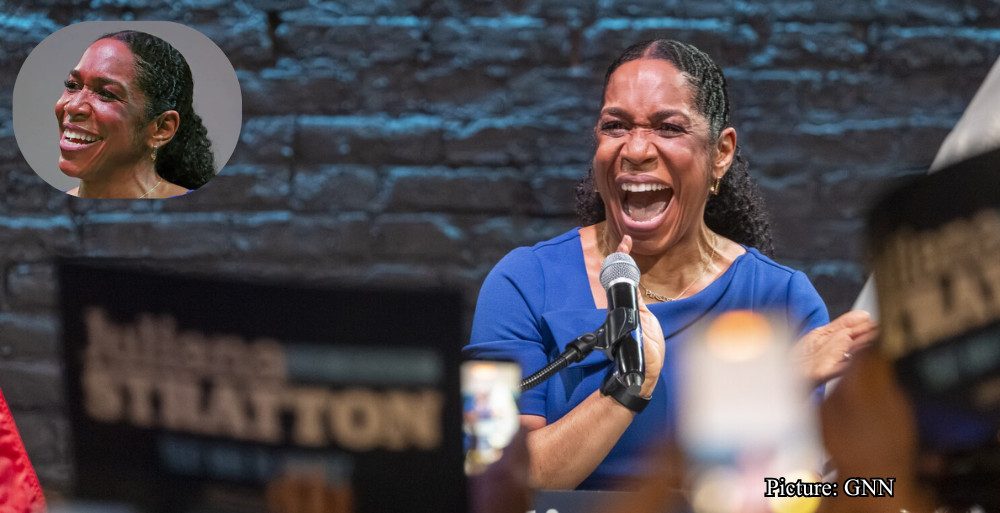
In a dramatic turn of events, Illinois Lt. Gov. Juliana Stratton has won the Democratic nomination for the state’s open U.S. Senate seat, defeating longtime frontrunner Rep. Raja Krishnamoorthi with significant backing from Chicago and downstate voters. Stratton’s victory, fueled by Governor J.B. Pritzker’s financial support and a bold progressive platform, sets the stage for a competitive general election against Republican nominee Don Tracy.
CHICAGO — In a significant political upset, Lt. Gov. Juliana Stratton emerged victorious in the Democratic primary for Illinois’ open U.S. Senate seat, defeating longtime frontrunner Rep. Raja Krishnamoorthi. With approximately 82% of precincts reporting late Tuesday evening, Stratton led with 39.6% of the vote to Krishnamoorthi’s 33.6%, translating to a margin of about 50,000 votes from over 900,000 ballots cast. The Associated Press officially called the race for Stratton shortly after 9:40 p.m.
The primary race marks a pivotal moment for Illinois politics, concluding a long and competitive campaign to replace retiring Sen. Dick Durbin, who has held the seat since 1997. Stratton’s victory is not just a personal triumph; it reflects shifting voter sentiments in the state, particularly in urban and downstate areas.
Stratton’s campaign message resonated with a diverse voter base, particularly in Chicago, where she garnered approximately 44% of the vote, compared to Krishnamoorthi’s 23% and Rep. Robin Kelly’s 25%. “Eleven months ago, I made a promise to Illinois to be the fighter you deserve,” Stratton told supporters on Chicago’s West Side, emphasizing her commitment to bold policy changes, including raising the minimum wage and abolishing the U.S. Immigration and Customs Enforcement Agency. “It’s time for bold ideas, big dreams, and real courage in Washington,” she declared, signaling a progressive agenda aimed at energizing her base.
The primary sets the stage for a highly anticipated general election showdown against Republican nominee Don Tracy, who received 40% of the vote in his own primary. Stratton’s strong showing in both Chicago and key downstate counties, including Metro East and Springfield, underscores her appeal beyond traditional Democratic strongholds. “We never lost sight of what’s most important, and that is courage,” Stratton said in her victory speech.
While Stratton’s ascent was buoyed by significant financial support from Governor Pritzker and the Illinois Future PAC, Krishnamoorthi’s campaign was characterized by extensive fundraising efforts, having raised over $19 million prior to his Senate bid. Despite a comprehensive ad blitz that began more than six months ahead of most competitors, Krishnamoorthi struggled to maintain momentum as voter preferences shifted.
In his concession speech, Krishnamoorthi expressed pride in his campaign and the support he received from across Illinois. “Obviously, this is not the result we sought,” he said, flanked by family members. Notably, he acknowledged the challenges posed by the financial clout of Pritzker, who effectively bankrolled Stratton’s campaign through a super PAC, allowing her to circumvent federal donation limits. “I’m honored at the support we received from every corner of the state,” he added, underscoring the breadth of his campaign’s reach.
Krishnamoorthi’s campaign faced scrutiny due to contributions from donors connected to former President Donald Trump, including a $30,000 donation from Shyam Sankar, a Palantir executive linked to ICE contracts. Although he donated this amount to immigrant rights organizations, the controversy may have contributed to his inability to break through the upper thresholds of voter support.
As Stratton prepares for the general election, she will likely face challenges from both Tracy and any lingering divisions within the Democratic Party. Critics have pointed to dark money initiatives aimed at splitting the vote among Black candidates, with accusations that strategies were employed to boost Kelly’s visibility at Stratton’s expense. This dynamic could complicate Stratton’s campaign, as she works to unify various factions within the Democratic base.
The general election promises to be closely watched, with Stratton’s progressive platform positioning her as a strong candidate against Tracy, who has emphasized reducing the cost of living as a top priority. “We stand before you tonight as the Illinois Republican nominee for the United States Senate,” Tracy declared at his watch party. He affirmed his commitment to addressing key issues affecting Illinois residents, such as energy and healthcare costs. “With your help, we’ll deliver that underdog victory in November that will shock the nation and make Illinois better, more balanced and a stronger state,” he added, rallying his supporters.
In addition to the Senate primary, four out of five open congressional seats in Illinois saw intense competition, drawing significant fundraising and media attention. Candidates in these races have collectively raised unprecedented amounts, reflecting the high stakes of the political landscape. For instance, in the 9th Congressional District, Evanston mayor Daniel Biss won with about 30% of the vote, a race that gained national attention due to its contentious nature.
The stakes for the Democratic Party in Illinois are particularly high given the shifting demographics and political dynamics. Stratton’s victory could signal a new direction for the party in the state, as she aims to harness the energy of progressive voters while appealing to moderates and independents. Her campaign is expected to focus heavily on economic issues, healthcare reform, and social justice, themes that resonate widely with the electorate.
This report is based on the source material provided, including statements attributed in that material.