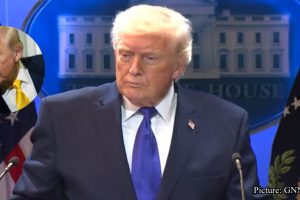









The Supreme Court’s decision to strike down the administration’s emergency tariffs has triggered a massive budgetary shortfall, forcing the Treasury to seek $1.6 trillion in unplanned borrowing. This fiscal emergency is compounded by an additional $400 billion in debt interest as the White House struggles to fund the ambitious tax reforms and rebate programs established under the One Big Beautiful Bill Act.
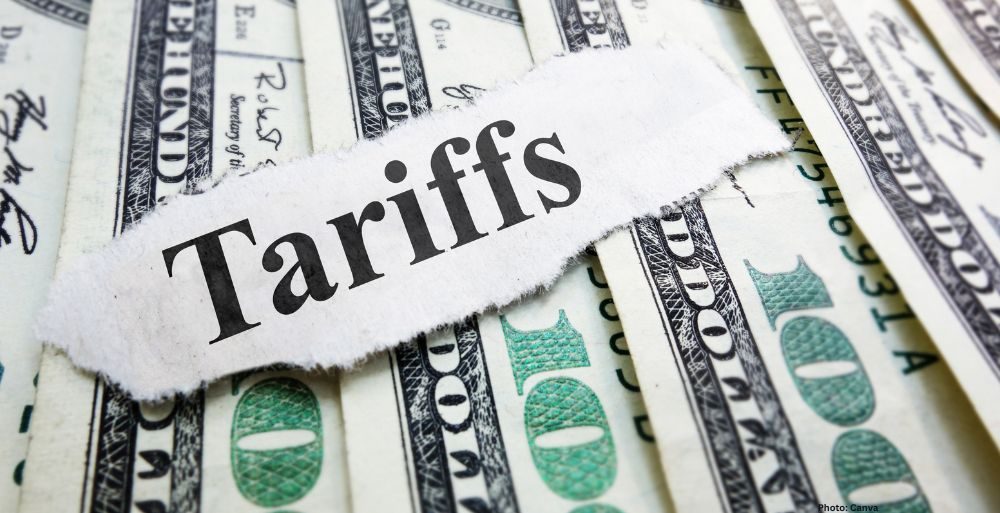
The United States Treasury is confronting a fiscal crisis of historic proportions as the legal foundation for the administration’s economic centerpiece has collapsed. In a stunning 6-3 decision late last month, the Supreme Court ruled that the sweeping tariffs implemented by the second Trump administration in 2025 were illegal, effectively vaporizing a revenue stream that the White House had projected at roughly $300 billion annually. The ruling has not only halted the collection of future duties but has also ignited a scramble to cover a $1.6 trillion funding gap, with a further $400 billion in interest payments threatening to push federal debt obligations into uncharted territory.
The crisis stems from the administration’s reliance on the International Emergency Economic Powers Act (IEEPA) to bypass Congress and unilaterally impose duties on a vast array of global imports. Dubbed the “Liberation Day” tariffs, these measures were intended to serve as the financial engine for the One Big Beautiful Bill Act (OBBBA), a sprawling legislative package that promised corporate tax write-offs, expanded standard deductions, and direct tariff rebate checks to American households. However, the high court’s majority opinion, authored by Chief Justice John Roberts, asserted that while the President has broad emergency powers, the authority to “regulate importation” does not extend to the unilateral imposition of taxes or duties—a power reserved exclusively for the legislative branch under Article I of the Constitution.
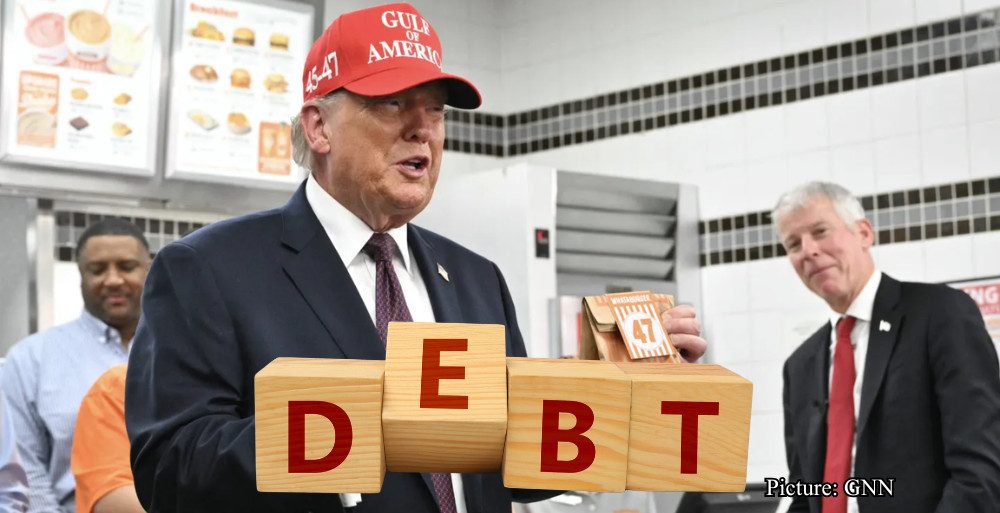
For Treasury Secretary Scott Bessent, the fallout is a logistical and mathematical nightmare. The Treasury had already baked the expected tariff windfalls into its long-term solvency projections. Without those funds, the federal government faces an immediate liquidity crunch. To keep the OBBBA’s popular provisions alive—including the 100% first-year depreciation for business equipment and the $31,500 standard deduction for married couples—the Treasury must now turn to the credit markets. Analysts warn that the sudden need to issue $1.6 trillion in new Treasury notes could spike yields, further increasing the cost of servicing the national debt, which is already burdened by the additional $400 billion interest projection.
The political implications are equally severe. The White House had championed the OBBBA as a “self-funding” miracle, arguing that foreign exporters would essentially pay for American tax cuts through the tariff wall. With that wall now dismantled, the administration is left with the political liability of a ballooning deficit. Jamieson Greer, the U.S. Trade Representative, has attempted to maintain leverage by pivoting to Section 122 of the Trade Act of 1974, which allows for a temporary 150-day global tariff. However, this stopgap measure offers only a fraction of the revenue provided by the original IEEPA duties and is already facing its own set of legal challenges from trade associations and retail groups.
Industry leaders are watching the chaos with a mix of relief and anxiety. While the removal of the 2025 tariffs lowers input costs for manufacturers and retailers, the uncertainty surrounding the Treasury’s borrowing spree is rattling the bond market. “The market hates a vacuum,” says one senior analyst at a major Manhattan investment firm. “We went from a predictable, if aggressive, trade policy to a total fiscal question mark in the span of 48 hours. The Treasury needs to find $2 trillion, and they need to find it while the cost of borrowing is rising.”
Furthermore, the Supreme Court ruling has opened the floodgates for refund claims. Thousands of businesses, led by litigants like Atmus Filtration Technologies, have already secured preliminary orders from the U.S. Court of International Trade to have their paid duties returned. The potential for the government to be forced to pay back over $130 billion in previously collected revenue adds another layer of stress to a Treasury balance sheet that is already “bleeding from both ends,” according to one congressional budget staffer.
As the White House navigates this judicial and economic minefield, the fate of the OBBBA hangs in the balance. If the administration cannot secure the $1.6 trillion in borrowing without triggering a market revolt, they may be forced to scale back the very tax cuts and rebate checks that defined their first year in office. For now, the Treasury is moving ahead with emergency bond auctions, hoping that the appetite for U.S. debt remains strong enough to swallow a $2 trillion pill necessitated by a legal miscalculation.