






A federal judge in Washington has halted a Justice Department investigation into Federal Reserve Chair Jerome Powell, ruling that the government provided essentially zero evidence of criminal wrongdoing. The decision marks a significant victory for central bank independence, with the court characterizing the probe as a politically motivated attempt to pressure the Fed into lowering interest rates.
The longstanding tension between the executive branch and the nation’s central bank reached a dramatic legal crescendo on Friday. U.S. District Judge James Boasberg issued a blistering unsealed opinion that effectively shuttered a Justice Department effort to subpoena the Federal Reserve’s Board of Governors. In a ruling that echoed across both Wall Street and Capitol Hill, Boasberg determined that the criminal investigation into Fed Chair Jerome Powell lacked even a modicum of legal merit, describing the government’s justifications as “thin,” “unsubstantiated,” and ultimately “pretextual.”
The conflict centers on a high-stakes standoff over the independence of the Federal Reserve, an institution designed to remain insulated from short-term political cycles to maintain economic stability. For months, the Justice Department, led by Acting U.S. Attorney Jeanine Pirro, has pursued allegations regarding cost overruns in a multi-billion-dollar renovation project of the Fed’s headquarters. However, Judge Boasberg’s ruling suggests the investigation was never truly about construction budgets or administrative transparency. Instead, the court found that the subpoenas were likely a tool of political coercion.
“A mountain of evidence suggests that the Government served these subpoenas on the Board to pressure its Chair into voting for lower interest rates or resigning,” Boasberg wrote. He further noted that while the government’s case was hollow, the evidence of political interference was “abundant,” suggesting the investigation’s “dominant, if not sole, purpose” was to harass Powell until he either yielded to the President’s economic agenda or stepped down to make room for a more compliant successor.
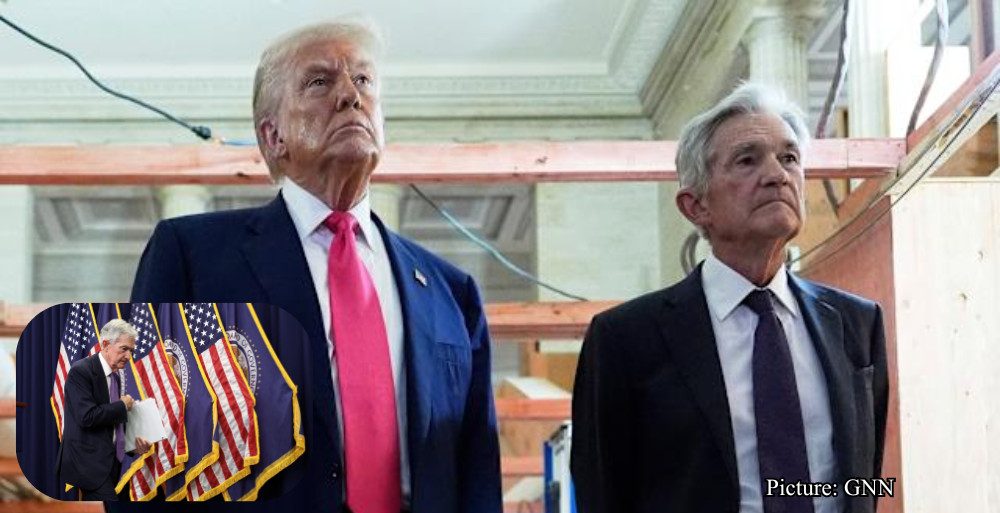
The ruling is a sharp blow to the Justice Department’s prestige and a direct vindication for Powell, who has spent the last year navigating a treacherous political landscape. The Fed Chair has consistently maintained that the central bank’s decisions are guided solely by its dual mandate of maximum employment and price stability, rather than the electoral needs of the White House. In a video message released in January, Powell took the rare step of publicly rebuking the investigation, labeling it a “politically motivated effort” to compromise the integrity of the Federal Reserve System.
The specific focus of the Justice Department’s probe involved Powell’s testimony before Congress regarding the Fed’s multi-billion-dollar office renovation project. Investigators claimed they were looking into whether public funds were wasted and whether Powell had made false statements to lawmakers about the scale of the overruns. Acting U.S. Attorney Jeanine Pirro doubled down on these allegations following the ruling, holding a press conference to blast Boasberg as an “activist” judge.
“This is the antithesis of American justice,” Pirro told reporters, visibly frustrated by the court’s intervention. “Exonerating anyone without any records, without an investigation or questioning, is not how our criminal justice system works.” Pirro pledged to appeal the ruling immediately, insisting that the focus remained on fiscal accountability and potential perjury, rather than interest rate policy.
Despite Pirro’s assertions, the court’s finding of “essentially zero evidence” has fueled a firestorm of criticism from lawmakers who see the probe as a dangerous precedent. The Federal Reserve’s ability to set the federal funds rate without political interference is considered a cornerstone of global financial confidence. Any perception that the Justice Department is being used as a cudgel to force monetary easing could lead to significant market volatility and a loss of trust in the U.S. dollar.
On Capitol Hill, key Republicans were quick to celebrate the judicial roadblock. Senator Thom Tillis of North Carolina, a senior member of the Senate Banking Committee, issued a stern warning to the Justice Department against pursuing an appeal. In a post on the social media platform X, Tillis argued that the ruling confirms the “weak and frivolous” nature of the investigation. “We all know how this is going to end,” Tillis said, calling the probe a “failed attack on Fed independence” and urging the D.C. U.S. Attorney’s Office to save itself from further embarrassment.
The legal battle comes at a sensitive time for the economy. With inflation remaining a persistent concern and the labor market showing signs of cooling, the Fed’s interest rate path is under intense scrutiny. Market participants have been watching the “war of words” between the administration and the central bank with growing unease. Historically, even the most aggressive presidents have maintained a public distance from the Fed’s internal deliberations, fearing that a politicized central bank would lead to long-term inflationary pressures.
Judge Boasberg’s opinion highlighted this historical norm, suggesting that the timing and nature of the subpoenas were inconsistent with standard law enforcement procedures. By labeling the government’s arguments as “pretextual,” the judge essentially accused the Justice Department of using a minor administrative matter—the renovation overruns—as a “Trojan horse” to gain access to internal Fed communications and exert leverage over Powell.
The Federal Reserve Board has remained largely silent since the ruling, with a spokesperson declining to comment on the unsealed opinion. However, the silence from 20th Street and Constitution Avenue belies the significance of the moment. For Powell, the ruling provides a much-needed shield as he prepares for the next round of Federal Open Market Committee (FOMC) meetings. It reaffirms his standing as a leader willing to withstand executive pressure to protect the institution’s long-term credibility.
As the Justice Department prepares its appeal, the legal community is watching closely. If Boasberg’s ruling stands, it will serve as a landmark defense of independent agencies against executive overreach. If overturned, it could open the door for future administrations to use the investigative powers of the DOJ to influence technical economic policy. For now, the “mountain of evidence” regarding political pressure remains the defining narrative of a case that has done more to expose the fractures in Washington than it has to uncover any crime.