







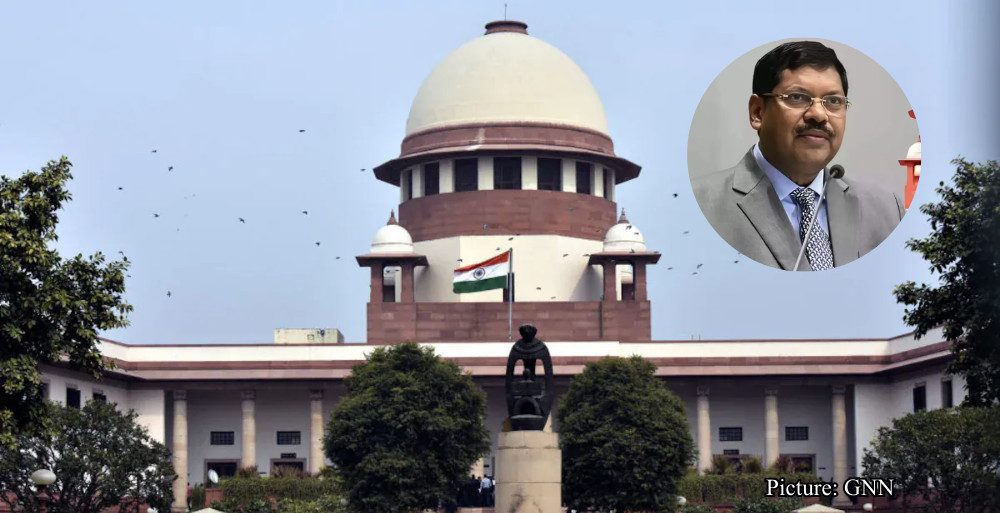
Public trust in the U.S. Supreme Court has plummeted to 22%, the lowest level since tracking began in 2000, as the high court faces intensifying scrutiny from across the political spectrum. The decline follows a series of high-stakes rulings on tariffs, immunity, and reproductive rights that have increasingly cast the judiciary as an extension of the nation’s hyper-polarized political landscape.
The United States Supreme Court, an institution designed to stand as the final, impartial arbiter of American law, is currently facing a crisis of legitimacy. According to the latest NBC News polling data, the share of registered voters who maintain a “great deal” or “quite a bit” of confidence in the high court has evaporated to just 22%. This figure represents the absolute nadir of public trust since the survey first began tracking the metric in 2000, marking a profound shift in how the American electorate perceives the third branch of government.
This collapse in institutional standing is not merely a reflection of partisan bickering but a sustained trend that suggests the “marble palace” is losing its aura of being above the political fray. For decades, the court enjoyed a buffer of public respect that shielded it from the volatility affecting the executive and legislative branches. In December 2000, even as the court’s Bush v. Gore decision decided a contested presidential election, confidence stood at 52%. Today, that reservoir of goodwill has been depleted by more than half.
The current data paints a stark picture of a divided and skeptical nation. While 22% hold high confidence, a substantial 40% of voters report having only “some” confidence, and a combined 38% say they have “very little” or “no” confidence at all. These numbers suggest that the court is no longer viewed as a neutral referee, but rather as a participant in the nation’s ongoing ideological warfare.
A Bench Under Fire from Both Sides
Historically, the court’s 6-3 conservative supermajority has acted as a bulwark for Republican priorities, a fact reflected in the persistent gap between Democratic and Republican approval. However, the most recent data reveals a new and potentially more damaging development: the court is beginning to lose its footing with voters of all stripes.
Democratic confidence in the court has been in a freefall since the 2022 overturning of Roe v. Wade, with only 9% of Democrats currently expressing significant confidence in the institution. That sentiment reached a visceral low of 4% following the 2024 ruling that granted President Donald Trump broad criminal immunity for actions related to the January 6 Capitol attack.
Yet, the court is now facing a rare “pincer movement” of criticism. The latest survey, conducted between February 27 and March 3, 2026, followed a surprising ruling in which the conservative-led court struck down President Trump’s sweeping trade tariffs. The decision bucked the recent trend of rulings favorable to the administration and triggered a firestorm of “harsh criticism” from the President himself. Consequently, Republican confidence—which surged to 55% after the immunity ruling—has begun to soften.
“It’s one thing to make controversial rulings that one party may or may not like but maintain respect and confidence,” noted Jeff Horwitt of Hart Research Associates, a Democratic pollster who co-conducted the survey. “What we are seeing is quite the opposite, where the court is making controversial rulings but not being respected and in fact confidence is being eroded.” Horwitt’s Republican counterpart, Bill McInturff of Public Opinion Strategies, noted that the justices are now “getting it from both sides.”
The Burden of Polarizing Jurisprudence
The erosion of trust is deeply tied to the perception that the court’s legal logic is increasingly indistinguishable from political platforming. When the court functions as a predictable ally for one party, it sacrifices the perception of objectivity. When it eventually rules against that same party—as it did with the recent tariff decision—it finds itself without a natural constituency to defend its integrity.
Maya Sen, a political scientist at the Harvard Kennedy School, suggests that while the tariff ruling alone might not permanently alter the court’s trajectory, it signals a precarious moment. The court still faces looming decisions on high-voltage issues like the administration’s plan to end automatic birthright citizenship.
“If there are a series of unfavorable rulings for the administration… I think what you’d expect to see is support among Democrats start to thaw a little bit and you’d expect to see some reaction from Republicans,” Sen observed. This suggests a volatile future where the court’s approval ratings oscillate based on the “scorecard” of wins and losses for each party, rather than a stable foundation of legal respect.
The Legitimacy Gap
The danger for the Supreme Court is not found in the ballot box—justices are appointed for life and are intentionally insulated from electoral pressures. Instead, the danger lies in the mechanics of power. Unlike the President, who commands the military, or Congress, which controls the national purse, the Supreme Court possesses only the power of its own judgment and the public’s willingness to abide by it.
Liberal Justice Elena Kagan warned of this exact scenario in 2022, stating that when people see the court as “just trying to impose personal preferences on society, irrespective of the law, that’s when there’s a problem.” Chief Justice John Roberts has countered that disagreement with an opinion is not a valid basis for questioning the court’s legitimacy. However, as the polling suggests, the American public is increasingly finding it difficult to separate the two.
Interestingly, the public seems to support the court’s specific actions even while distrusting the institution. A majority (54%) of voters approved of the ruling striking down the tariffs, with 55% agreeing that the trade barriers were harming the economy. This creates a paradox: the public likes the outcome of the tariff case but remains deeply wary of the outfit that delivered it.
As the court moves into the final months of its current term, the record-low confidence levels serve as a somber backdrop. For an institution that relies on the “passive virtues” of prestige and perceived neutrality, the current polling is more than a PR headache—it is a flashing red light for the health of American constitutional democracy.