






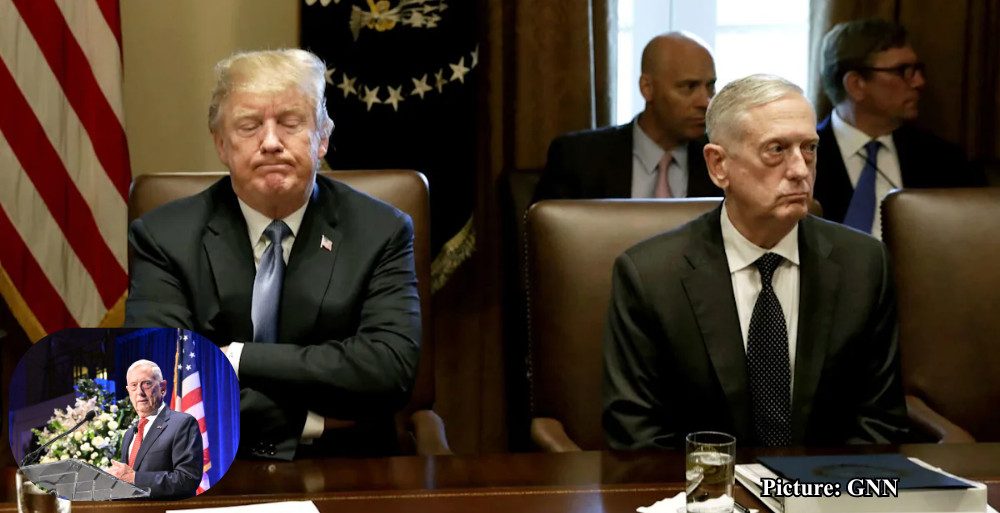
Former Defense Secretary James Mattis expressed concerns over U.S. military strategy regarding Iran, emphasizing the need for collaborative international efforts to address the challenges facing the Strait of Hormuz during his remarks at the CERAWeek conference in Houston.
HOUSTON — In a candid assessment of U.S. military strategy concerning Iran, former Defense Secretary James Mattis highlighted significant challenges facing the United States in the Strait of Hormuz during a session at the CERAWeek by S&P Global conference on Monday. His comments come amidst a backdrop of uncertainty regarding U.S.-Iran relations and the implications for global oil markets.
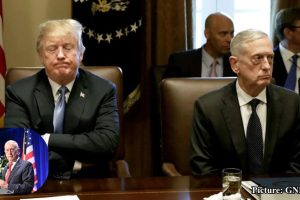
Mattis, who served under President Donald Trump before resigning in 2019, criticized the administration for what he described as a lack of strategic foresight in dealing with Iran. “We’re in a tough spot, ladies and gentlemen, and I can’t identify a lot of good options,” he stated, emphasizing the precarious situation in the Strait of Hormuz, a critical maritime chokepoint for global oil shipments.
Strategic Concerns over the Strait of Hormuz
The Strait of Hormuz is a narrow waterway through which approximately 20% of the world’s oil passes, making it a focal point for international energy security. Mattis warned that if the U.S. were to withdraw military presence in the region, it could embolden Iran to claim control. He stated, “If President Trump declares victory and pulls back the U.S. military, Iran would now say we own the Strait.” Such a scenario could lead to increased tolls or threats against shipping, which Mattis described as “something completely unsustainable in the international market.”
Highlighting the limitations of the current military approach, Mattis remarked, “The Americans are fighting in a markedly limited war, and I think that what we’re seeing is a situation where targetry never makes up for a lack of strategy.” He underscored the difficulties of ensuring maritime security in the region, particularly given Iran’s extensive coastline and its capability to launch attacks from shore.
Challenges of Naval Protection
During his remarks, Mattis elaborated on the challenges faced by the U.S. Navy in protecting commercial shipping. He compared the situation to the Texas Gulf Coast, stating, “If you look at the Texas Gulf Coast, that’s about 367 miles, that gives you an idea of how difficult this will be for the U.S. Navy to try and protect ships in that shipping lane, 600 miles down the Gulf, 100 miles through the Straits and then out into the water.”
He pointed out that Iran possesses anti-ship cruise missiles that can be launched from mobile platforms, complicating the security landscape. “They’ve got anti-ship cruise missiles that could be fired off the back of a pickup truck that can go 100 miles. So there’s the problem,” he said. This capability raises the stakes for both military and commercial vessels operating in the region.
Market Responses and International Implications
Amidst these discussions, oil prices experienced fluctuations. Brent crude oil prices eased on Monday after President Trump indicated a de-escalation in tensions, backing away from threats to strike Iranian installations. Following his comments, Brent crude traded just below $100 per barrel after closing at $112 the previous week. This contrasts with the price of approximately $73 before recent military engagements with Iran, illustrating the volatility of energy markets in response to geopolitical developments.
Brookings Institution vice president Suzanne Maloney, who participated in the panel alongside Mattis, echoed concerns regarding the efficacy of U.S. policy toward Iran. She noted, “I think anyone who knows Iranians, knows the country, has tremendous hope and optimism for Iran, but unfortunately, this regime has been quite good at survival.” Maloney emphasized that the U.S. objective of regime change has proven increasingly challenging.
Collaborative Solutions Needed
Both Mattis and Maloney agreed that addressing the ongoing energy crisis and ensuring stability in the region necessitates collaboration with international allies. Mattis stated, “The bottom line is, there is not a problem associated with this current loss of energy supplies that can be solved by any one country.” He underlined the importance of a strategic approach that includes military cooperation and economic sanctions to compel Iran to return to the negotiating table.
As tensions in the region continue to evolve, the need for a cohesive and strategic response from the U.S. and its allies remains paramount. The discussions at CERAWeek have illuminated the pressing challenges in energy security and foreign policy as stakeholders navigate the complex landscape surrounding Iran’s influence in the Strait of Hormuz.