




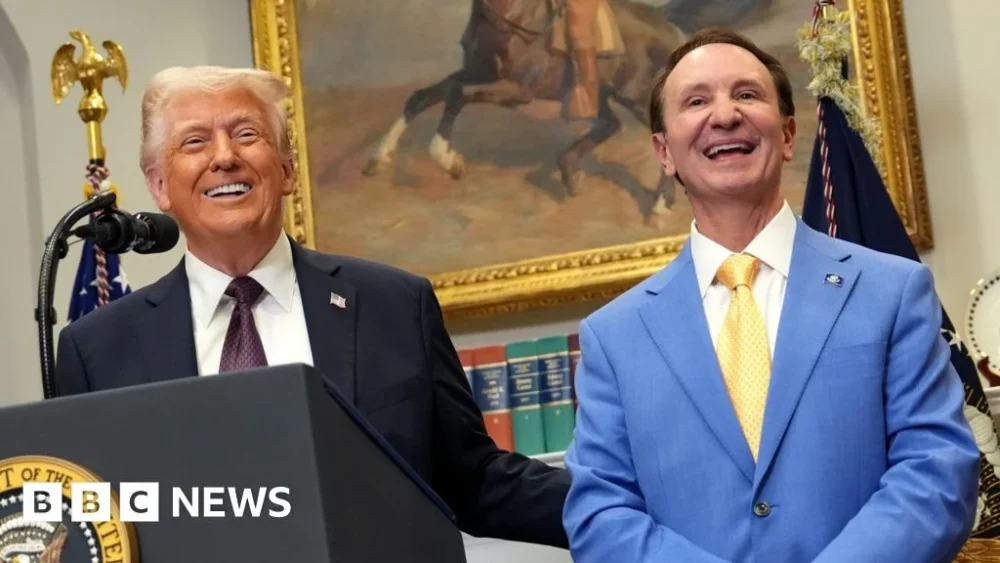
Diplomatic tensions between the United States and Denmark have flared anew after U.S. President Donald Trump announced the appointment of Louisiana Governor Jeff Landry as Washington’s special envoy to Greenland — a move that has reignited controversy over the Arctic island’s future and sovereignty.
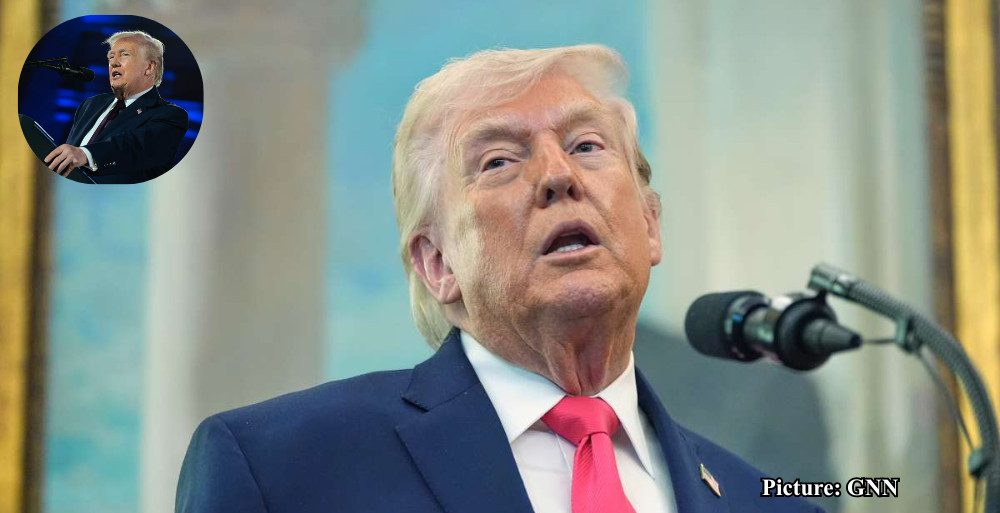
Trump revealed the appointment late Sunday on his social media platform Truth Social, describing Greenland as a strategic priority for American national security. “Jeff understands how essential Greenland is to our National Security, and will strongly advance our Country’s interests for the safety, security, and survival of our allies — and indeed, the world,” Trump wrote.
The announcement immediately drew sharp reactions from Copenhagen and Nuuk, as it revived Trump’s long-standing and highly contentious ambition to bring Greenland — a self-governing territory within the Kingdom of Denmark — under U.S. control. Trump has repeatedly argued that Greenland’s location in the Arctic and its vast reserves of largely untapped rare earth minerals make it indispensable to American strategic interests.
Landry, a Republican who assumed office as Louisiana governor in early 2024, described the appointment as a “volunteer position” and called it “an honor.” In a post on social media, he went further than the White House announcement, openly stating that he would work to “make Greenland a part of the U.S.” He also sought to reassure constituents back home, adding, “This in no way affects my position as Governor of Louisiana!”
Those remarks raised alarm bells in Greenland, where leaders were quick to assert their autonomy. Greenland’s Prime Minister Jens-Frederik Nielsen responded with a carefully worded but firm statement, urging calm while reaffirming the island’s right to self-determination. “It may seem like a lot,” Nielsen said, “but we will shape our own future. Greenland is ours, and our borders will be respected.”
The reaction in Denmark was far less restrained. Copenhagen retains authority over Greenland’s foreign policy and security, and officials there expressed outrage at what they viewed as a direct challenge to Danish sovereignty. Danish Foreign Minister Lars Løkke Rasmussen told local media he was “deeply outraged” by Trump’s move and said he would summon the U.S. ambassador to Denmark, Ken Howery, for an explanation.
The controversy has also reverberated across Europe. A spokesperson for the European Commission, Anouar El Anouni, stressed that protecting the “inviolability” of Denmark and Greenland’s borders is “essential for the European Union.” The statement underscored broader European concerns that Trump’s rhetoric could destabilize Arctic governance at a time of heightened geopolitical competition.
Greenland, the world’s largest island, occupies a strategically critical position between North America and Europe and is increasingly central to global competition in the Arctic. Melting ice has opened new shipping routes, while the island’s reserves of rare earth elements — vital for clean energy technologies, electronics, and defense systems — have attracted growing interest from major powers, including the United States, China, and Russia.
Trump first floated the idea of acquiring Greenland during his earlier presidency, a proposal that was widely dismissed at the time but has since returned with greater intensity. Shortly after taking office again in January, he declared that the United States would “take over” Greenland and notably refused to rule out the use of economic pressure or even military force. On several occasions, he has vowed that the U.S. would gain control of the island “one way or the other,” comments that sent shockwaves through European capitals and triggered a diplomatic frenzy.
Critics argue that appointing a sitting U.S. governor as envoy — particularly one who openly endorses annexation — risks inflaming tensions further and undermining international norms. Supporters within Trump’s political base, however, see the move as a signal of renewed American assertiveness in the Arctic at a time when strategic competition is intensifying.
For Greenlanders, the episode has revived longstanding anxieties about being caught between global powers. While many support greater economic development and expanded international partnerships, public opinion has consistently favored independence and rejected any notion of being absorbed by another state.
As the diplomatic fallout continues, analysts warn that Trump’s envoy appointment could complicate U.S. relations not only with Denmark but with the European Union more broadly. Whether the move represents a symbolic gesture or the opening act of a more aggressive Arctic strategy remains to be seen. What is clear is that Greenland — once a peripheral concern in global politics — is now firmly at the center of a high-stakes geopolitical debate.