





Despite the Supreme Court ruling invalidating key tariffs, the United States expects all trading partners to uphold existing agreements, ensuring reciprocity and protecting American workers — a mix of quiet diplomacy and legal leverage aimed at preserving the administration’s trade agenda.
The White House is scrambling to stabilize its trade strategy after a recent Supreme Court of the United States ruling struck down a broad range of President Donald Trump’s tariffs, forcing officials into a mix of quiet diplomacy and renewed pressure on foreign partners.
Shortly after Trump announced on social media that he would impose a 15 percent global tariff, U.S. Trade Representative Jamieson Greer held urgent talks with his British counterpart, Peter Kyle.
Despite the court’s decision undermining the legal basis of key tariffs, the United Kingdom signaled it was prepared to stick with the trade agreement reached with Washington in May. However, British officials stressed that the U.S. must honor the terms of that pact, which capped duties at 10 percent — not the newly announced 15 percent rate. Days later, when the revised tariff took effect, it was set at 10 percent instead of the higher rate Trump had initially declared.
The exchange was part of a broader damage-control effort launched after the court ruled on Feb. 20 that the president lacked authority under a national emergency law to impose sweeping “reciprocal” tariffs. Administration officials have since worked behind the scenes to reassure trading partners and preserve agreements negotiated under the now-invalidated tariff framework.
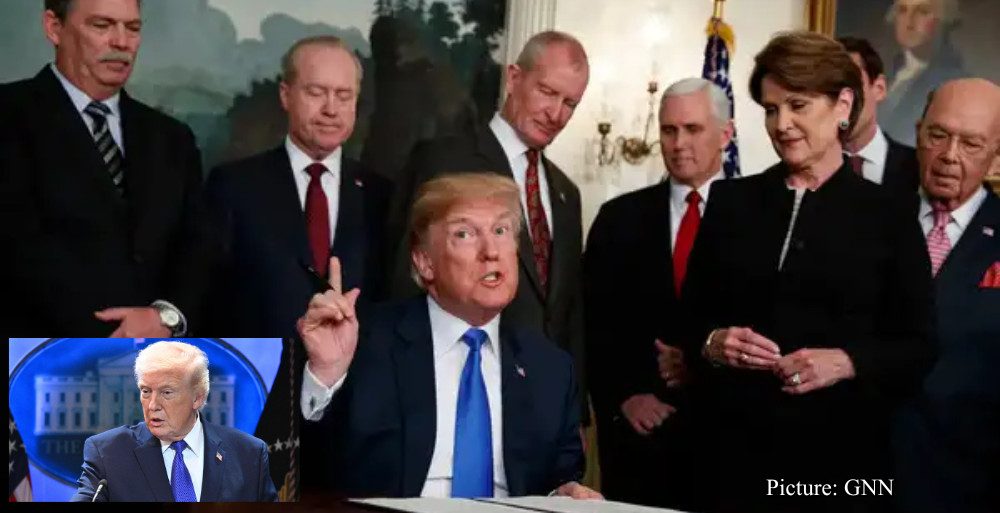
Publicly, Trump has maintained a hard line. In a post on Truth Social, he warned that any country seeking to exploit the court’s ruling would face “much higher” tariffs. Privately, however, senior officials have taken a more measured approach, emphasizing that Washington expects all partners to uphold existing deals restoring “reciprocity” in trade.
In the days following the ruling, Greer and Commerce Secretary Howard Lutnick spoke with officials from the European Union, India and Canada. French Trade Minister Nicolas Forissier said discussions with U.S. counterparts were “calm and constructive,” in contrast to Trump’s more combative public messaging.
The legal uncertainty has rattled several partners. The European Parliament briefly froze legislation to implement its side of the agreement after Trump floated the 15 percent tariff. Still, EU Trade Commissioner Maroš Šefčovič urged lawmakers to proceed, citing U.S. assurances that Washington would honor the so-called Turnberry accord.
India also postponed planned meetings related to its recent deal with the U.S., though both sides expect the agreement to move forward. South Korea’s legislature is reportedly preparing to vote in early March on authorizing a $350 billion investment commitment tied to its pact with Washington. Japan, which pledged $550 billion in U.S. investments, has likewise signaled it intends to continue implementing its agreement.
Despite the court ruling, the administration retains other legal tools to impose tariffs, including national security authorities that have already been used to levy 25 percent duties on automobiles, steel and aluminum. Those sector-specific tariffs were central to securing investment pledges from the EU, Japan and South Korea.
Analysts say that while the Supreme Court decision weakens the administration’s leverage somewhat, it does not eliminate it. The White House can still initiate new trade investigations that could result in fresh tariffs, including probes into digital services regulations or pharmaceutical imports.
In Asia, trade deals are intertwined with broader strategic concerns. For Japan, continued cooperation is seen not only as an economic calculation but also as a political and security consideration amid rising tensions with China. Other countries, such as Bangladesh and Taiwan, are reassessing their positions, with domestic critics questioning agreements built on now-invalidated tariff threats.
Even so, most major U.S. trading partners appear reluctant to walk away, wary of provoking further action from Washington. Though the Supreme Court curtailed the president’s ability to impose sweeping tariffs overnight, the administration retains significant authority to target specific countries after formal investigations.