








The Transportation Security Administration (TSA) has confirmed that travelers in the United States who arrive at airport security without a valid REAL ID or passport will soon face a $45 verification fee. The new charge will officially take effect on February 1, 2026, following an earlier proposal of an $18 fee that sparked national debate.
The policy was first introduced through a notice on the Federal Register in November and finalized in early December. Under the new rule, passengers unable to present approved identification will be directed to a paid identity verification process called TSA Confirm.ID. While the TSA says the measure is essential for security modernization, critics argue that families and infrequent travelers will carry the biggest financial burden.
Why Families Will Feel the Biggest Impact
According to consumer advocates and aviation experts, the fine print of the policy creates an uneven financial impact. The $45 fee only covers a 10-day validation window, meaning travelers can fly multiple times within that period without paying again. Frequent flyers benefit most under this structure.
However, families who travel occasionally could be forced to pay the fee multiple times per person. For example, a family of four taking a two-week domestic vacation without REAL IDs or passports would pay $180 for departure and another $180 for the return, totaling $360 in TSA fees alone.
Children under 18 are exempt from the ID requirement for domestic travel, which slightly eases the cost for families with young kids. Still, any adult aged 18 and above must pay the fee if they lack proper identification — including grandparents and extended family members traveling together.
Bill McGee, aviation policy expert at the American Economic Liberties Project, warned that the structure of the fee “disproportionately penalizes households that fly only once or twice a year.”
A former TSA officer, speaking anonymously, also criticized the policy, calling the fines excessive and the enforcement overly rigid for families already facing rising travel costs.
Why the TSA Says the Fee Is “Necessary”
The TSA maintains that the $45 charge offsets government expenses tied to its new alternative identity verification system, designed to modernize security and strengthen fraud prevention. The agency says the system will ultimately make checkpoints faster and safer for travelers nationwide.
The move is also widely seen as a final push to enforce compliance with the REAL ID Act, which was passed in 2005 following the 9/11 attacks but only fully implemented in May 2025 after nearly two decades of delays.
Until recently, travelers without REAL ID-compliant licenses were allowed to fly after undergoing additional screening without any financial penalty. That grace period is now ending.
Former TSA officials say the new fine serves as a long-overdue enforcement tool. After years of warnings and deadline extensions, passengers who continued to ignore the REAL ID requirement are now facing real financial consequences.
What Happens If You Arrive Without Proper ID
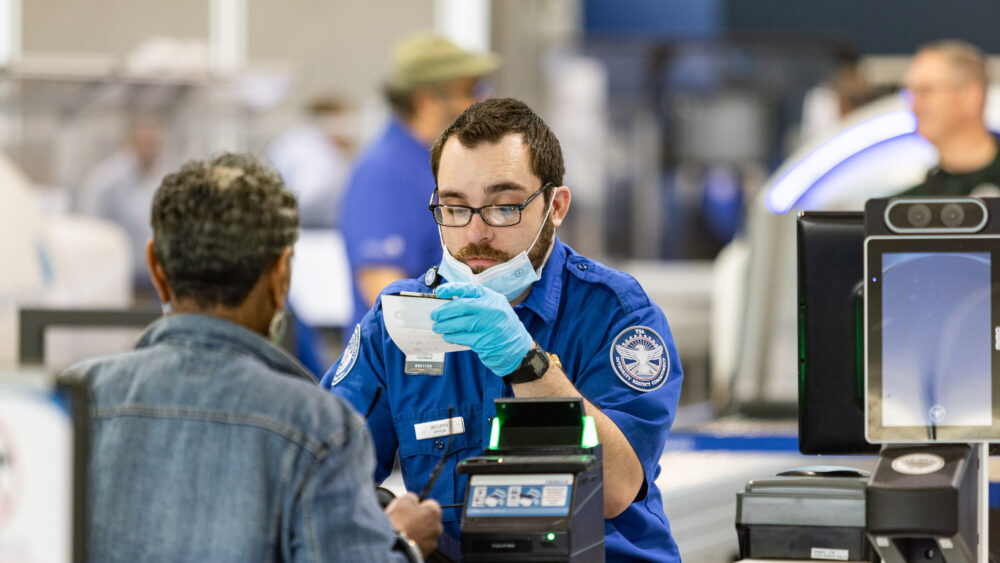
Travelers who reach the checkpoint without a passport or REAL ID will be removed from the screening line and required to complete identity verification forms either online through the TSA website or in person at the airport. This process may take up to 30 minutes or more, depending on volume.
If a traveler cannot successfully verify their identity, they will not be cleared to fly under any circumstances, TSA officials confirmed.
How Travelers Can Avoid the $45 TSA Fee
To avoid the new charge, passengers must ensure they carry either a valid REAL ID or a U.S. passport for all domestic flights after February 1, 2026.
The TSA strongly advises travelers to schedule appointments at their local Department of Motor Vehicles (DMV) as soon as possible to upgrade their licenses to REAL ID status. Some states have experienced delays and printing errors, so early application is recommended.
Alternatively, applying for a passport offers universal acceptance at TSA checkpoints and for international travel.
According to the TSA, about 94% of U.S. travelers already possess acceptable identification, but the remaining population will now face a clear financial incentive to comply before next year’s deadline.