





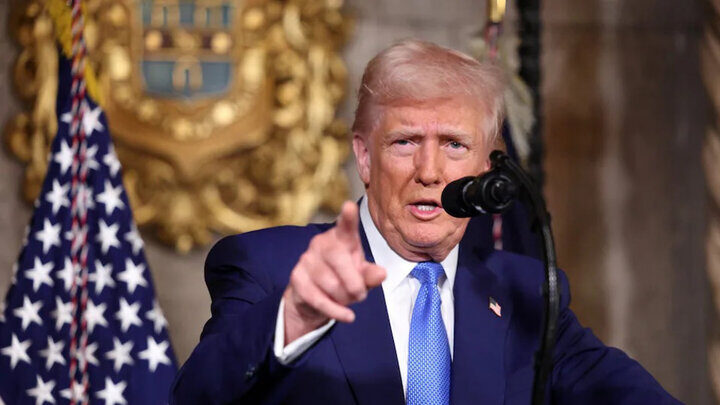
U.S. President Donald Trump has significantly expanded America’s travel restrictions, signing a proclamation on Tuesday that increases the number of countries facing full or partial entry bans from 19 to 39, according to a statement from the White House. The move marks one of the most sweeping immigration policy escalations of Trump’s current term and signals a renewed hardline approach to border control and national security.
Under the proclamation, seven countries have been newly added to the full travel ban list: Laos, Sierra Leone, Burkina Faso, Mali, Niger, South Sudan, and Syria. Laos and Sierra Leone were previously subject to partial restrictions, but now face complete entry limitations.
An additional 15 countries have been placed under partial travel restrictions, including Angola, Antigua and Barbuda, Benin, Côte d’Ivoire, Dominica, Gabon, The Gambia, Malawi, Mauritania, Nigeria, Senegal, Tanzania, Tonga, Zambia, and Zimbabwe.
“The listed countries demonstrate severe deficiencies in screening, vetting, and information-sharing,” the White House said, defending the expansion as a necessary measure to protect U.S. national security.
Background to the Expansion
CNN had reported earlier this month that Homeland Security Secretary Kristi Noem had recommended expanding the travel ban to between 30 and 32 countries. The final proclamation exceeded those expectations, reflecting what immigration analysts describe as a deliberate tightening of U.S. entry policies across multiple fronts.
Nationals from the affected countries will face varying degrees of restrictions on entry into the United States, depending on visa category and immigration status. The proclamation includes exceptions for lawful permanent residents, current visa holders, specific visa classifications, and individuals whose entry is deemed to be in the national interest of the United States.
“This is not a blanket prohibition,” a senior administration official said, adding that the policy is “targeted, flexible, and security-driven.”
New Provisions and Exceptions
In addition to expanding the country list, the proclamation introduces specific travel limitations on individuals holding Palestinian Authority-issued travel documents. At the same time, it partially lifts restrictions on nonimmigrant visas for citizens of Turkmenistan, while continuing to suspend entry for Turkmen nationals under certain categories.
Policy experts note that such tailored provisions reflect an attempt by the administration to balance security enforcement with diplomatic considerations.
Triggered by Security Concerns
The timing of the announcement coincides with President Trump’s intensified immigration crackdown following a recent shooting in Washington, DC, that left one National Guard member dead and another critically wounded.
The suspect, Rahmanullah Lakanwal, is an Afghan national who previously assisted U.S. forces in Afghanistan. He resettled in Washington state under the Biden administration and was later granted asylum during Trump’s current term.
The incident has become a focal point for the administration’s argument that existing vetting systems are insufficient. “This tragedy underscores why America must have the strongest possible controls on who enters our country,” Trump said earlier this week while addressing supporters.
A Broader Immigration Reset
The travel ban expansion is part of a broader overhaul of U.S. immigration policy. Since returning to office, Trump has halted or sharply tightened nearly every legal and illegal pathway into the country. These measures include:
- A pause on asylum adjudications
- A review of immigration cases approved under the Biden administration
- A “reexamination” of certain green card holders
- An ongoing mass deportation campaign
Immigration advocates argue the policies disproportionately affect vulnerable populations, while supporters contend they restore sovereignty and public safety.
Echoes of Trump’s First-Term Travel Ban
The proclamation also revives memories of Trump’s controversial first-term travel ban, introduced in 2017, which barred travelers from seven majority-Muslim nations. That policy faced multiple legal challenges before the U.S. Supreme Court ultimately upheld a revised version restricting entry from countries including Iran, North Korea, Syria, Libya, Yemen, Somalia, and Venezuela.
President Joe Biden repealed that ban shortly after taking office in 2021, calling it “a stain on our national conscience.”
With Tuesday’s proclamation, Trump has once again placed immigration at the center of his political agenda—this time with an even broader scope.
Full List of Countries Affected
The updated list of 39 countries subject to full or partial travel restrictions includes:
Afghanistan, Burma, Chad, Republic of the Congo, Equatorial Guinea, Eritrea, Haiti, Iran, Libya, Somalia, Sudan, Yemen, Burundi, Cuba, Laos, Sierra Leone, Togo, Turkmenistan, Venezuela, Burkina Faso, Mali, Niger, South Sudan, Syria, Angola, Antigua and Barbuda, Benin, Côte d’Ivoire, Dominica, Gabon, The Gambia, Malawi, Mauritania, Nigeria, Senegal, Tanzania, Tonga, Zambia, and Zimbabwe.
What Comes Next
Legal experts anticipate renewed challenges in federal courts, while diplomats warn the move could strain relations with several affected nations. Still, the administration appears undeterred.
“This is about security, not politics,” a White House spokesperson said. “The United States has the right—and the responsibility—to control its borders.”
As the policy takes effect, the global and domestic implications of America’s expanded travel ban are likely to dominate political and legal debates in the months ahead.