







In an era shaped by globalization, international mobility has become a defining marker of privilege, opportunity, and geopolitical influence. Yet, contrary to popular belief, economic strength, military dominance, or national size do not automatically translate into passport power. The latest rankings from the Henley Passport Index reveal a striking reality: a small Asian country now holds the title of the world’s most powerful passport, while the United States — once the global leader — has fallen behind 37 nations.
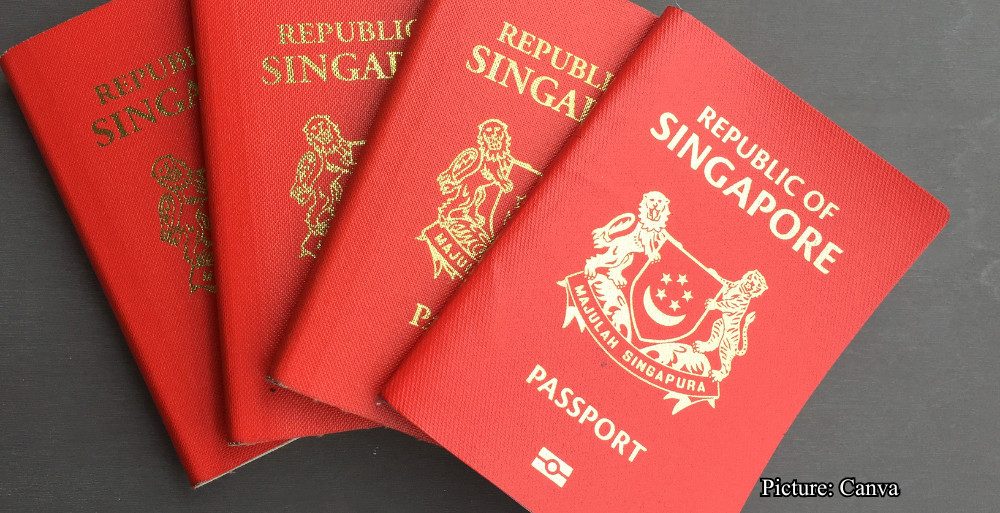
At the very top of the 2026 rankings sits Singapore, whose passport grants visa-free or visa-on-arrival access to 192 destinations out of 227 tracked worldwide. Close behind, Japan and South Korea share second place, each offering access to 188 destinations. Together, these small Asian nations have surpassed traditional powerhouses — proving that diplomacy, openness, and global trust now matter more than brute economic or military force.
How Passport Power Is Measured
A passport’s ranking is determined primarily by how many countries its holders can enter without requiring a visa. The greater the visa-free access, the stronger the passport. Conversely, passports requiring visas for most international travel rank lower — limiting their holders’ global mobility.
This metric has increasingly become a reflection of diplomatic relations, political stability, global cooperation, and visa reciprocity, rather than sheer national influence.
Europe Dominates the Upper Rankings
While Asia leads the top spot, Europe maintains a strong presence. Countries such as Denmark, Luxembourg, Spain, Sweden, and Switzerland share third place, allowing access to 186 destinations. Meanwhile, Austria, Belgium, France, Germany, Italy, the Netherlands, Norway, and several others occupy the fourth tier with 185 visa-free destinations.
The United States: From First Place to Tenth
Despite boasting the world’s largest economy and most powerful military, the United States now ranks 10th, offering visa-free access to 179 destinations — down from 186 last year. This represents a steep decline from 2014, when the U.S. passport topped global rankings.
The fall reflects shifting visa policies, trade tensions, and diplomatic reciprocity gaps. Several countries — including Brazil, Vietnam, Papua New Guinea, and Myanmar — have revised visa rules in ways that reduced travel freedoms for Americans. Additionally, China’s evolving visa openness toward Europe — excluding the U.S. — has further contributed to America’s slide.
Christian H. Kaelin, Chair of Henley & Partners, explained:
“The declining strength of the U.S. passport signals a fundamental shift in global mobility and soft power dynamics. Nations that embrace openness and cooperation are surging ahead, while those resting on past privilege are being left behind.”
Visa Reciprocity: America’s Weak Spot
One of the biggest factors dragging down U.S. passport power is visa reciprocity. While Americans can travel visa-free to 179 destinations, the U.S. itself only allows 46 nationalities to enter without a visa — ranking it 78th on the Henley Openness Index.
This imbalance has become a key reason why other nations have limited travel privileges for Americans. Experts note that countries with large gaps between mobility freedom and openness tend to stagnate or decline in passport rankings.
Trump-Era Policies and Mobility Decline
Analysts link much of the U.S. passport’s decline to restrictive immigration and visa policies — particularly during the administration of Donald Trump. Measures such as travel bans, visa suspensions across multiple African, Middle Eastern, and Southeast Asian nations, and rising visa fees have contributed to America’s shrinking global travel leverage.
According to policy experts, the U.S. has shifted toward an isolationist stance, weakening its diplomatic mobility influence. Annie Pforzheimer of the Center for Strategic and International Studies noted:
“Even before Trump’s return to power, U.S. policy had turned inward. That isolationist mindset is now reflected in America’s loss of passport power.”
China’s Rise as America Retreats
While the U.S. becomes more restrictive, China has taken the opposite approach — expanding visa-free entry, introducing new visa categories, and attracting global talent. As a result, China’s passport ranking has jumped from 94th in 2015 to 59th in 2026, adding 37 new visa-free destinations.
On the Henley Openness Index, China now allows visa-free entry to 77 countries, surpassing the U.S. This shift has already boosted inbound travel, with foreign trips to China rising over 30% in early 2025, according to official immigration data.
Dr. Tim Klatte of Grant Thornton China observed:
“America’s mobility weakens as China’s strategic openness strengthens. These diverging paths will reshape global travel, trade, and geopolitical influence.”
At the Bottom: The World’s Weakest Passports
At the other end of the spectrum, Afghanistan remains the world’s weakest passport, allowing visa-free access to just 24 destinations. Syria, Iraq, Pakistan, and Yemen also rank among the lowest.
Meanwhile, India ranks 80th, offering access to 55 destinations, while China continues its upward climb at 59th.
Passport Power Now Equals Global Trust
Experts emphasize that passport strength is no longer just about travel — it reflects political credibility, economic stability, diplomatic influence, and national reputation.
“Passport privilege shapes opportunity, security, and global participation,” Kaelin noted. “Mobility advantages are increasingly concentrated among politically stable and economically strong nations.”
Despite its ranking decline, the U.S. passport remains highly sought after — evidenced by strong interest in Trump’s proposed $1 million “gold card” residency scheme.