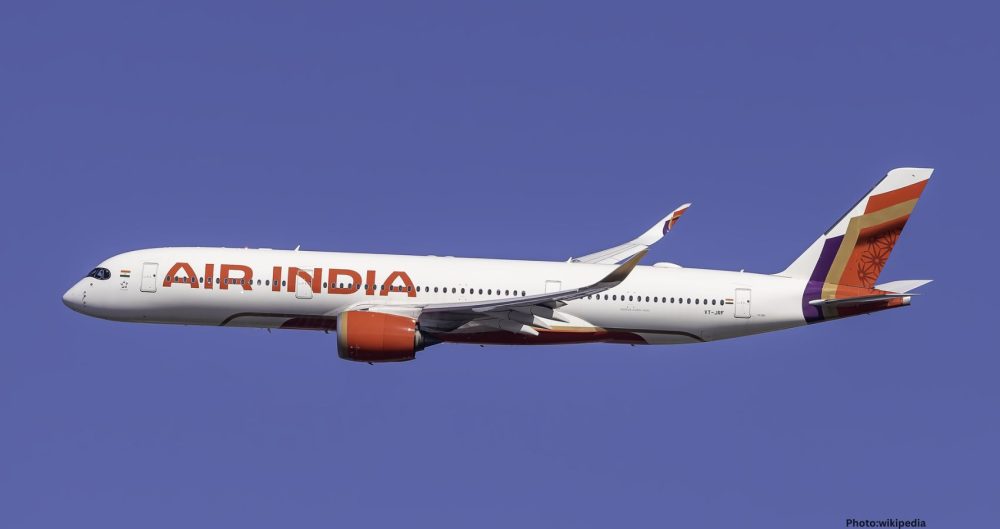










Indian carriers operating long-haul international routes are facing major disruptions after Iran abruptly closed its airspace, forcing airlines to cancel flights to the United States and reroute several Europe-bound services. The sudden development has added fresh strain to global aviation networks already grappling with geopolitical instability across West Asia.
Air India Cancels Key US Routes
Air India on Thursday cancelled at least three nonstop flights to the United States, including two services from Delhi to New York and Newark, and one flight from Mumbai to New York, according to sources familiar with the situation. The cancellations come as the airline reassesses flight safety and operational feasibility following the airspace closure.
In a statement posted on social media, Air India acknowledged the disruption and cited passenger safety as the overriding concern.
“Due to the emerging situation in Iran and the subsequent closure of its airspace, flights overflying the region are now using alternative routing, which may lead to delays. Some Air India flights where rerouting is not currently possible are being cancelled,” the airline said.
The carrier expressed regret over the inconvenience caused, describing the disruption as unforeseen and beyond its control.
Why Iran’s Airspace Matters
Iranian airspace is a critical corridor for Indian airlines operating westbound routes, particularly long-haul flights to North America and Europe. With Pakistan’s airspace already unavailable for Indian carriers, airlines had increasingly relied on Iran as a key transit zone.
The closure has now left airlines with limited alternatives. One option is routing flights through Iraq’s airspace, but this significantly lengthens flight time. For ultra-long-haul routes to the United States, the added distance creates a serious operational challenge.
Sources said the extended routing results in fuel limitations, making it impossible for certain aircraft to complete nonstop journeys safely. As a result, airlines have been forced to either cancel flights outright or explore technical stops, which further complicates schedules and crew logistics.
Europe Flights Face Delays
While some US services have been cancelled, flights to Europe are also being affected. Air India indicated that several Europe-bound flights are being rerouted and may experience longer travel times and delays as aircraft avoid restricted airspace.
With both Iranian and Pakistani airspace unavailable, westbound flights from India are now taking circuitous paths, increasing fuel burn, crew duty hours, and operational costs. Aviation analysts warn that prolonged restrictions could lead to schedule rationalisation, fare volatility, and further cancellations if the situation persists.
Other Indian Airlines Also Impacted
The disruption is not limited to Air India. Budget carrier IndiGo confirmed that some of its international flights have also been impacted by the sudden closure.
“Due to the sudden airspace closure by Iran, some of our international flights are impacted. Our teams are working diligently to assess the situation and support affected customers by offering the best possible alternatives,” IndiGo said in a statement.
Similarly, SpiceJet cautioned passengers that certain services may be affected, advising travellers to stay updated on flight schedules.
Geopolitical Tensions Add Uncertainty
The airspace shutdown comes amid escalating tensions between Iran and the United States, raising concerns that the situation could deteriorate further. Aviation experts note that airlines are particularly sensitive to developments in conflict zones, as airspace restrictions can be imposed with little notice.
“Airlines always err on the side of caution,” said an aviation industry analyst. “When geopolitical risk rises, especially involving military posturing or potential conflict, airlines reassess routes immediately to protect passengers and crew.”
Passenger Impact and What Comes Next
For passengers, the disruption has resulted in cancellations, delays, and rebooking challenges, particularly for those travelling to the US on time-sensitive itineraries. Airlines are offering alternate routings where possible, but limited options mean longer travel times and, in some cases, postponed journeys.
If Iranian airspace remains closed for an extended period, airlines may be forced to reduce frequencies, deploy aircraft with different range capabilities, or introduce stopovers on routes that were previously nonstop.
For now, Indian carriers say they are closely monitoring developments and coordinating with aviation authorities to minimise passenger inconvenience. However, with multiple airspace closures converging at once, the situation highlights how quickly global travel can be disrupted by geopolitical events far from departure and destination cities.
As tensions in the region continue to evolve, travellers are being advised to check flight status regularly, allow extra time for connections, and remain flexible with travel plans in the coming days.