





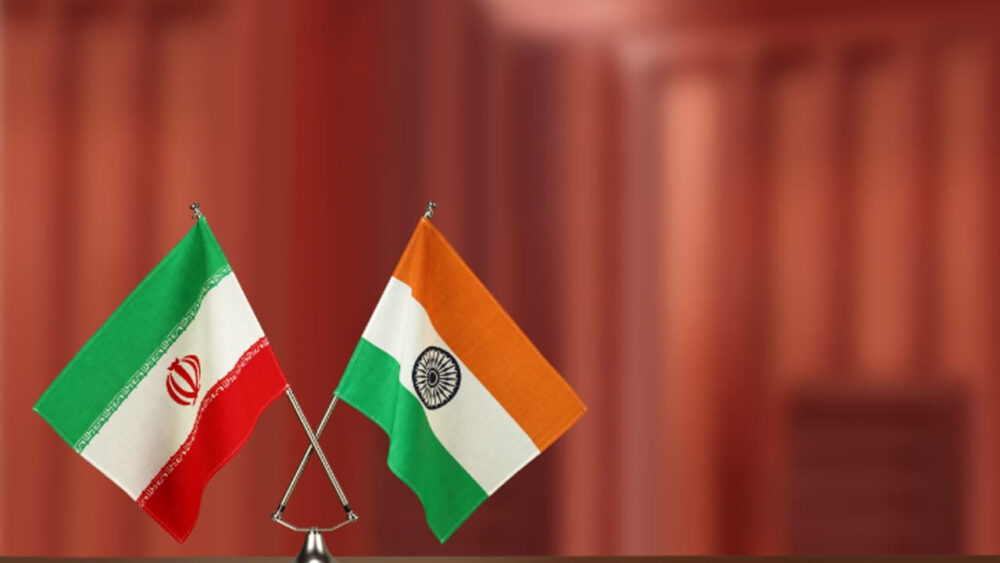
India has issued a fresh travel advisory urging its citizens to avoid non-essential travel to Iran, as widespread protests driven by economic hardship and political discontent continue to intensify across the country. The advisory, released on Monday by the Ministry of External Affairs (MEA), reflects growing concern over the deteriorating security situation and the expanding footprint of demonstrations nationwide.
“In view of recent developments, Indian nationals are advised to avoid non-essential travel to the Islamic Republic of Iran until further notice,” the MEA said in an official statement, signalling heightened caution as unrest spreads beyond Tehran into multiple provinces.
The advisory also outlined specific safety measures for Indian citizens already present in Iran. “Indian citizens and PIOs currently in Iran should exercise due caution, avoid areas of protests or demonstrations, and closely monitor news as well as the website and social media handles of the Embassy of India in Tehran,” the statement added.
As part of its precautionary steps, New Delhi urged Indian nationals residing in Iran to ensure they are formally registered with the Indian Embassy. “Indian nationals living in Iran on resident visas are advised to register with the Indian Embassy, if not already done so,” the MEA noted, underlining the importance of maintaining communication during periods of instability.
Protests Spread Amid Economic Strain
The advisory comes as Iran grapples with its most widespread wave of protests in recent years. Demonstrations that began in Tehran on December 28 over rising prices and economic stagnation have since spread to cities across the country, evolving into broader expressions of political frustration.
According to reports, protests have now occurred in 23 of Iran’s 31 provinces, affecting at least 45 cities, many of them small to medium-sized urban centres. Western regions of the country have seen particular concentrations of unrest, though authorities insist that the situation remains under control.
Iran’s economy has been under severe pressure due to long-standing international sanctions, with the national currency, the rial, losing more than a third of its value against the US dollar over the past year. Inflation remains firmly in double digits, eroding purchasing power and fuelling public anger among shopkeepers, workers, and middle-class households.
In an attempt to soften the blow, the Iranian government recently announced a monthly allowance for every citizen, equivalent to roughly 3.5 per cent of the average monthly wage. However, many protesters have dismissed the measure as insufficient, arguing that structural economic reforms are needed.
Supreme Leader Issues Stern Warning
Iran’s Supreme Leader Ayatollah Ali Khamenei addressed the unrest for the first time since protests erupted, striking a firm tone while acknowledging underlying economic challenges.
“We talk to protesters, the officials must talk to them,” Khamenei said. “But there is no benefit to talking to rioters. Rioters must be put in their place.”
His remarks underscored Tehran’s approach of combining limited engagement with demonstrators while drawing a hard line against what authorities describe as violent or destabilising actions. Officials have repeatedly warned that while economic grievances may be discussed, attempts to push protests into broader disorder will not be tolerated.
Casualties and Clashes
Despite efforts to contain the unrest, clashes have occurred in several locations. Since December 30, at least 12 people have been killed in localized incidents, including members of Iran’s security forces, according to official statements. While many protests have remained peaceful, sporadic violence has heightened fears of further escalation.
Iranian officials have insisted that security forces are acting to prevent chaos rather than suppress legitimate grievances. At the same time, prosecutors and senior officials have issued warnings that any attempts to exploit the protests for political destabilisation will be met with firm action.
International Reactions Raise Tensions
The situation in Iran has drawn sharp reactions from abroad, further complicating an already tense environment. Speaking to reporters aboard Air Force One, US President Donald Trump said Washington was closely monitoring developments.
“If they start killing people as they have in the past, I think they’re going to get hit very hard by the United States,” Trump warned, adding that the US was watching events in Iran “very closely.”
Israel also weighed in, with Prime Minister Benjamin Netanyahu expressing solidarity with Iranian protesters. Israel, he said, “stands in solidarity with the struggle of the Iranian people and with their aspirations for freedom,” signalling political support for demonstrators challenging Tehran’s authority.
Iran swiftly rejected such statements, accusing foreign powers of attempting to interfere in its internal affairs. Iranian Foreign Ministry spokesman Esmail Baqaei told journalists that “Israel is trying to exploit the slightest opportunity to sow division and undermine our national unity.”
Prosecutor General Mohammad Movahedi-Azad echoed those sentiments last week, warning that authorities would respond decisively to any “externally designed scenarios” aimed at leveraging the protests.
India Watches Developments Closely
For India, the advisory reflects a balancing act between safeguarding its citizens and maintaining stable diplomatic ties with Tehran, a key regional partner. With thousands of Indian nationals living and working in Iran — including students, professionals, and business owners — New Delhi has opted for caution as events continue to unfold.
The MEA said it remains in close contact with the Indian Embassy in Tehran and is monitoring the situation “round the clock.” Further advisories may follow depending on how the protests evolve in the coming days.
As Iran navigates a volatile mix of economic pressure, public anger, and international scrutiny, Indian officials are urging vigilance, restraint, and preparedness — a reminder that regional unrest can quickly spill over into global concern.