







“By 2030, there will be no such thing as IT services. There will be no such thing as BPO. Those are gone. It’s very clear to me that people in India don’t believe that the whole idea of IT services is over. They think they can adapt, but they don’t see the scale of the replacement coming.”
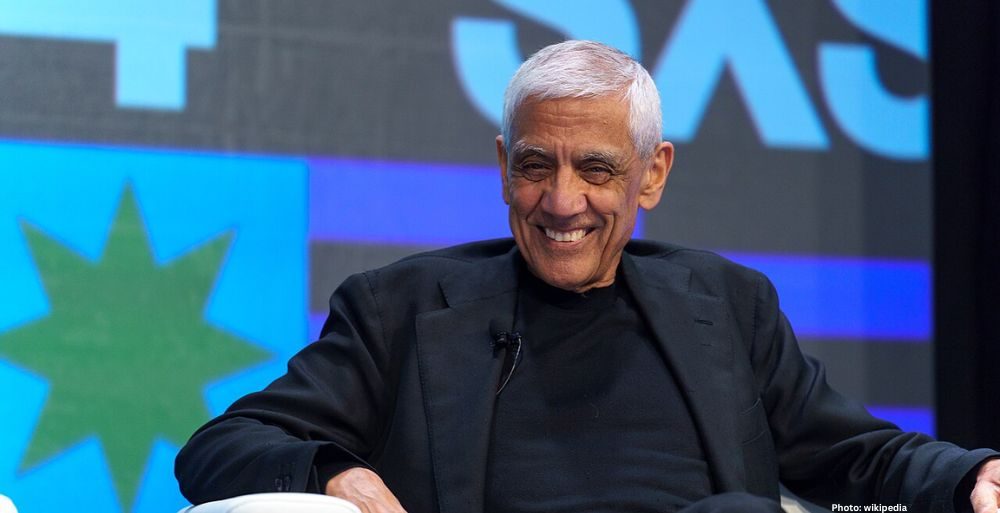
Venture capital titan and Sun Microsystems co-founder Vinod Khosla has issued a definitive warning to the global technology landscape, predicting the complete disappearance of the IT services and Business Process Outsourcing (BPO) industries by the year 2030. Speaking at the India AI Impact Summit 2026 in New Delhi, Khosla asserted that the rapid acceleration of artificial intelligence will dismantle the labor-arbitrage models that have defined the Indian economy for three decades. The veteran investor characterized the coming shift not as a gradual evolution, but as a “very, very disruptive” collapse of traditional service-based revenue streams that will occur within the next four years.
The core of Khosla’s thesis rests on the unprecedented capability of AI agents to replicate high-level human expertise at a marginal cost approaching zero. Unlike previous technological revolutions—such as the transition from desktop computing to mobile—Khosla argues that AI is not a tool for human enhancement but a replacement for cognitive labor. He estimates that 80% of all economically valuable tasks, ranging from basic data entry to complex software engineering, will be fully automated. This transition marks the end of an era where global corporations rely on large-scale human workforces in developing nations to manage back-end operations and software maintenance.
According to Khosla, the disbelief currently held by industry leaders in India regarding this obsolescence is a significant barrier to necessary adaptation. He posited that the incumbent IT giants are “stuck in a mindset” of the past, failing to recognize that the very definition of a “service” is being rewritten by algorithmic efficiency. The shift is expected to be ruthless, targeting sectors previously thought to be insulated by human judgment, including accounting, legal research, diagnostic medicine, and semiconductor design. Khosla noted that the shift is “almost certain,” leaving no room for the survival of the current BPO framework.
The economic implications for India are particularly profound, given that the IT-BPM sector contributes nearly 7.5% to the nation’s GDP. Khosla emphasized that the era of “selling man-hours” is over. However, he offered a strategic pivot for the nation, urging a transition from a service-oriented economy to a product-led AI powerhouse. He argued that India possesses the unique advantage of a massive data pool and a high density of engineering talent, which should be redirected toward building sovereign AI models and specialized applications rather than maintaining legacy code for Western corporations.
Khosla envisions a future where AI serves as a “force multiplier” for social equity, particularly in healthcare and education. He predicted that by the end of the decade, every citizen could have access to a “near-free AI doctor” available 24/7, alongside personalized AI tutors. This democratization of expertise would effectively solve the problem of scaling essential services to billions of people—a feat that human-centric systems have failed to achieve. The investor suggested that while the “job” of a doctor or teacher may change, the availability of their specialized knowledge will become a universal utility.
Beyond the immediate decade, Khosla’s forecast extends into a radical restructuring of the global macroeconomy. By 2035, he anticipates the emergence of a “huge deflationary economy.” As AI and robotics drive the marginal cost of production for both physical goods and intellectual services toward zero, the traditional relationship between labor and capital will be severed. This deflationary pressure will necessitate a complete overhaul of fiscal and social policies, as the primary challenge for governments will shift from managing scarcity to managing the social consequences of extreme abundance and structural unemployment.
The long-term vision presented by Khosla includes the eventual “vanishing” of the concept of a job by 2050. He argued that the 20th-century model of working for survival will become an anachronism. In this post-labor society, human activity will be driven by personal passion and creativity rather than economic necessity. However, Khosla warned that the transition period—the “bridge” between the current service economy and the automated future—will be fraught with political and social instability. He stressed that the 75th rank of a nation in global innovation will no longer suffice; only those at the absolute frontier of AI development will retain economic sovereignty.
The impact on the global educational system is also expected to be total. Khosla questioned the long-term viability of traditional university degrees if AI can perform specialized tasks better than the top 20% of human graduates. He suggested that the focus of human development must shift toward high-level reasoning, empathy, and interdisciplinary innovation—skills that AI agents may take longer to master. For the IT professionals currently employed in India’s massive tech parks, the message was clear: the window for retraining is closing rapidly as the AI-native era begins.
Khosla concluded his address by reiterating that the destruction of the IT services sector is not a “risk” to be managed, but a “certainty” to be prepared for. He urged Indian entrepreneurs to stop building “wrappers” around existing Western AI models and instead focus on deep-tech innovation that addresses the specific needs of the Global South. The survival of India’s technological relevance, according to Khosla, depends entirely on its ability to lead the very disruption that threatens its current economic foundations.