







A surge in hostility toward Indian professionals and Indian-origin business leaders in the United States has emerged following sweeping changes to the H-1B skilled-worker visa programme introduced by the Trump administration, raising concerns among civil rights groups, industry experts, and corporate leaders.
Several major U.S. corporations, including FedEx, Walmart, and Verizon, have become focal points of online harassment campaigns, with social media users accusing them of “selling jobs” to Indian workers—allegations that companies and analysts strongly dispute.
The backlash has intensified since the administration announced a fundamental restructuring of the H-1B system in September, a move framed by the White House as necessary to “protect American workers” but viewed by critics as fueling xenophobia and workplace discrimination.
A Costly and Restrictive New H-1B Framework
Under the revised policy, H-1B applicants now face a dramatically increased application fee of $100,000, alongside a wage-based selection mechanism that prioritises the highest-paid positions. From February, eligibility will narrow further, with U.S. authorities expected to overwhelmingly favour Level-IV wage applicants, effectively excluding many early-career professionals and mid-level specialists.
Administration officials argue that the changes are designed to ensure that foreign labour is used only where U.S. talent is unavailable. “This reform is about restoring fairness to the American workforce and discouraging misuse of the visa system,” a senior official said.
However, immigration experts warn that the overhaul risks undermining industries that rely heavily on specialised skills, particularly in technology, healthcare, research, and engineering—fields where Indian professionals form a significant portion of the workforce.
Organised Online Harassment and Racial Targeting
As the policy changes took effect, online attacks targeting Indian Americans and Indian-origin executives escalated rapidly. According to Raqib Naik, Executive Director of the Center for the Study of Organised Hate, many of the incidents appear to be coordinated.
“We are seeing organised campaigns that deliberately single out Indian American entrepreneurs and professionals,” Naik said. “They are being portrayed as job stealers and visa scammers, which is both inaccurate and dangerous.”
Naik noted that Indian American business owners who received loans from the government-backed Small Business Administration have been disproportionately targeted, with personal information circulated online to encourage harassment.
Data Signals a Sharp Rise in Threats
Independent data supports these concerns. An analysis conducted by advocacy group Stop AAPI Hate, in collaboration with counter-terrorism firm Moonshot, found that threats of violence against South Asian communities increased by 12 percent in November, while the use of racial slurs targeting South Asians surged by 69 percent during the same period.
Community leaders say the spike reflects a broader climate in which immigration policy debates are increasingly framed through ethnic and racial lenses.
FedEx CEO Becomes Flashpoint
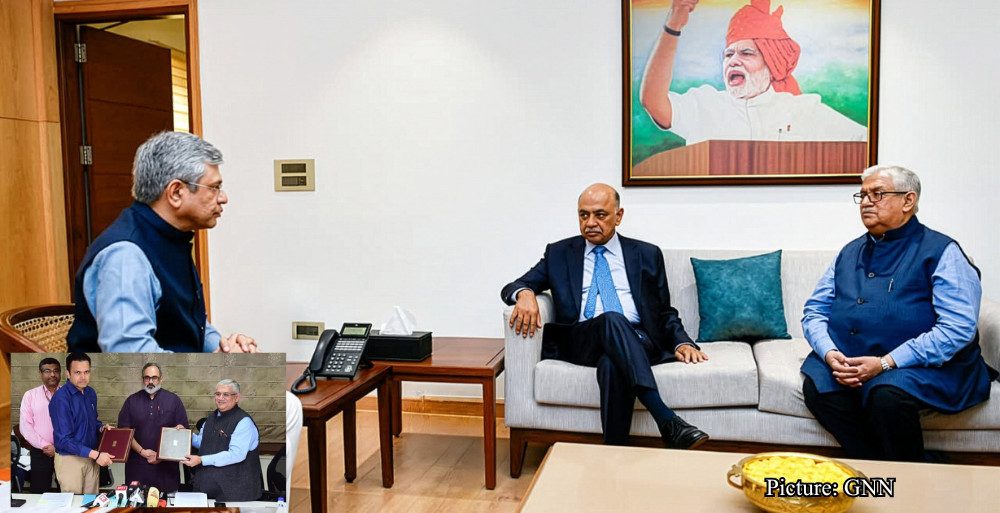
Tensions escalated further ahead of Christmas after a video showing a damaged FedEx delivery truck circulated widely on social media. The footage triggered a wave of abuse aimed at FedEx CEO Raj Subramaniam, who is of Indian origin.
One widely shared post declared: “Stop the f***** Indian takeover of our great American companies.”* Several far-right commentators alleged—without evidence—that Subramaniam was replacing White American workers with Indian employees.
FedEx categorically rejected those claims. In a statement, the company said:
“For more than 50 years, FedEx has fostered a merit-based culture that creates opportunity for everyone. We take great pride that this has resulted in a workforce reflecting the diversity of the more than 220 countries and territories we serve.”
Broader Corporate and Political Context
Observers note that the backlash against Indian professionals is unfolding alongside a broader rollback of diversity, equity, and inclusion (DEI) initiatives across corporate America. Over the past year, dozens of major companies have scaled back DEI programmes following criticism from conservative groups who argue such initiatives disadvantage White Americans.
“The convergence of restrictive immigration policies, anti-DEI rhetoric, and economic anxiety has created a volatile environment,” said a labour policy analyst. “Indian professionals, because of their visibility in high-skill sectors, are becoming convenient targets.”
A Workforce Caught in the Crossfire
Despite the hostility, economists emphasise that Indian professionals continue to play a critical role in the U.S. economy. American firms have increasingly relied on skilled workers from India to fill shortages in software development, medicine, scientific research, and advanced manufacturing.
“Immigration is not a zero-sum game,” said an industry executive. “When companies hire globally, they grow, innovate, and create more jobs locally. Turning skilled workers into scapegoats only weakens the system.”
As the H-1B restrictions tighten in the coming months, advocacy groups warn that unless political rhetoric is tempered, hostility toward Indian Americans and other immigrant communities could deepen further—posing risks not only to individuals, but also to corporate stability and social cohesion.