







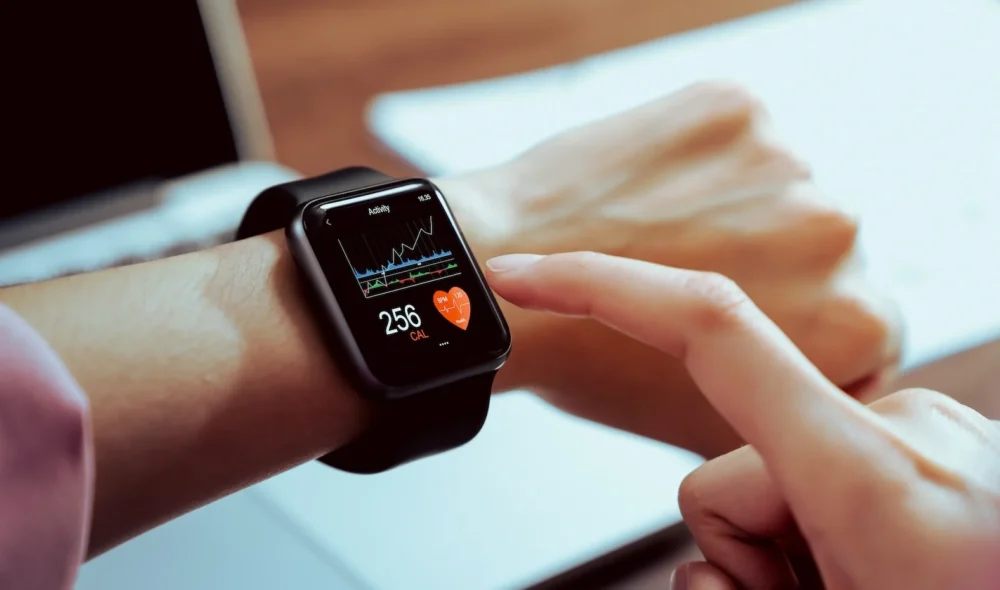
Smartwatches are no longer lifestyle accessories; they’ve become one of the most influential health technologies of this decade. On millions of wrists, these compact devices are continuously tracking heart rhythms, sleep patterns, blood oxygen levels, stress signatures, and micro-changes in physiology that once required specialised equipment. And this shift is not just technological, it’s cultural.
The global appetite for health insights is driving a surge in the wearable-health market, which crossed $39 billion in 2025 and is projected to exceed $90 billion by 2032, with the broader wearable ecosystem expected to touch $240 billion by 2035. Behind these numbers is a powerful behavioural shift: people are choosing awareness over assumption, data over guesswork, and preventive care over delayed diagnosis.
One of the most striking breakthroughs is the ability of smartwatches to detect Atrial Fibrillation (AFib), a silent rhythm disorder responsible for nearly a quarter of all strokes. Recent analyses show AFib detection accuracy at ~95% sensitivity and ~97% specificity, bringing near-clinical precision directly into homes. With AFib-related strokes causing over 150,000 deaths each year, early alerts from smartwatches could help prevent nearly 30,000 strokes annually, potentially saving 10,000+ lives through timely action alone.
Beyond heart rhythm monitoring, today’s wearables can map stress fluctuations, identify sleep disruption, capture oxygen dips, track overexertion, estimate blood pressure, and even detect falls, evolving into a constantly learning health ecosystem. As upcoming generations introduce continuous glucose insights, hydration tracking, and more advanced bio-signals, the opportunity for innovators is extraordinary.
This is why global conversations are turning toward integrated, technology-supported preventive care and why the upcoming Global Integrative Medicine Conference (GIMC) is poised to become a pivotal meeting ground. As innovators, device engineers, clinicians, public-health leaders, and lifestyle-medicine experts converge, the focus is expanding from what devices can measure to what this data can do for humanity. The future lies not only in smarter gadgets, but in smarter systems that unite digital health, scientific research, and human-centered healing.
Smartwatches may be small, but they signal a monumental shift. Health is becoming personal, predictive, and participatory. And the next chapter of this transformation will be written where technology and integrative medicine meet – a conversation GIMC 2026 aims to lead.
GIMC 2026 – American Academy for Yoga in Medicine – https://aaymonline.org/conference2026/
“Wearables are giving medicine what it has always needed; continuous, personalised data. This isn’t just tech progress; it’s a global health revolution. Millions can spot warning signs before symptoms appear, saving lives and transforming healthcare. But with new players and bold claims flooding the market, we must evaluate each promise carefully to protect consumers and their investments. The next leap will come from collaboration across disciplines, and that is exactly the dialogue GIMC is fostering worldwide.”