









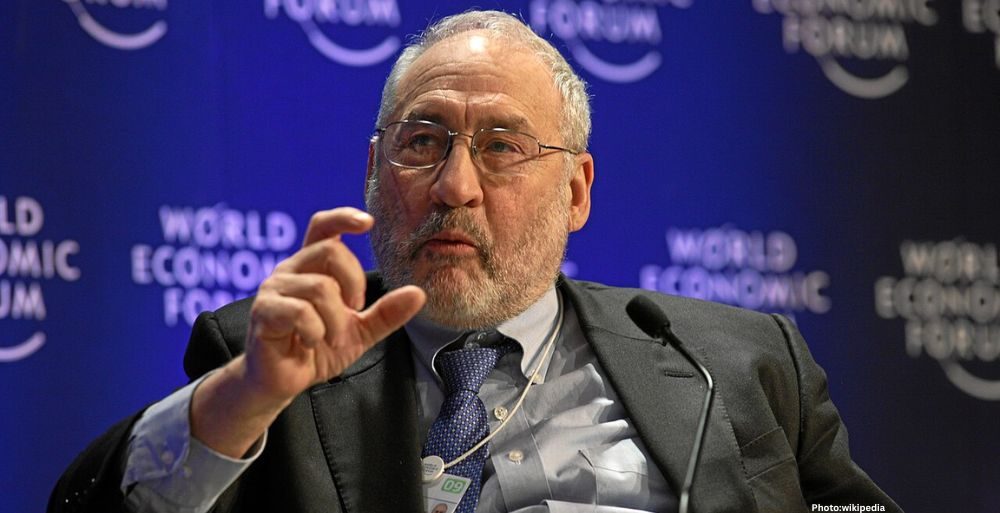
Nobel laureate Joseph Stiglitz argues that without aggressive government intervention, artificial intelligence will accelerate the hollowing out of the middle class and concentrate unprecedented wealth within the “tech bro” elite. The economist warns that the very architects of these tools are simultaneously lobbying to dismantle the public institutions required to manage the resulting labor displacement.
The promise of artificial intelligence has long been framed by its creators as a tide that will lift all boats, ushering in an era of hyper-productivity and a frictionless global economy. But to Joseph Stiglitz, the 83-year-old Nobel laureate and Columbia University professor, this narrative is less of a prophecy and more of a smokescreen. For a man who has spent the better part of five decades dissecting the failures of modern capitalism, the AI revolution is not a novel phenomenon; it is the most dangerous acceleration yet of a trend he has documented for years: the systematic extraction of value from the many to the few.
In a series of recent discussions, including insights from his reissued 2024 book, The Road to Freedom: Economics and the Good Society, Stiglitz paints a sobering picture of a world where algorithmic efficiency becomes a primary weapon against labor. The core of his concern lies in the fundamental design of AI-driven business models. Unlike previous industrial shifts that augmented human capacity, the current trajectory of AI allows firms to strip labor out of production entirely. This shift does not just change how work is done; it fundamentally alters who captures the rewards of that work.
If we don’t do anything about managing AI, there is a threat that it will lead to more inequality, Stiglitz warned in a recent interview. Since inequality is already a “bad, serious problem” in modern society, he views the current tech trajectory as a textbook case of market failure in the making. According to Stiglitz, the technology is being deployed to concentrate profits at the top while pushing the massive risks of economic transition—unemployment, wage stagnation, and social instability—onto the workers and the public.
Getty ImagesThe political dimension of this shift is what Stiglitz finds most combustible. He identifies a specific irony in the Silicon Valley ecosystem: the “tech bro” class, as he calls them, are the primary beneficiaries of AI, yet they are also the most vocal advocates for smaller government and deregulation. This creates a self-fulfilling trap. For an AI transition to be successful and socially stable, the state needs robust resources to retrain workers, provide a social safety net, and invest in new sectors of the economy. However, the very oligarchs reaping the rewards of AI are actively working to undermine the fiscal capacity of the government to provide that support.
This “downscaling” of government, Stiglitz argues, will impair the ability of the state to facilitate the necessary transition for millions of displaced employees. The government needs to provide support for helping people move from where they are no longer needed to where they might be more productive. By lobbying against the taxes and regulations that would fund these transitions, tech leaders are effectively pulling up the ladder behind them, ensuring that the productivity gains of AI remain locked within corporate balance sheets rather than circulating through the broader economy.
The logic of the corporate world supports Stiglitz’s fears. In a market where labor is viewed strictly as a cost center, the ultimate goal of automation is the total elimination of the human factor. Some technology strategists have even suggested that the “ideal number of human employees inside of any company is zero.” For a CEO, a worker-less company is a peak-efficiency machine; for a society, it is a recipe for economic collapse. When AI hallows out the labor market, it destroys the very consumer base that is supposed to purchase the products the AI creates.
Stiglitz’s career has been a long-form study of how unfettered capitalism can fail the people it was intended to serve. From the Asian financial crisis of the late 1990s to the subprime mortgage meltdown of 2008, he has consistently argued that markets are not self-correcting and that information asymmetry allows those at the top to exploit those at the bottom. In his view, AI is the ultimate tool for information asymmetry. Algorithms can now predict consumer behavior, set predatory prices, and replace human judgment in ways that further tilt the playing field toward those who own the code.
The danger, as Stiglitz sees it, is that the window for meaningful intervention is closing. The pace of AI development is far outstripping the pace of legislative response. While Washington and Brussels debate the ethics of “deepfakes” and data privacy, the underlying economic architecture of the world is being rewritten. Stiglitz argues that without a “public option” for AI development or a tax code that penalizes capital-heavy, labor-light business models, the wealth gap will become an unbridgeable chasm.
The Nobel laureate is not calling for a halt to innovation, but rather a redirection of it. He advocates for “labor-augmenting” rather than “labor-replacing” technology. However, he remains deeply skeptical that the private sector will move in this direction voluntarily. Right now, he observes, no one with real power is listening to the warnings of the academic or the advocate. Instead, the momentum remains with a tech elite that views the government not as a partner in a social transition, but as an obstacle to limitless scale.
As the next chapter of the digital age unfolds, Stiglitz’s pessimistic outlook serves as a clarion call. If the “tech oligarchs” continue their push to hollow out the state, the resulting AI revolution may well be remembered not for its intelligence, but for its role in dismantling the social contract that held the middle class together for the last century.