








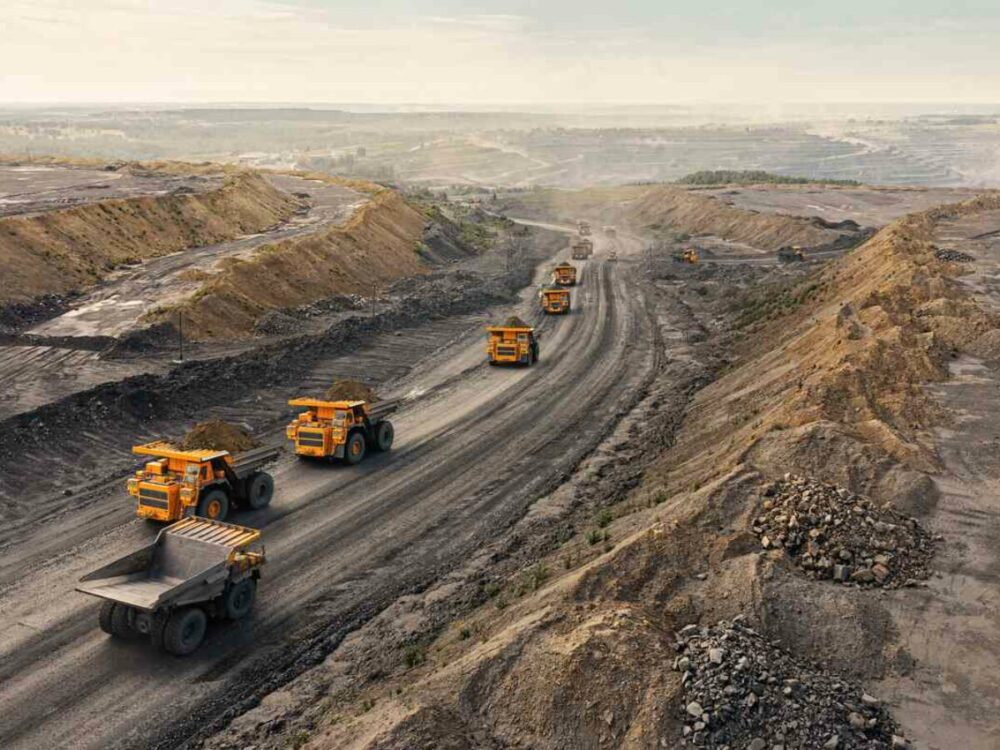
Saudi Arabia is positioning itself as a potential heavyweight in the global race for critical and rare earth minerals, claiming it holds $2.5 trillion worth of untapped mineral reserves — a move that could alter geopolitical power balances long dominated by China.
The renewed global focus on minerals comes as Donald Trump recently announced a potential agreement tied to Greenland that could grant access to rare earth resources. These minerals are essential for technologies powering clean energy, artificial intelligence, electric vehicles, and advanced military systems — making them strategically vital in the modern economy.
At present, China remains the undisputed leader in rare earth production and refining, controlling more than 90% of the world’s refined rare earth output and over 60% of rare earth mining, according to the International Energy Agency. Analysts say China’s dominance stems from decades of coordinated state investment, private sector alignment, and global expansion.
“China is light years ahead of the United States,” said Abigail Hunter, executive director of the Minerals Center at SAFE (Securing America’s Future Energy), speaking at the Future Minerals Forum in Riyadh. “That leadership comes from long-term strategic planning, state-backed projects, and international investment.”
Saudi Arabia’s Strategic Push Beyond Oil
Saudi Arabia is accelerating efforts to diversify its economy away from oil — and mining is emerging as a central pillar of that transition. Under its Vision 2030 economic reform agenda, the kingdom aims to transform mining into a cornerstone industry supporting domestic manufacturing, clean energy expansion, and electric vehicle production.
Saudi officials say the nation’s mineral portfolio includes gold, copper, zinc, lithium, and rare earth elements such as dysprosium, terbium, neodymium, and praseodymium — materials critical for wind turbines, electric motors, batteries, and advanced computing systems.
The kingdom has dramatically increased spending on mineral exploration, with budgets rising 595% between 2021 and 2025, according to S&P Global. Licensing activity for new mining projects has also accelerated, attracting both domestic and international firms.
However, industry experts caution that exploration does not equate to immediate production.
“Mining is a really long game,” Hunter noted. “It can take three to five years to build a processing plant — and up to 29 years in some jurisdictions.”
To speed progress, Saudi Arabia is cutting regulatory hurdles, lowering mining taxes, and committing large-scale public investment to compete with established mining leaders such as Canada and Australia.
Maaden’s $110 Billion Bet on the Future
Saudi Arabia’s state-owned mining giant Maaden recently announced a $110 billion investment plan over the next decade to expand metals and mining operations, pursue international partnerships, and attract global industry talent.
“We’re humble enough to realize we can’t do it alone,” said Bob Wilt, CEO of Maaden, signaling the kingdom’s openness to foreign collaboration.
Although Saudi Arabia’s mineral wealth still pales in comparison to its oil reserves — the second largest proven globally — analysts say the country’s motivations go far beyond revenue.
Experts argue the kingdom is seeking geopolitical influence, supply chain leverage, and strategic relevance in a world shifting toward electrification and decarbonization.
Becoming a Global Processing Hub
Beyond extraction, Saudi Arabia hopes to become a regional processing and refining hub, leveraging its abundant energy supply and industrial expertise from Saudi Aramco.
“Reliable energy is Saudi Arabia’s biggest advantage,” said Melissa Sanderson, co-chair of the Critical Minerals Institute. She suggested Aramco’s engineering capabilities could help develop lower-cost and more environmentally efficient refining methods, potentially challenging China’s dominance.
The kingdom has also attracted growing interest from the United States. Following China’s tightened export controls on heavy rare earths — many with military applications — Washington is seeking alternative supply chains.
In a major move, U.S.-based MP Materials, backed by the Pentagon, announced a partnership with Maaden and the U.S. Department of Defense to build a rare earth refinery in Saudi Arabia. The facility will be jointly owned by MP Materials and the Defense Department.
Challenges: Environment, Diplomacy, and Stability
Despite ambitious plans, Saudi Arabia faces obstacles. Environmental groups remain skeptical, noting the kingdom opposed parts of a recent United Nations Environment Assembly draft treaty aimed at improving mining transparency and reducing environmental harm.
There are also concerns over regional instability, diplomatic complexities with African mineral-producing nations, and long-term operational risks.
Still, Sanderson believes Saudi Arabia’s broader objective is clear: long-term geopolitical influence rather than quick financial return.
“This is not a strategy about immediate payoff,” she said. “This is about long-term power, long-term influence, and becoming a pivot point in the global mineral economy.”