








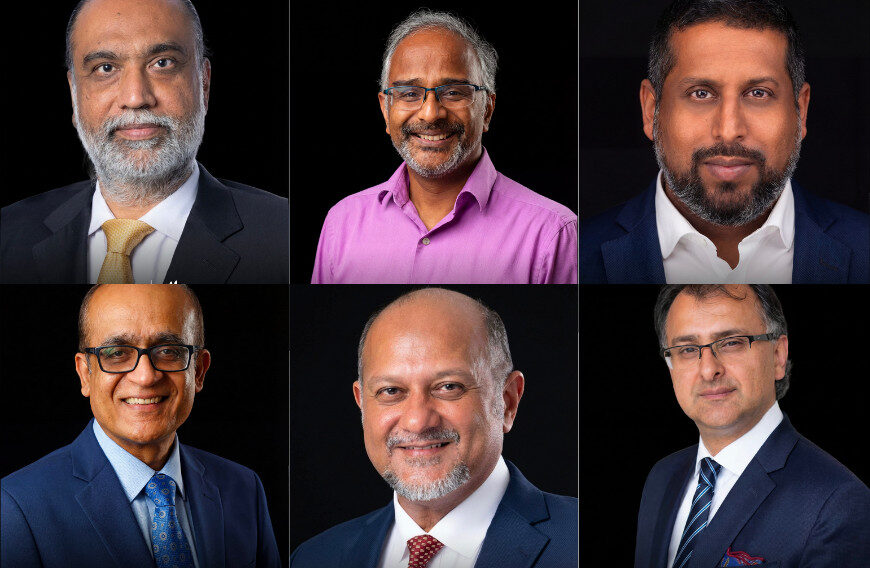
The growing influence of the Indian diaspora in shaping global technology governance was underscored this week as six leaders of Indian origin were named to the Tech Diplomacy Global 50 (TDG50) 2026, a prestigious list recognising the world’s most influential figures advancing responsible technology policy, digital governance, and international cooperation.
Compiled by the Tech Diplomacy Global Institute in collaboration with UNESCO, the annual list highlights policymakers, academics, diplomats, and institutional leaders who are shaping how emerging technologies—ranging from artificial intelligence and cybersecurity to digital trade and data governance—are regulated and deployed across borders.
The strong presence of Indian-origin leaders on the 2026 list reflects the diaspora’s expanding role in steering global conversations on ethical, inclusive, and coordinated approaches to technology governance at a time when digital systems increasingly shape geopolitics, economies, and societies.
Amandeep Gill: At the Centre of UN Digital Governance
Among the most prominent names on the list is Amandeep Gill, a retired Indian diplomat who currently serves as the United Nations Under-Secretary-General and Special Envoy for Digital and Emerging Technologies. In this role, Gill is tasked with coordinating global efforts on AI governance, digital cooperation, and the responsible use of emerging technologies within the UN system.
Gill’s academic background spans technology, diplomacy, and international policy. He holds a PhD in Nuclear Learning in Multilateral Forums from King’s College London, a Bachelor of Technology in Electronics and Electrical Communications from Panjab University, and an Advanced Diploma in French History and Language from the University of Geneva.
Speaking previously on the need for global cooperation in technology governance, Gill has emphasised that “digital technologies must be guided by shared values and multilateral frameworks if they are to benefit humanity as a whole.” His inclusion signals the central role the UN now plays in coordinating global digital norms.
Ajay Agrawal: Bridging AI, Economics, and Entrepreneurship
Also featured is Ajay Agrawal, an economist and professor at the Rotman School of Management, University of Toronto. Agrawal is widely recognised for his work on the economic impact of artificial intelligence and innovation-driven growth.
He is the founder of the Creative Destruction Lab (CDL) and a co-founder of NEXT Canada, two not-for-profit initiatives that support the commercialisation of scientific research through entrepreneurship. These institutions have helped scale technology startups across sectors including AI, health technology, and advanced manufacturing.
Agrawal’s inclusion highlights the importance of academic leadership in shaping policy-relevant insights on how emerging technologies transform labour markets, productivity, and global competitiveness.
Gobind Singh Deo: Digital Leadership in Asia-Pacific
The list also includes Gobind Singh Deo, Malaysia’s Minister of Digital, marking a notable recognition of Indian-origin leadership within government policymaking in the Asia-Pacific region. A lawyer by training and an alumnus of the University of Warwick, Deo has been instrumental in shaping Malaysia’s digital economy policies.
His presence on the TDG50 reflects the increasing role of national digital ministries in navigating issues such as data sovereignty, cybersecurity resilience, and cross-border digital trade.
Deodat Maharaj: Technology for Development
Another Indian-origin leader recognised is Deodat Maharaj, the Managing Director of the United Nations Technology Bank for Least Developed Countries. Maharaj assumed the role in 2024 and has since focused on strengthening science, technology, and innovation ecosystems in the world’s poorest nations.
With over 25 years of international experience, Maharaj has previously held senior positions at the Commonwealth Secretariat, UNDP, and Caribbean Export. His work centres on ensuring that technological advancement does not deepen global inequalities but instead supports inclusive development.
Vilas Dhar and Suresh Venkatasubramanian: Ethics and Responsibility at the Forefront
The fifth Indian-origin leader on the list is Vilas Dhar, President of the Patrick J. McGovern Foundation, a global philanthropy organisation with assets exceeding $1.5 billion. Dhar, a graduate of the Harvard Kennedy School and New York University School of Law, has championed responsible AI and data-driven solutions for social good.
Completing the list is Suresh Venkatasubramanian, Professor of Computer Science and Data Science at Brown University and Director of the Center for Technological Responsibility, Reimagination, and Redesign (CNTR). Venkatasubramanian previously served in the Biden–Harris administration and was a key contributor to the Blueprint for an AI Bill of Rights.
His work has consistently emphasised fairness, accountability, and transparency in algorithmic systems, positioning him as a leading voice in ethical AI governance.
A Growing Global Footprint
The strong showing of Indian-origin leaders in the Tech Diplomacy Global 50 underscores the diaspora’s expanding influence in shaping the global rules and norms that will govern emerging technologies. As digital systems increasingly intersect with diplomacy, security, and development, the presence of Indian-origin experts at the highest levels of decision-making reflects both individual excellence and a broader shift in global leadership dynamics.