







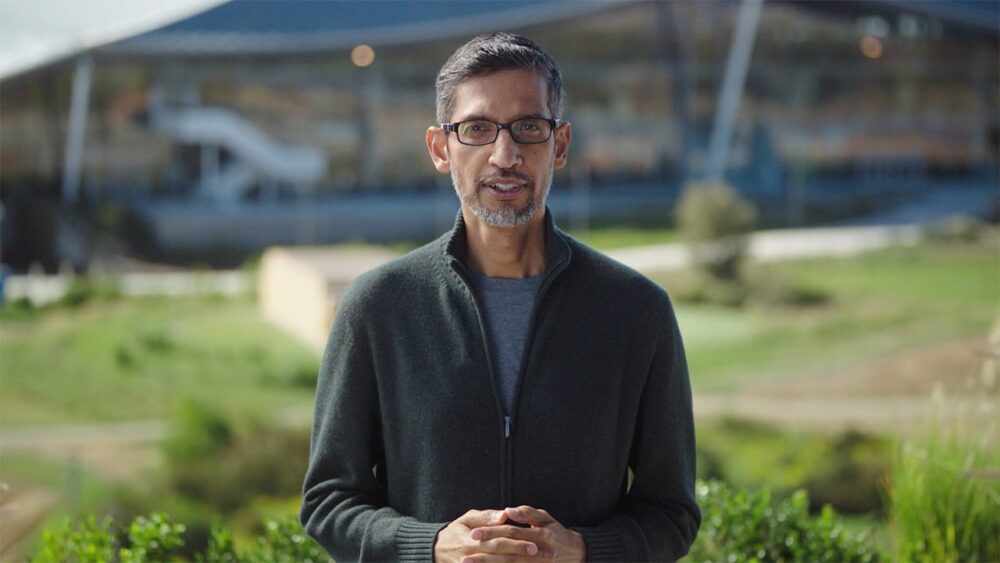
Google CEO Sundar Pichai has unveiled a bold vision for the future of artificial intelligence infrastructure: data centers operating in space. In a recent interview with Fox News, Pichai revealed that Google believes extraterrestrial data centers could become a mainstream reality within the next decade.
The initiative, known as Project Suncatcher, was announced earlier this month and focuses on using space-based solar power to fuel AI infrastructure more efficiently. Pichai explained that the Sun generates vastly more energy than humanity currently consumes, making space an ideal environment for large-scale renewable power generation.
“Our goal is to explore how future data centers could operate beyond Earth and directly harness the Sun’s immense energy output,” he said. “Within ten years, this may become a standard way to build computing infrastructure.”
Pilot Space Data Centers Coming by 2027
Google plans to take the first major step in early 2027 by launching two pilot satellites into Earth’s orbit. These test platforms will evaluate whether AI hardware can function reliably in the harsh conditions of space.
Google will partner with Planet, a satellite imaging firm, to design and deploy the orbiting test units. The goal is to determine whether data processing, storage, cooling, and solar-power collection can be carried out efficiently beyond Earth.
If successful, these trial systems could pave the way for full-scale orbital AI data centers.
A Growing Space-Based Data Center Race
Google is not alone in pushing data storage and AI computation into space. Recently, a startup backed by Nvidia and Y Combinator launched its own AI-powered satellite to test space-based computing.
The company’s leadership has claimed that extraterrestrial data centers could generate up to 10 times lower carbon emissions than Earth-based facilities, even after accounting for rocket launches.
While the cost of AI satellites has dropped significantly in recent years, the overall expense of building full-scale space data centers remains uncertain. By comparison, Earth-based data center infrastructure is expected to require over $5 trillion in investment by 2030, according to global consulting estimates.
Why Google Is Looking to Space for Power
The push toward orbital computing is driven by a massive energy challenge. AI systems require enormous electricity to train and operate. A U.S. government energy report recently revealed that data center electricity demand has tripled over the last decade, and could double or even triple again by 2028.
In 2023 alone, U.S. data centers consumed over 4% of the nation’s total electricity, a figure projected to rise to 12% by 2028.
Google’s own energy use has surged as well. The company reported using 30.8 million megawatt-hours of electricity last year, more than double what it consumed in 2020. Although Google managed to cut its data-center emissions by 12% in 2024, despite continued expansion, sustainability remains a growing concern.
Environmental and Investment Risks Remain
While the promise of clean, space-based solar power is appealing, experts warn that the rapid expansion of AI infrastructure could pose both financial and environmental risks.
Industry analysts caution that:
- Overbuilding data centers could leave expensive assets stranded, and
- Underbuilding could cause companies to fall behind in the AI race
Environmental experts have also voiced concern about the long-term impact of AI infrastructure at planetary scale. The United Nations has repeatedly called for stronger safeguards to ensure AI development does not overwhelm global sustainability efforts.
The Future of AI Infrastructure
With Google investing tens of billions of dollars into new data centers across the U.S.—including major developments in Texas—the company is clearly betting heavily on the long-term expansion of AI.
Space-based data centers represent the next frontier in that strategy. If Project Suncatcher succeeds, it could redefine how the world powers artificial intelligence, placing the future of computing not on Earth, but in orbit.