








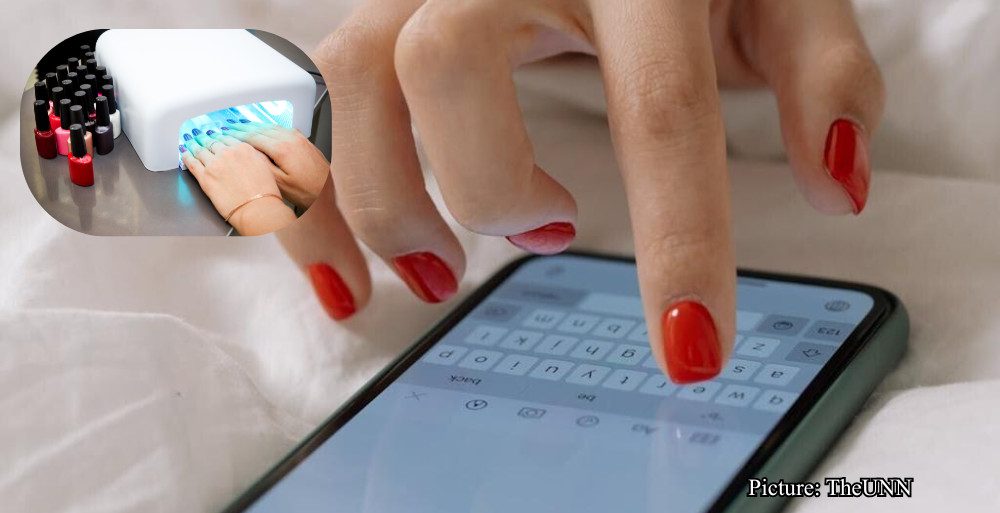
A college student has developed a prototype nail polish that enables long fingernails to function as touch-screen styli, addressing usability challenges for individuals with specific hand conditions.
In a groundbreaking development, Manasi Desai, a chemistry student at Centenary College of Louisiana, has created a prototype nail polish aimed at enabling long fingernails to function as touch-screen styli. This innovation seeks to assist users who encounter difficulties operating smartphones, particularly those with long nails or calloused fingertips. Desai, alongside her research supervisor, Joshua Lawrence, an associate professor of chemistry at Centenary, presented their findings on March 23 at the annual meeting of the American Chemical Society.
Identifying the Need for Touch-Screen Polish
As touch-screen technology has proliferated in recent years, its usability has become a concern for various groups of people. For instance, individuals such as guitar players and carpenters often develop callouses that inhibit the electrical conductivity necessary for touch screens to register their input. This phenomenon, previously termed “zombie finger” by Consumer Reports in 2015, highlights a common frustration for users with specific hand conditions. Additionally, users wearing gloves or those with very dry skin may struggle to operate touch screens effectively, further emphasizing the need for accessible solutions.
The idea for a touch-screen-compatible nail polish emerged when Desai and Lawrence consulted with a phlebotomist who found it challenging to use her smartphone due to her long nails. Her enthusiastic response to the idea of a specialized polish prompted further research and development, underscoring the real-world applicability of the concept.
Understanding the Science Behind the Innovation
Modern touch screens operate on the principle of capacitance, wherein they create a small electric field that registers disruptions when a conductive material, such as a human fingertip, contacts the surface. In contrast, non-conductive materials, including typical fingernails, do not trigger this response. Previous attempts at creating a capacitive nail polish have included the incorporation of carbon nanotubes or metallic particles, which pose inhalation risks and limit color options.
Desai undertook a systematic investigation, meticulously testing combinations of 13 commercially available clear-coat nail polishes alongside over 50 additives. Her primary goal was to formulate a clear, nontoxic polish that could effectively conduct touch input. The researchers discovered that the most effective formulations included taurine, an amino acid, and ethanolamine, an organic molecule known as an amino alcohol. When combined, these ingredients produced a top coat that successfully registered touch on smartphones.
According to Lawrence, the innovative polish operates through acid-base chemistry rather than relying on metal additives. He explained that the interaction occurs via proton transfer between acidic and basic components. “We think we have proton exchange between acidic and basic groups at the surface of the polish, fulfilling the same role as ion mobility in skin,” Lawrence stated in correspondence with Live Science.
Challenges Ahead for Market Readiness
Despite the promising results, Desai and Lawrence acknowledge that the product is not yet ready for commercialization. Current formulations lose effectiveness too rapidly, often ceasing to function within hours or days. “We want them to work for days or weeks, minimum,” Lawrence noted, emphasizing the need for further refinement of the formula to enhance longevity while maintaining safety and nontoxicity.
The researchers have already submitted a provisional patent for their invention, marking a significant step in protecting their intellectual property. “Right now, we have a good proof of concept material, but need to do a lot more work!” Lawrence remarked, underscoring their commitment to perfecting the product. This provisional patent serves as a crucial component in ensuring that they can secure funding and support for further research and development.
Implications for Accessibility and Future Research
The implications of this innovation extend beyond mere convenience; it could significantly enhance accessibility in technology. As smartphones and tablets continue to dominate personal and professional communication, ensuring that all users can operate these devices effectively is critical. The development of touch-screen-compatible nail polish not only addresses a specific usability issue but also showcases how chemistry can contribute to solving everyday problems.
Looking ahead, Desai and Lawrence aim to refine their formula further, exploring additional combinations of ingredients that could enhance the product’s performance while ensuring safety for consumers. The potential for this nail polish to become a practical solution for individuals with long nails or other hand-related challenges remains a compelling prospect. Moreover, their work illustrates a broader trend within scientific research that seeks to directly address the needs and challenges faced by everyday users.
In the coming months, Desai and Lawrence plan to conduct further experiments to enhance the efficacy and aesthetic appeal of their product. The goal is to create a nail polish that not only functions well but also meets the consumer demand for safety and style. As they continue their research, this innovative approach to addressing touch-screen usability may pave the way for future advancements in both cosmetic chemistry and assistive technology.