







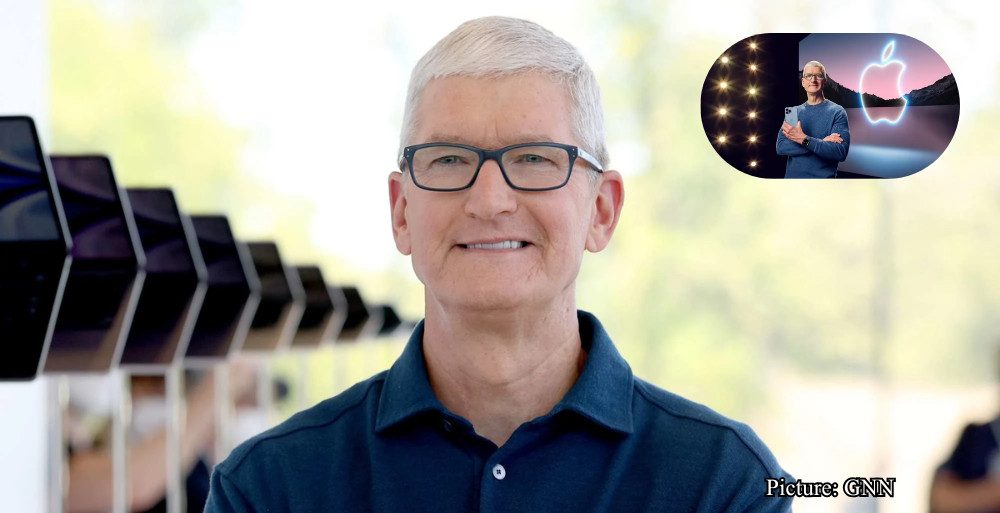
In a wide-ranging interview marking Apple’s 50th anniversary, CEO Tim Cook urged smartphone users to prioritize real-world connections and outdoor experiences over “endless scrolling.” Speaking from a public school in Harlem, the 65-year-old executive addressed the paradox of leading a trillion-dollar tech giant while cautioning against the overconsumption of its primary product. Cook also utilized the platform to firmly dismiss rumors of his impending retirement, discuss the neutralizing ethics of artificial intelligence, and highlight the company’s expanded philanthropic efforts in music education amid a shifting economic landscape marked by new federal tariffs.
NEW YORK — Standing in the halls of the Wadleigh Secondary School for the Performing and Visual Arts on Tuesday, Apple CEO Tim Cook offered an unexpected directive to the billions of people who use his company’s devices: put them down.
The interview, conducted by Good Morning America’s Michael Strahan, coincided with the 50th anniversary of Apple’s founding on April 1, 1976. While the milestone served as a backdrop for celebrating five decades of innovation—from the Apple II to the recently released iPhone 17 series—Cook focused much of the conversation on the social and psychological responsibility of technology.
“I don’t want people using them too much,” Cook said, referring to the iPhone, which currently commands a 58% market share in the United States. “I don’t want people looking at the smartphone more than they’re looking in someone’s eyes; as if they’re scrolling endlessly. This is not how you want to spend your day. Go out and spend it in nature.”
The Ethics of Engagement and Screen Time
Cook’s comments come at a time of heightened scrutiny regarding digital well-being. According to market data from early 2026, the average iPhone user now engages in 92 daily device interactions, with daily screen time averaging 5.8 hours. This represents a significant portion of the waking day, a trend Cook described as contrary to the intended purpose of the technology.
The CEO’s stance aligns with a growing body of clinical research. A study recently published in Frontiers in Psychiatry noted that while smartphones remain “an integral part of life,” excessive use is linked to physical discomfort, loneliness, and depression. By advocating for “looking into someone’s eyes,” Cook signaled a shift in corporate rhetoric, moving away from maximizing “time on device” toward a model of “intentional use.”
Apple has previously introduced features like “Screen Time” and “Focus” modes to help users manage their digital habits. However, Cook’s personal plea for users to “spend it in nature” suggests that software-based limiters may not be a sufficient solution for the current cultural addiction to short-form content and social media, which accounts for approximately 34% of total iPhone usage.
Economic Headwinds and the Tariff Debate
Beyond social habits, the interview delved into the complex political and economic environment of 2026. The tech industry is currently grappling with a series of federal tariffs on hardware imports that have placed significant pressure on Silicon Valley’s bottom line.
Analysts at Morgan Stanley recently estimated that these tariffs could impose over $33 billion in annual costs on Apple alone. While Apple has successfully shifted approximately 15% of its iPhone production to India and moved its U.S.-bound MacBook assembly to Vietnam, the company remains vulnerable to trade volatility.
Cook, who has maintained a reputation for pragmatic diplomacy with Washington, remained “straight down the middle” when asked about the political climate. He noted that the company is exploring all avenues to mitigate costs, though industry experts suggest that price increases for consumers are “inevitable.” Some analysts predict that without a resolution to the current trade wars, the cost of flagship devices could rise by as much as 10% to 15% by the next fiscal cycle.
Philanthropy Through ‘Save The Music’
The setting of the interview—a Harlem secondary school—was a deliberate choice to highlight Apple’s expanded partnership with the Save The Music Foundation. Cook announced that the company is doubling its reach, aiming to provide instruments and technology to nearly 50 additional schools, impacting an estimated 25,000 students in the coming year.
During the segment, students were shown using iPads, Apple Pencils, and the newly released AirPods Max 2 to compose and produce original tracks alongside Grammy-nominated artist Maggie Rogers. Cook framed this as Apple’s “greatest contribution”—the intersection of technology and the liberal arts.
“We’ve had ups and downs, but the people I work with are so amazing,” Cook said, reflecting on his 15-year tenure as CEO. “They bring out the best in me, and hopefully I can bring out the best in them.”
Dismissing Succession Rumors
Perhaps the most direct moment of the interview occurred when Strahan addressed the “rumor” that Cook, who turned 65 last November, was preparing to step back from his role. Speculation had intensified following a Financial Times report suggesting a leadership transition could occur as early as mid-2026.
“I didn’t say that,” Cook responded sharply, dismissing the reports. “I never said that; that’s a rumor going around. I love what I do deeply. I can’t imagine life without Apple.”
The denial provides temporary stability for investors, as Apple’s stock remains at an all-time high despite global supply chain challenges. While the company undoubtedly has a confidential succession plan—with Senior VP of Hardware Engineering John Ternus often cited by analysts as a potential candidate—Cook made it clear that he remains at the helm for the foreseeable future, particularly as the company navigates the “profound” potential and risks of Artificial Intelligence.
“Technology doesn’t want to be good, and it doesn’t want to be bad,” Cook concluded. “It’s in the hands of the user and the hands of the inventor.”