








On a quiet morning in Stockholm, a Nobel Prize–winning physicist watches a robotic arm carefully pour coffee. The movement is precise, almost delicate — a small demonstration of a much larger shift underway.
“Your grandchildren will probably work less than you,” he says calmly. “Maybe a lot less.”
Outside, offices hum with activity. Deadlines pile up. Notifications flash. But inside research labs and warehouses, machines are learning to write emails, analyze contracts, diagnose illnesses, drive vehicles, and even generate software code.
The question many people quietly ask themselves is no longer science fiction:
If machines can do my job — what happens to me?
A Structural Shift, Not Just Another Tech Cycle
When Nobel laureates begin echoing voices like Elon Musk and Bill Gates, people take notice.
Several prize-winning scientists, including theoretical physicist Giorgio Parisi, argue that artificial intelligence and robotics represent a transformation closer to the Industrial Revolution than to the smartphone era.
-
Elon Musk speaks of a future with “universal high income” where work becomes optional.
-
Bill Gates envisions AI systems creating “a lot of free time” by handling routine tasks.
-
Nobel physicists go further: productivity will surge, human labor hours will shrink, and the traditional concept of a lifelong job may not survive the century.
The math, they suggest, points in one direction: less compulsory work.
Automation Is Already Here
You don’t need a telescope to see the shift.
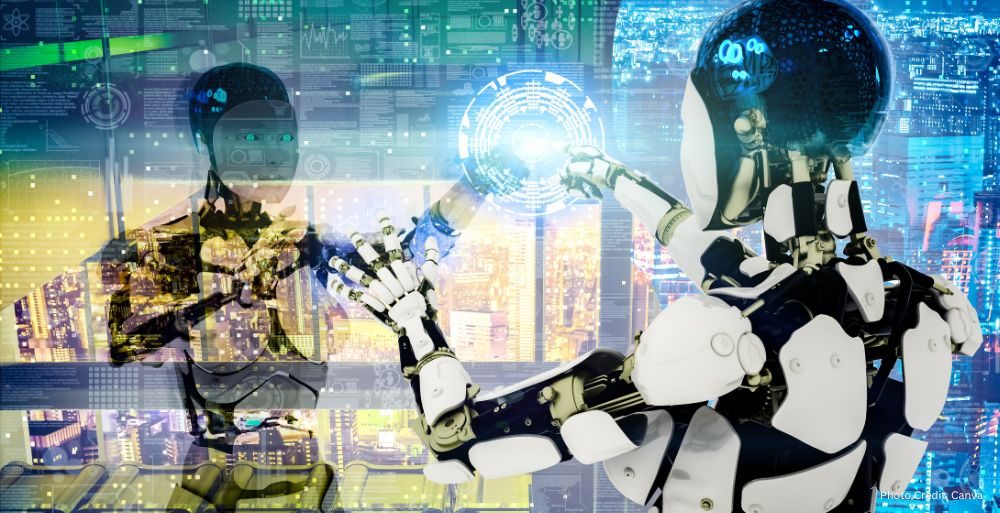
Modern warehouses are run by fleets of autonomous robots. Call centers use AI agents to handle thousands of conversations daily. Hospitals deploy algorithms to interpret scans and flag anomalies.
Historically, automation eliminated some jobs but created others. Farmers became factory workers. Factory workers became office employees.
This time may be different.
AI doesn’t just replace physical labor — it replaces cognitive tasks. It can draft reports, design systems, optimize logistics, and even write code that improves itself.
The result? The economy can maintain or increase output with fewer full-time workers.
Society becomes richer in productivity — but potentially poorer in traditional employment.
The Paradox of Abundance
In theory, this should mean greater prosperity. If machines produce more with less labor, everyone benefits.
But wages are still tied to hours worked.
If fewer hours are required, income distribution becomes the central issue. Musk calls this the “age of abundance.” Economists discuss guaranteed income models or taxation of AI-driven capital.
The larger question is psychological:
What happens when work is no longer the organizing structure of daily life?
The Hidden Risk: Emptiness
Jobs, even imperfect ones, provide rhythm — wake up, commute, tasks, breaks, small victories.
Remove that structure, and time can feel unmoored.
The danger of a post-job world isn’t laziness. It’s meaninglessness.
Without intentional design, free time becomes passive consumption — endless scrolling, distraction, algorithm-driven habits.
A Nobel laureate recently put it bluntly:
“I’m not afraid of machines working. I’m afraid of humans forgetting what to do when they are not working.”
How to Prepare for a Low-Work Future
If automation continues on its current path, preparation may be less about career ladders and more about resilience.
Three themes frequently emerge in discussions among technologists, economists, and scientists:
1. Build Skills for Curiosity, Not Just Employment
Develop interests that feed your mind — art, language, gardening, programming, music. These endure beyond job markets.
2. Prioritize Financial Stability Over Status
A modest safety net provides flexibility in a world of shifting roles and shorter contracts.
3. Strengthen Community
When traditional work structures weaken, social networks become essential anchors.
The people most likely to thrive may not be the busiest today — but those who have quietly learned how to live without constant direction.
A Future That Feels Like a Long Sunday
Imagine a weekday resembling a slow Sunday afternoon.
Your AI assistant has sorted your inbox. Autonomous vehicles move quietly outside. Grocery stores operate largely through automation.
You still work — but perhaps 10 or 15 focused hours per week, centered on distinctly human strengths: creativity, empathy, negotiation, invention.
Some income may come from state support or productivity-sharing mechanisms. Additional income may come from flexible, chosen contributions.
This future won’t arrive suddenly. It will seep in — one automated system at a time.
A Civilizational Crossroads
For centuries, technological progress reduced physical labor. Electricity, machinery, and computing steadily shortened work hours.
Now, we may be approaching a point where compulsory labor declines dramatically.
The central challenge is no longer just how we earn a living — but how we construct meaning when earning is no longer the core of identity.
The 40-year, full-time career may turn out to be a temporary historical phase.
The next phase asks a deeper question:
If work is optional, what makes life purposeful?
FAQ
Will AI eliminate most jobs?
Many routine tasks are already automated. While new roles will emerge, experts argue that total human working hours may decline significantly.
Will I personally lose my job?
Not necessarily. More likely is unstable, contract-based, or part-time work rather than lifelong employment.
Which jobs are more resilient?
Roles involving complex human interaction, creativity, care, and physical presence tend to adapt more slowly to automation.
Is less work a good thing?
It depends on income policy, social structures, and how individuals use expanded free time. Managed well, it could increase well-being. Managed poorly, it could deepen inequality and social drift.