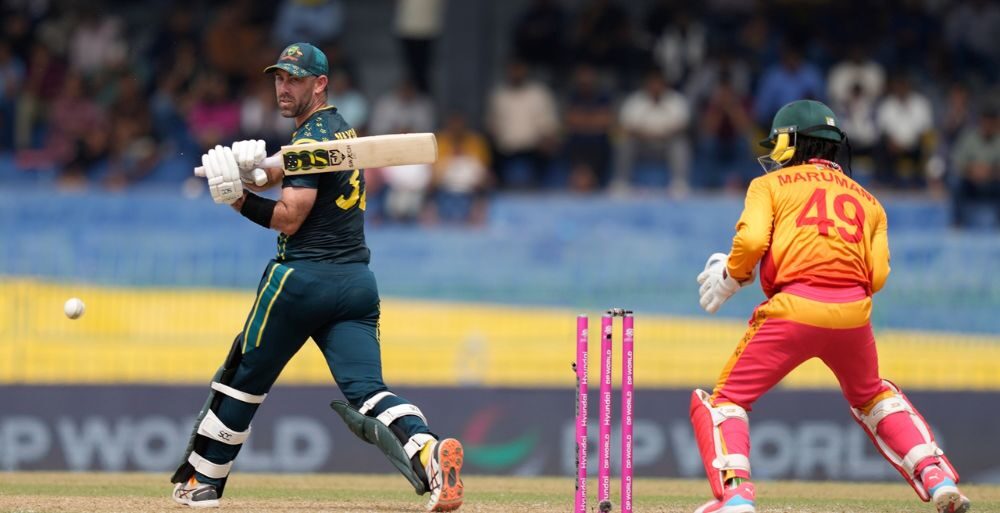









The recent victory by Zimbabwe over Australia on a sun-drenched afternoon in Colombo represents far more than a statistical anomaly or a singular upset in a crowded international cricket calendar. While the result provides a significant and timely boost for the sport within Zimbabwe, it simultaneously serves as a stark indictment of Australia’s ongoing and peculiar relationship with the shortest format of the game. Zimbabwe did not merely scrape past their more decorated opponents; they systematically outplayed a side often regarded as cricketing royalty, exposing a lack of depth and a historical indifference that has long characterized the Australian approach to Twenty20 Internationals.
The Australian squad entered the contest hampered by injuries and inconsistent form, yet they remained a team expected to negotiate the hurdles presented by a supposedly lesser opponent. Historically, Australian cricket has been defined by its ability to adapt and overcome adversity, yet this specific performance suggested a departure from that resilient tradition. Zimbabwe, conversely, exhibited a profound sense of belief and tactical discipline from the opening delivery. They refused to be intimidated by the reputations of their opponents, many of whom are staples of high-stakes franchise cricket around the globe.
Throughout the match, Zimbabwe maintained the ascendancy, demonstrating a superior understanding of the conditions and the specific requirements of the format. While Australia’s bowling attack was missing the established trio of Mitchell Starc, Josh Hazlewood, and Pat Cummins, the personnel on the field were hardly novices. Bowlers such as Adam Zampa, Nathan Ellis, and Ben Dwarshuis carry significant international and domestic reputations. Furthermore, the presence of Cameron Green, one of the most expensive acquisitions in the history of the Indian Premier League, underscored the perceived talent gap between the two nations. In contrast, among the Zimbabwean ranks, only Sikandar Raza has experienced the spotlight of the world\’s premier T20 league.
Despite these disparities in commercial value and global profile, Zimbabwe subdued Australia in every facet of the game. On a sluggish surface that demanded patience over brute force, the Zimbabwean batsmen showcased an impressive ability to accumulate runs and build a sustainable total. Brian Bennett, a twenty-two-year-old rising star, anchored the innings with a composed sixty-four off fifty-six deliveries. His disciplined approach provided the necessary platform for veteran Sikandar Raza and Tadiwanshe Marumani to accelerate the scoring rate in the closing stages. When it was their turn to bowl, Zimbabwe displayed a level of tactical sophistication that harried a formidable Australian batting lineup featuring the likes of Travis Head, Glenn Maxwell, and Marcus Stoinis.
This defeat has significantly jeopardized Australia’s prospects in the current edition of the tournament, but the implications extend beyond a single points table. Australia’s relationship with Twenty20 cricket has always been secondary to its reverence for the Ashes, Test cricket, and the fifty-over World Cup. Within the hierarchy of Australian cricket, these traditional forms remain the central pillars of the sport’s identity, while the Twenty20 international circuit is often viewed as a peripheral concern. This prioritization is reflected in the public and institutional reaction to failure in the format. While a loss in a Test series or an ODI World Cup might spark national introspection and administrative upheaval, Twenty20 exits are typically met with a sense of passing disappointment that heals with remarkable speed.
The Big Bash League, Australia\’s premier domestic T20 competition, occupies a strange space in this ecosystem. While it is popular and commercially successful, it has arguably failed to serve as a consistent pipeline for international superstars in the same way the Indian Premier League has unearthed generational talents like Jasprit Bumrah. For many in the Australian setup, the domestic league is a lucrative and entertaining sideshow, but one that lacks the historical weight or the long-term recall value of the Sheffield Shield or international tours. This detachment between the domestic product and the international side’s performance was laid bare by a disciplined group of Zimbabwean cricketers who lacked the fashionability of their opponents but possessed a clearer sense of purpose.
The narrative that this was simply one bad day at the office for the Australian team ignores the deeper malaise affecting their T20 structures. Australia has secured a Twenty20 World Cup title in the past, yet their overall record in the tournament is surprisingly modest for a nation of their stature. In eight iterations of the event, they have reached the semifinal or final stages only three times. This lack of consistency points to a systemic issue rather than a series of unfortunate events. The focus on individual brilliance and the hope that world-class players from other formats can seamlessly transition their skills into the T20 arena has often proven to be a flawed strategy against specialists who live and breathe the nuances of the shorter game.
For Zimbabwe, the victory is a transformative moment that could alter the trajectory of the sport in the country. Following years of administrative challenges and a period of perceived mediocrity on the international stage, defeating a top-tier nation in a major tournament provides the kind of momentum that can inspire a new generation of players and supporters. It validates the progress made by their coaching staff and rewards the resilience of a squad that has often operated in the shadows of the game’s giants. The Zimbabwean performance was characterized by a specific type of \”know-how\” that involved working with the pitch rather than fighting against it, a skill that the Australians seemed to have neglected in their pursuit of aggressive, high-impact cricket.
As the tournament progresses, Australia finds itself at a crossroads regarding its identity in the shortest format. The tendency to treat T20 internationals as a satellite orbiting the more important suns of Test and ODI cricket may no longer be sustainable in an era where other nations are professionalizing their approach to the format with clinical precision. The defeat to Zimbabwe was not an aberration but a reflection of a historical indifference that has finally been exposed by a more focused adversary. If Australia wishes to reclaim a position of dominance across all versions of the game, it must address the lack of specialized development and the institutional apathy that currently plagues its T20 ambitions.
The disparity in the \”mercenary\” value of the players—highlighted by the massive contracts held by many Australians compared to the relative obscurity of the Zimbabweans—serves as a reminder that financial might does not always equate to tactical superiority on the field. The Zimbabwean squad, largely ignored by the major global leagues, proved that discipline, situational awareness, and collective belief remain the most potent weapons in international sport. This result will likely be remembered as one of the great upsets in tournament history, but for those who have observed the slow stagnation of Australia’s T20 evolution, it was a result that had been looming on the horizon for some time.
Moving forward, the conversation in Australian cricket circles must shift from excuses regarding player fatigue or missing stars toward a fundamental re-evaluation of how the format is coached and prioritized. Meanwhile, Zimbabwe departs Colombo with its reputation enhanced and its future looking brighter than it has in decades. The mirror held up to Australian cricket by this defeat reveals a side that is struggling to find its footing in a rapidly evolving landscape, proving that in the world of Twenty20, reputation alone is no longer enough to guarantee survival against the hungry and the disciplined.
Zimbabwe Victory Over Australia Highlights Persistent Struggles in International T20 Cricket