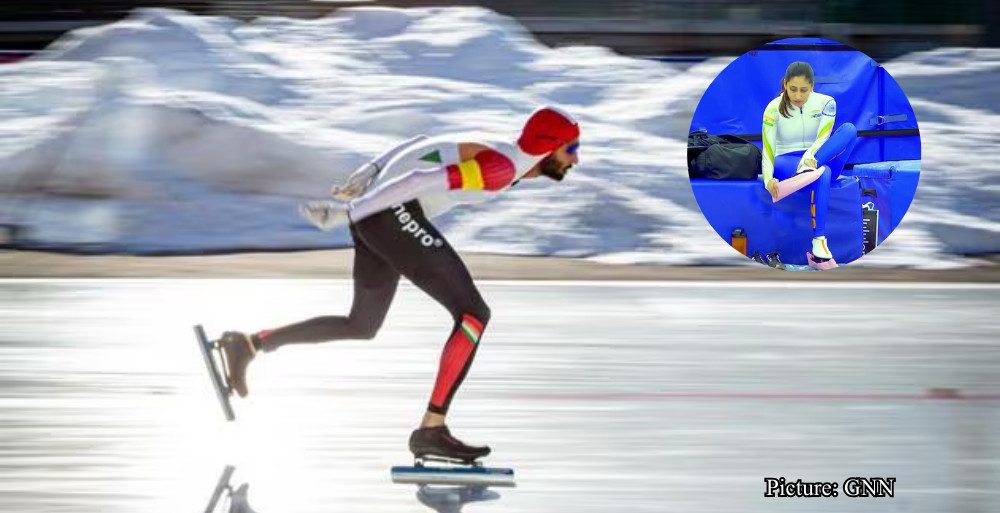




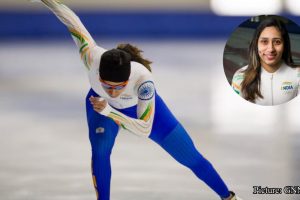
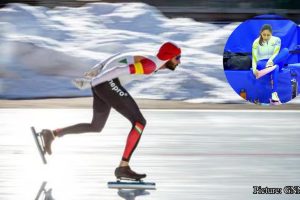
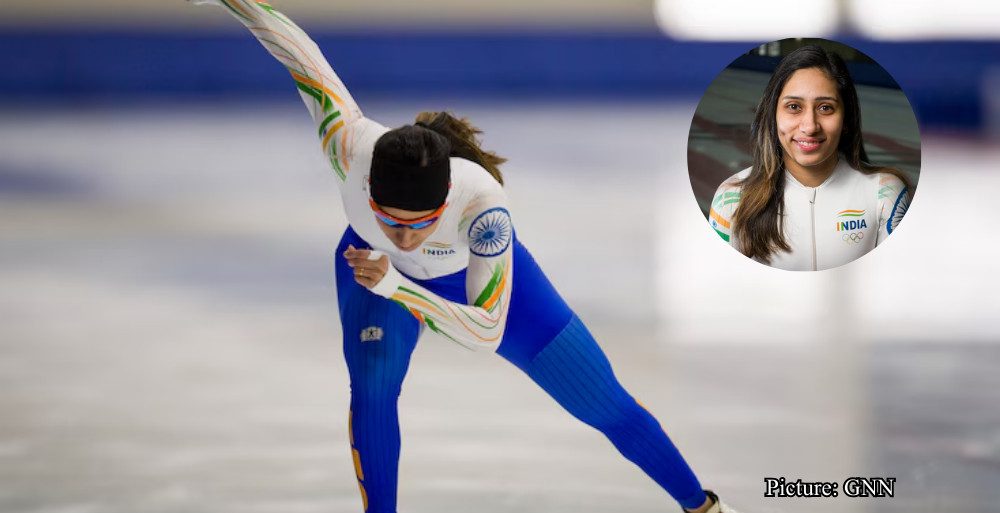
Shruti Kotwal, the holder of multiple Indian national records in speedskating, is fighting a dual battle against the clock and U.S. immigration law to maintain her training residency in Salt Lake City. As a self-funded athlete from a nation with virtually no winter sports infrastructure, Kotwal’s Olympic dreams now hinge on a $13,000 fundraising goal to secure the legal status necessary to remain on American ice.
The transition from the sweltering heat of Pune, Maharashtra, to the razor-thin oxygen and “fastest ice on earth” at the Utah Olympic Oval in Kearns is more than a geographical shift; for Shruti Kotwal, it is a desperate quest for the fundamental tools of her trade. At 34, Kotwal has earned the title of India’s fastest woman on ice, holding national records in the 500-, 1,000-, and 1,500-meter sprints. Yet, as she prepares for the next cycle of international competition, her greatest obstacle isn’t a rival skater or a personal best—it is the looming expiration of her visa this June.
Kotwal’s journey is an extraordinary case study in the geopolitical and economic barriers that face athletes from developing nations in niche sports. Growing up in a tropical climate where ice is a luxury rather than a landscape, Kotwal began her career on roller skates. The biomechanics of “rolling to gliding” are remarkably similar, utilizing the same explosive lower-body power and core stability, but the technical nuances of the blade require a level of precision that can only be honed on world-class facilities.
In India, while the northern regions like Shimla offer natural ice, the conditions are far from the regulated environments required for elite speedskating. “You can learn how to skate on that, but you can’t really compete,” Kotwal explained. “It’s pretty dangerous because there’s no safety, there’s no Zamboni. We don’t really have infrastructure for speedskating.” This lack of institutional support forced Kotwal into a nomadic existence, seeking ice in Germany and Calgary before finally settling in the Salt Lake Valley, home to one of the premier high-altitude training centers in the world.
However, the cost of being a pioneer is high. Unlike athletes from the United States, the Netherlands, or Norway, who benefit from robust national federations and corporate sponsorships, Kotwal describes herself as her “own national team.” This self-reliance has created a precarious legal situation. She currently resides in the U.S. on an O-1 Visa, a classification reserved for individuals with “extraordinary ability” in fields such as science, education, or athletics. While most O-1 recipients are sponsored by an employer or an agent, Kotwal is effectively self-sponsoring, a move that places the entire financial and evidentiary burden on her shoulders.
“I don’t have a contract that I can show to the government or immigration,” Kotwal said. “I have to kind of constantly prove and provide evidence that I am a speedskater and how I got here and that I hold all the national records for my country.”
The administrative friction of the O-1 visa, which requires renewal every two years, led Kotwal and her husband to pursue an EB-1 visa last August. The EB-1, often referred to as the “Einstein Visa,” offers a path to permanent residency for those at the very top of their field. It would provide the stability Kotwal needs to focus entirely on her 2026 Olympic ambitions rather than legal filings. But the transition comes with a steep price tag: roughly $13,000 in legal and attorney fees.
With her personal savings exhausted by the costs of international travel, equipment, and ice time, Kotwal turned to the community. She launched a GoFundMe campaign that has caught the attention of local advocates, including Caroline Gleich, a prominent Utah ski mountaineer and former U.S. Senate candidate. Gleich, who has built a career navigating the intersections of elite athletics and public policy, stepped in as a co-sponsor of the fundraiser.
“A lot of people have dreams… and their dreams can feel unattainable sometimes,” Gleich noted. “The more that we can support each other and help make dreams become realities, to turn them into tangible goals, the better.”
As of early 2026, the campaign has raised approximately $4,600—just over a third of the required amount. The stakes extend beyond Kotwal’s personal career. She views her presence in Utah as a proof of concept for future Indian winter athletes. By navigating the complexities of U.S. immigration and elite training protocols, she is drafting a blueprint for a nation of 1.4 billion people that has historically been underrepresented in the Winter Olympiad.
The economic reality of speedskating is harsh. A single pair of custom carbon-fiber boots and premium blades can cost upwards of $2,000, and coaching fees at a facility like the Utah Olympic Oval add thousands more annually. For Kotwal, these expenses are secondary to the “sense of freedom” she finds on the ice. “It feels like you can be yourself. You can express yourself… it’s almost like a very empowering feeling,” she said.
If the funding goal is not met by June, Kotwal faces a forced exit from the United States, a move that would likely end her competitive career given the absence of comparable facilities in India. Her struggle highlights a systemic issue within the Olympic movement: the “infrastructure gap” that prevents talented individuals from the Global South from competing on a level playing field. For now, the “fastest woman on ice” is waiting for the ground to stop shifting beneath her feet.