

At a time when diplomatic relations between India and Pakistan remain tense and dialogue is scarce, an extraordinary people-to-people initiative has quietly carried on—powered not by governments or treaties, but by children, colours, and hope. This week, the 14th Annual Peace Calendar for 2026 was unveiled, once again proving that while politics may stall, the imagination of young minds refuses to do so.
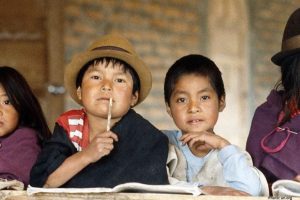
Released by Aaghaz-e-Dosti at an event in Anandpur Sahib, the calendar features 12 artworks created by schoolchildren from both sides of the border—six from India and six from Pakistan. Each painting captures a child’s idea of peace, cooperation, and shared humanity, offering a powerful counter-narrative to years of diplomatic chill.
Notably, the Peace Calendar initiative has continued uninterrupted since its inception in 2012, surviving wars of words, broken talks, border tensions, and even a global pandemic. “The highs and lows in diplomatic relations will continue,” said Devika Mittal, co-founder of Aaghaz-e-Dosti and a sociology professor at a University of Delhi–affiliated college. “But young minds should not stop dreaming about peace. That would be the most dangerous thing. There is no future without peace—and our future is our children.”
Art as a Bridge When Borders Close
The 2026 calendar, produced in collaboration with Gallery Art’est — An Art Abode and the Gandhian Society, carries the theme “Together We Rise.” The concept invites children to imagine how India and Pakistan could grow, innovate, and prosper together rather than apart.
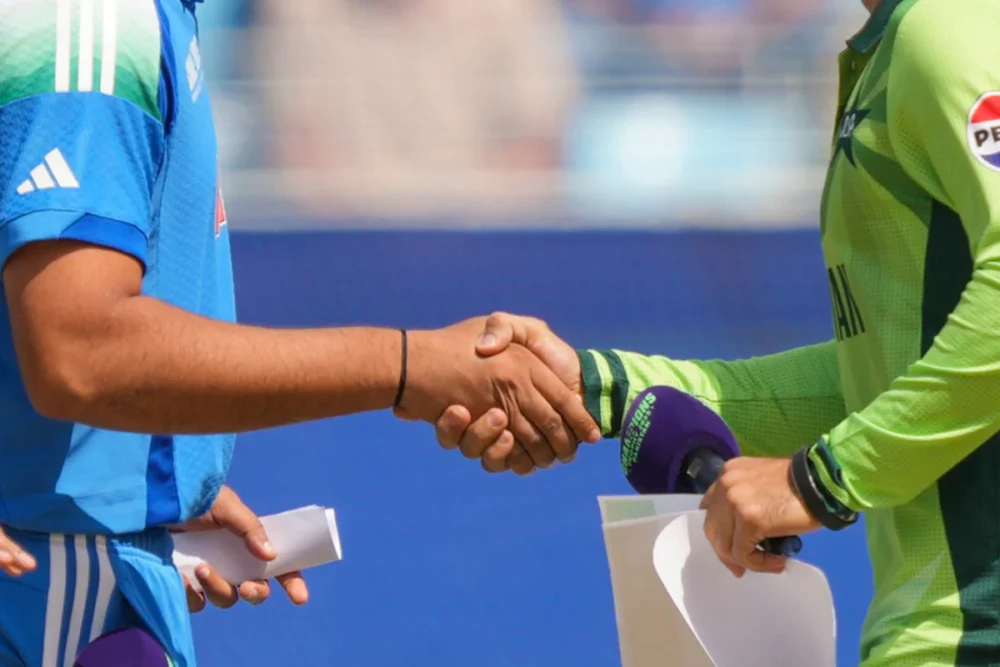
One of the most striking artworks comes from Laila Babar, a student at Roots IVY International School in Faisalabad, Pakistan. Her painting depicts Indian and Pakistani cricketers shaking hands on a cricket field—a simple yet emotionally charged image in a region where sport often mirrors political tensions.
“The idea is that sport should teach us sportsmanship and respect,” said Mittal. “When children paint cricketers shaking hands, they are really asking adults to behave better.”
Cricket, a shared passion across the subcontinent, has long reflected the ups and downs of bilateral relations. Matches are watched with fervour, but opportunities for goodwill often give way to hostility. In that context, a child’s vision of Indian and Pakistani players greeting each other peacefully becomes a quiet act of resistance against division.
Fourteen Years of Unbroken Continuity
Aaghaz-e-Dosti—literally meaning the beginning of friendship—was founded in 2012 with the aim of fostering “unwavering bonds of peace and friendship” between the people of India and Pakistan. Its Peace Calendar has since become a yearly tradition, released without fail even when official engagement between the two countries came to a halt.
“We believe people-to-people peacebuilding initiatives should not be disrupted at any cost,” Mittal said. “That’s why we’ve continued working with children from both sides, nurturing their minds toward peace right from the beginning.”
This year, the organisation received more than 200 paintings from India and around 40 to 50 from Pakistan. Contributions came from cities such as Delhi, Punjab, Maharashtra, Karnataka, and Madhya Pradesh on the Indian side, and Karachi, Lahore, and Faisalabad on the Pakistani side. Organisers say maintaining ties with Pakistani schools has required persistence, especially as formal channels of exchange have narrowed.
Peace in the Time of Pandemic and Postal Shutdowns
The initiative even survived the Covid-19 pandemic. “We published the calendar during Covid as well,” recalled Ravi Nitesh, co-founder of Aaghaz-e-Dosti. “There was no physical launch, but the message of peace did not stop.”
Nitesh emphasised that civilian initiatives must remain resilient regardless of political setbacks. “There are many reasons why diplomatic relations face highs and lows,” he said. “But civilian peace efforts should be strong enough to support governments and, more importantly, keep young minds away from weapons. The future leaders are children.”
One of the most poignant aspects of the programme is its encouragement of handwritten letters exchanged between children in India and Pakistan. Until 2017, these letters were physically mailed across the border, often taking weeks or months to arrive. In 2019, when postal exchanges were suspended, the initiative adapted.
“Now we scan the letters,” Mittal explained. “Teachers print them and give them to children to read. It’s not the same as holding a letter in your hand, but the emotions still reach.”
Children See More Than We Think
According to organisers, the artworks submitted each year reflect how deeply children absorb current events. When the Kartarpur Corridor opened in 2019, several paintings celebrated it as a bridge of faith and friendship. When Indian Olympian Neeraj Chopra’s mother publicly praised Pakistani athlete Arshad Nadeem, children painted that moment too—recognising generosity beyond nationalism.
“This year, some children even painted ideas about India and Pakistan collaborating in artificial intelligence,” Nitesh said. “They are watching everything. They understand more than we assume.”
A Quiet Handshake That Speaks Loudly
In a region where political handshakes are rare and fragile, the image of Indian and Pakistani cricketers greeting each other—painted by a child—carries profound symbolic weight. It reminds us that peace does not always begin in conference rooms. Sometimes, it begins with a brush, a canvas, and a belief that the future can be different.
As the 2026 Peace Calendar circulates, it carries with it not just artwork, but a message: while borders may harden, imagination does not. And as long as children on both sides continue to paint peace, the idea of friendship between India and Pakistan remains very much alive.