









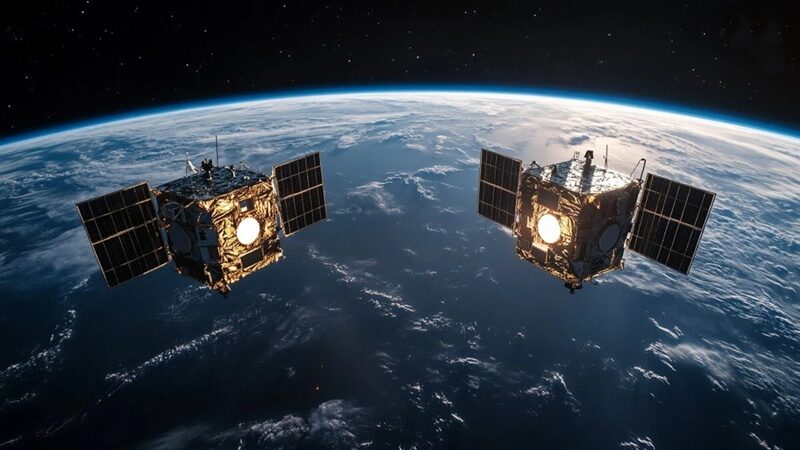
India is on the brink of achieving a major space exploration milestone, moving closer to joining an elite league of countries capable of refueling satellites in orbit. This cutting-edge capability would position India as only the second nation in the world — after the United States — to master the complex technology of on-orbit refueling, a breakthrough that promises transformative potential for satellite longevity and strategic space operations.
The development reflects the rapid strides being made by Indian space researchers and engineers, particularly within the Indian Space Research Organisation (ISRO), which has steadily expanded India’s space capabilities across launch vehicles, lunar exploration, and interplanetary missions. The on-orbit refueling project underscores New Delhi’s ambition to enhance self-reliance and technological leadership in outer space.
What On-Orbit Refueling Means for Space Technology
Traditionally, satellites are launched with a finite amount of fuel, after which their operational lifespan ends. On-orbit refueling allows technicians — using robotic spacecraft or specialized refueling modules — to transfer propellant to ageing satellites while they remain in space. This innovation can dramatically extend the operational lives of satellites, reduce costs associated with replacing them, and enhance service continuity for communications, navigation, remote sensing, and defence applications.
A senior engineer involved with the programme explained, “Once we master on-orbit refueling, our existing satellite infrastructure will remain relevant for much longer. This is pivotal for reducing space debris and maximising return on investment for satellite missions.”
India’s Strategic Push in Space Innovation
The move toward on-orbit satellite refueling is part of a broader strategic effort by India to expand its capabilities across the entire aerospace value chain. Over the past decade, ISRO’s portfolio has advanced from cost-effective launch vehicles like the PSLV and GSLV to high-profile missions that include lunar probes, Mars missions, navigation satellites, and soon, ambitious human spaceflight projects.
Sources within the space community indicate that India’s refueling system development is progressing well, with engineering trials and design validation nearing completion. The project combines precision robotics, fluid transfer technology, and advanced guidance systems — all of which are essential for safe and effective operations in the challenging conditions of space.
According to one scientist involved in the initiative, “Space is unforgiving. Any system that operates beyond Earth’s protective atmosphere must be robust, reliable, and highly precise. We are confident in our teams and technologies, and this capability will pay dividends for years to come.”
Global Implications and Strategic Importance
Mastering on-orbit refueling carries significant strategic and commercial benefits. For spacefaring nations, the ability to rejuvenate satellites in orbit can:
- Extend satellite lifespans, reducing the need for costly replacements
- Improve resilience of communication and surveillance networks
- Reduce space debris by minimizing defunct satellites
- Support deep space missions and modular spacecraft designs
- Strengthen defence and national security capabilities
The United States has been a pioneer in on-orbit servicing technologies, with space missions demonstrating satellite refueling and robotic servicing techniques. India’s entry into this domain would broaden global capacity and open the door for collaboration with international space agencies and commercial partners.
Collaborative and Commercial Opportunities
Experts believe India’s progress could attract partnerships with global satellite operators, private space startups, and international space agencies. With the global space economy expanding rapidly — forecast to exceed a trillion dollars in the coming decade — innovations like on-orbit refueling are expected to unlock new business models and service ecosystems.
One industry analyst noted, “Countries and companies that lead in satellite servicing will set the standards for sustainable space operations in the coming era. India stepping into this arena sends a strong signal that it intends to be a major player in space commerce.”
Looking Ahead: What’s Next for India’s Space Frontier
While exact timelines for operational on-orbit refueling missions have not been formally announced, insiders suggest that demonstration projects may take place within the next few years. These will likely involve prototype missions designed to test hardware, control systems, and coordination between ground stations and servicing vehicles.
As India moves closer to this landmark achievement, the scientific community and public alike have greeted the news with excitement and pride. The nation that once earned global acclaim for low-cost space launch solutions is now poised to enter a domain that defines the future of orbital infrastructure.
This achievement would not only mark a technical triumph but also underscore India’s deepening footprint in space research, exploration, and sustainable satellite operations — affirming its role as a rising space power on the world stage.