







Life, as most people understand it, follows a simple arc: birth, existence, death. The story ends there. But at the microscopic level, researchers are discovering that the narrative may not be so linear. A growing body of scientific research suggests that for certain cells, death does not necessarily mark the end — but instead, the beginning of something unexpected.
At the scale of cells, humans are less singular beings and more vast ecosystems. Every human body is composed of roughly 30 trillion cells, working alongside trillions of microbes, forming a cooperative biological collective. And while the organism as a whole may die, some of its cells appear capable of reorganizing themselves into entirely new forms — exhibiting behaviors that challenge long-standing definitions of life, death, and even consciousness.
This phenomenon has led some scientists to propose the existence of a biological “third state,” one that exists between life and death.
The Rise of Xenobots and the ‘Third State’ of Life
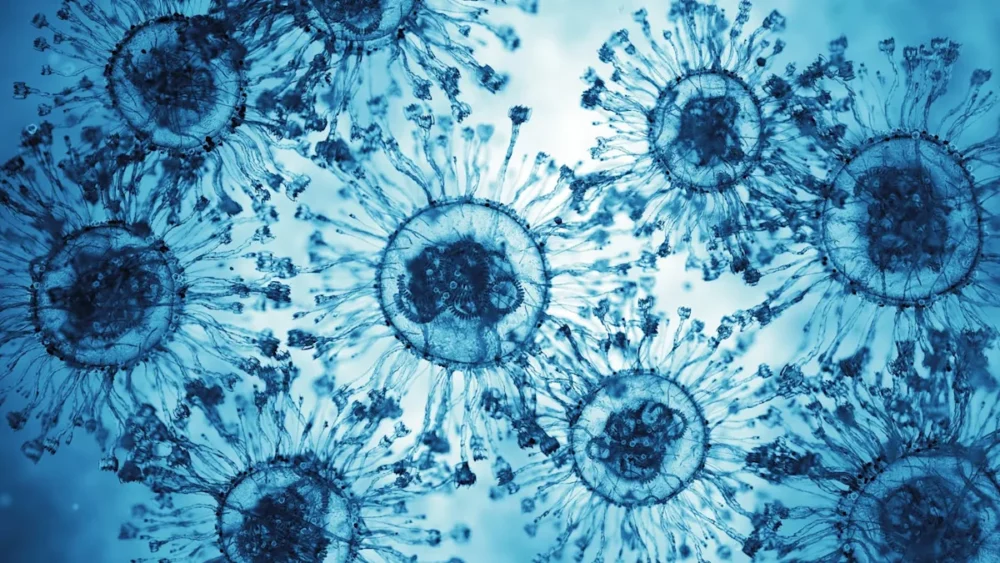
Much of this debate has been fueled by research into xenobots — microscopic, AI-designed multicellular organisms built from living cells. Unlike machines made of metal or plastic, xenobots are composed entirely of biological tissue, yet behave in ways that their original cells never did inside a living organism.
In September 2024, Peter Noble of the University of Alabama at Birmingham and Alex Pozhitkov of the City of Hope detailed this emerging research in an article published on The Conversation.
Xenobots are formed when living cells are removed from their original biological context and allowed — sometimes with AI guidance — to self-organize into new structures. For example, cells that once used hair-like cilia to transport mucus may repurpose those same structures for locomotion. The result is a biological entity capable of movement, repair, and even limited problem-solving.
Because these cells reorganize themselves after the death of the original organism, Noble and Pozhitkov argue that xenobots represent a “third state” of existence — neither fully alive in the traditional sense, nor truly dead.
“Taken together, these findings challenge the idea that cells and organisms can evolve only in predetermined ways,” the authors wrote. “The third state suggests that an organism’s death may play a significant role in how life transforms over time.”
Similar behavior has been observed in human-derived cellular constructs known as anthrobots, further broadening the implications of this research.
Are Cells Conscious?
Beyond their medical potential, xenobots have reignited a deeper philosophical debate: what, exactly, is a cell?
For William Miller, an evolutionary biologist and physician, xenobots offer evidence supporting a controversial idea known as the Cellular Basis of Consciousness (CBC) theory. Miller explores this framework in his 2023 book The Sentient Cell, arguing that cells possess a form of inherent cognition — and possibly even consciousness.
“The organism as a whole no longer responds as it had,” Miller explains, “but subsets of cells are active, decision-making, and problem-solving. This fundamentally reconstitutes how we see the living frame.”
According to Miller, the fundamental unit of biological agency is not the organism or even the brain — but the individual cell itself.
This claim challenges deeply entrenched scientific assumptions. Consciousness is typically defined as requiring a nervous system and a brain capable of producing subjective experience. Yet Miller and others argue that such definitions may reflect human bias more than biological reality.
Intelligence at Scales We Can’t See
That bias is something Michael Levin, a developmental and synthetic biologist at Tufts University, has spoken about extensively. Levin’s lab played a key role in constructing xenobots, and he argues that humans are particularly poor at recognizing intelligence when it appears at unfamiliar scales.
“We have a finely tuned ability to see intelligence in medium-sized objects moving at medium speeds,” Levin explains. “But we struggle to recognize it when it’s extremely small or extremely large.”
From this perspective, cellular intelligence may not be absent — merely invisible to intuition shaped by human experience.
A Challenge to Darwinian Orthodoxy?
If cells possess agency, Miller argues, biology itself must be reinterpreted. Traditional Darwinian narratives emphasize competition and “survival of the fittest.” But cellular life tells a different story.
“Cells succeed by cooperating,” Miller says. “A better biological slogan would be, ‘I serve myself best by serving others.’”
In this view, genes are not masters issuing commands but tools that cells use to navigate their environment. Organisms, then, become vast collaborative projects — trillions of cells coordinating toward shared goals.
Skepticism From the Scientific Community
Not everyone is convinced.
In a 2024 letter published in EMBO Reports, multiple scientists criticized CBC theory, calling it “an intellectual exercise without empirical evidence.”
Among the authors was Lincoln Taiz of the University of California, Santa Cruz, who argues that unusual cellular behavior has been observed for decades — without invoking consciousness.
“When cells are removed from their normal context, they behave differently,” Taiz said in an email. “That doesn’t mean we’ve discovered a new state of life.”
Taiz draws parallels to plant galls — abnormal growths caused when insects inject hormones into plant tissue. “Is that a third state of life?” he asks rhetorically.
Similarly, Wendy Ann Peer of the University of Maryland emphasizes the need for falsifiable hypotheses.
“For a theory to be scientific, it must be testable and falsifiable,” Peer says. “Claims of cellular consciousness don’t yet meet that bar.”
Where Both Sides Agree
Despite deep disagreements, both proponents and skeptics converge on one point: cells are far more capable than once believed. Whether conscious or not, their adaptability offers enormous promise.
Taiz likens future medical uses of anthrobots to humans becoming their own “gall-forming insects,” guiding stem cells to form structures that repair tissue or deliver treatment.
Miller, too, sees collaboration rather than control as the future of medicine. “We’re learning how to partner with cells,” he says. “And if we’re smart, we’ll let them show us what’s possible.”
The Future of Life — and Medicine
Conscious or not, cells are poised to play a starring role in the future of human health. From regenerative medicine to targeted drug delivery, biobots may soon become tools crafted from our own tissues — minimizing immune rejection while maximizing precision.
And while the question of cellular consciousness remains unresolved, one thing is increasingly clear: life is not as simple as the boundary between living and dead.
Between those states, something strange — and profoundly intriguing — may be unfolding.