









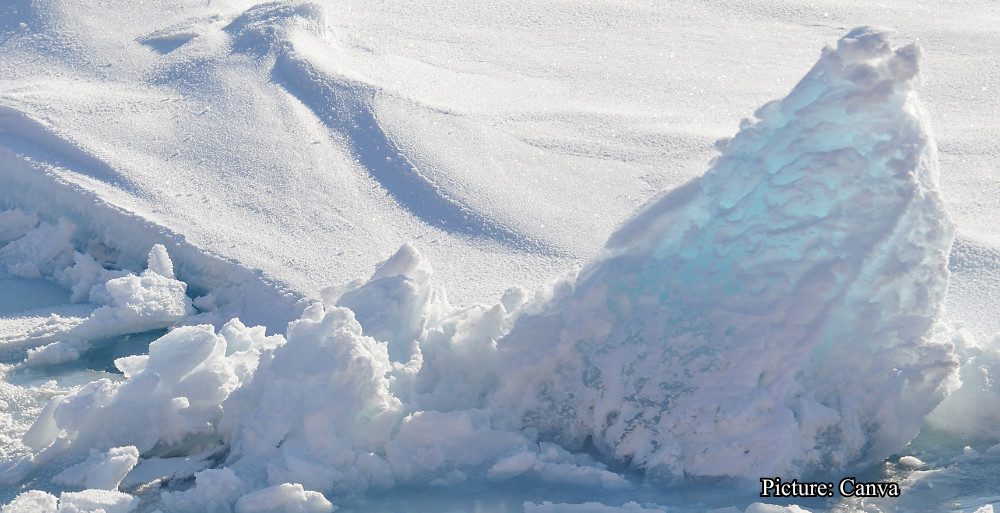
In a groundbreaking expedition, scientists have successfully drilled 523 meters into the Antarctic ice sheet, revealing a geological archive that could significantly alter our understanding and predictions of future sea-level rise and climate change.
Antarctica, often referred to as the ‘white continent,’ has long been a focal point for climate research due to its vast ice sheets that hold about 60% of the world’s fresh water. The recent scientific endeavor to drill deep into the Antarctic ice has yielded a treasure trove of climate data, stretching back 23 million years. This data is crucial for understanding the historical climate patterns of our planet and for making more accurate predictions about future climatic shifts, particularly regarding sea-level rise.
The drilling project, conducted by an international team of scientists, aimed to reach the subglacial bedrock beneath the ice sheet. The 523-meter core extracted from the ice provides an unprecedented window into the Earth’s climatic past. Each layer of ice in the core represents a different period in history, much like the rings of a tree, allowing scientists to analyze trapped air bubbles and isotopic compositions to infer past atmospheric conditions.
This undertaking is not just a testament to human ingenuity and perseverance in extreme conditions, but also a crucial step in climate science. The data obtained from the ice core can help scientists understand the natural variability of the Earth’s climate system. By studying past warm periods, researchers can gain insights into the potential impacts of current and future warming scenarios.
The Antarctic ice sheet is a critical component of the Earth’s climate system. Its massive size and the reflective nature of its surface play a significant role in regulating global temperatures. However, it is also one of the most vulnerable regions to the effects of climate change. As global temperatures rise, the ice sheets are melting at an alarming rate, contributing to sea-level rise. Understanding the historical patterns of ice sheet stability and collapse is vital for predicting future changes.
The significance of the findings from this drilling project cannot be overstated. The data can help refine climate models, which are essential tools for predicting future climate scenarios. Current models often struggle to accurately predict the rate and magnitude of ice sheet melting and subsequent sea-level rise. By incorporating the new data, scientists can improve these models, providing policymakers with more reliable information to guide climate action.
Historically, the Antarctic ice sheet has undergone periods of significant melting and reformation. During the mid-Miocene epoch, around 15 million years ago, the Earth experienced a warm period that led to substantial ice melt and sea-level rise. The new data from the ice core can help scientists understand the conditions that led to this melting and how similar conditions might affect the ice sheets today.
The implications of these findings extend beyond the scientific community. Rising sea levels pose a significant threat to coastal communities around the world. By improving predictions of sea-level rise, scientists can help inform adaptation strategies to protect vulnerable populations. This is particularly important for low-lying island nations and densely populated coastal cities that are at the forefront of climate change impacts.
Moreover, the project highlights the importance of international collaboration in tackling global challenges. Climate change is a problem that transcends national borders, and addressing it requires coordinated efforts from scientists and policymakers worldwide. The success of this drilling project is a testament to the power of international cooperation in advancing scientific knowledge and addressing pressing global issues.
As the world grapples with the realities of climate change, the insights gained from this Antarctic expedition offer a glimmer of hope. By enhancing our understanding of the Earth’s climate system, scientists can provide the knowledge needed to mitigate the impacts of climate change and build a more sustainable future. However, the window for action is closing rapidly. The data from the ice core serves as a stark reminder of the urgency of addressing climate change and the need for immediate and decisive action.
In conclusion, the successful drilling into the Antarctic ice sheet and the subsequent discovery of 23 million years of climate history mark a significant milestone in climate research. The findings have the potential to reshape our understanding of past climate events and improve predictions of future changes. As we continue to explore the icy depths of Antarctica, we uncover not only the secrets of our planet’s past but also the keys to securing its future.