







In a landmark move aimed at preserving religious sanctity and cultural heritage, the Government of Punjab has officially declared Amritsar, Sri Anandpur Sahib, and Talwandi Sabo (Sri Damdama Sahib) as Holy Cities of the state. The decision brings with it sweeping restrictions on the sale and consumption of meat, alcohol, tobacco, and other intoxicants within the notified areas.
The declaration was formalised through a notification issued on December 15 by the Department of Home Affairs, Punjab, following approval from the Governor of Punjab.
“The Governor of Punjab is pleased to declare the walled city of Amritsar in district Amritsar; the city of Sri Anandpur Sahib in district Rupnagar; and the city of Talwandi Sabo (Sri Damdama Sahib) in district Bathinda, as Holy Cities of the state of Punjab,” the notification stated.
What the Holy City Status Means
With immediate effect, the holy city designation enforces strict prohibitions to uphold the spiritual character of these revered Sikh centres. The restrictions apply within the walled city of Amritsar, and the municipal limits of Sri Anandpur Sahib and Talwandi Sabo.
According to the government order:
- Sale and consumption of alcohol and liquor-related products are banned.
- Cigarettes, tobacco, and other intoxicants are prohibited from being sold or used.
- Sale and consumption of meat are banned within the notified limits.
The Department of Excise has been directed to enforce a complete ban on liquor, while the Department of Health and Family Welfare will oversee restrictions related to tobacco and intoxicants. The Department of Local Government, along with the Deputy Commissioners of Amritsar, Rupnagar, and Bathinda, has been tasked with ensuring strict ground-level implementation.
Significance of the Three Holy Cities
Each of the declared cities holds immense historical and religious importance in Sikhism:
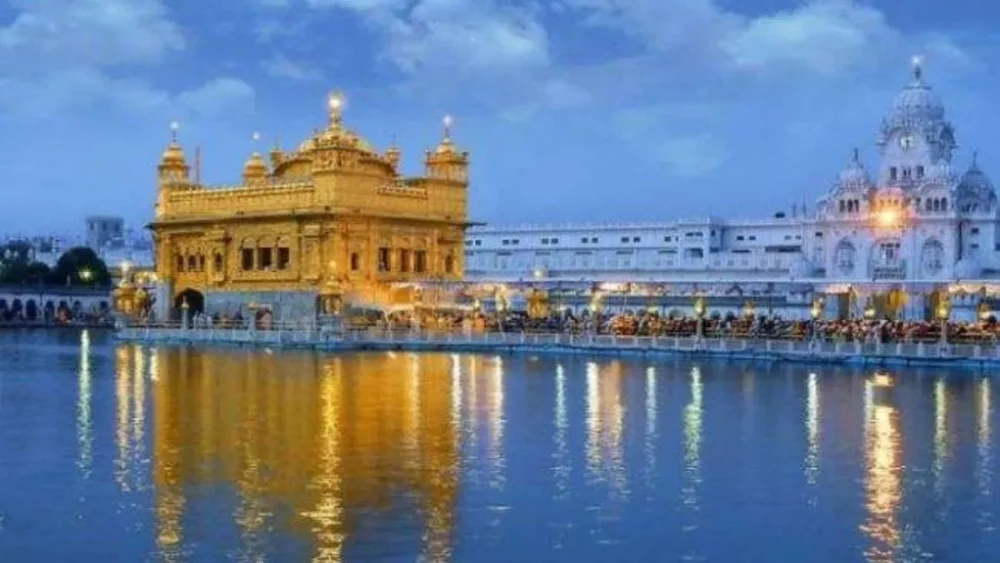
- Amritsar is home to the Golden Temple (Sri Harmandir Sahib), the holiest shrine of Sikhism and a major global pilgrimage centre.
- Sri Anandpur Sahib, founded by Guru Tegh Bahadur, is closely associated with the creation of the Khalsa Panth by Guru Gobind Singh in 1699.
- Talwandi Sabo (Sri Damdama Sahib) is one of the five Takhts of Sikhism, where Guru Gobind Singh is believed to have compiled parts of the Guru Granth Sahib.
A senior Punjab government official said the move reflects long-standing public sentiment.
“These cities are not just geographical spaces; they are spiritual centres that attract millions of devotees every year. The holy city status ensures their sanctity is protected in letter and spirit.”
Political and Legislative Background
Punjab Chief Minister Bhagwant Mann had announced the decision last month, stating that Anandpur Sahib would also be developed as a heritage city. The formal notification follows a unanimous resolution passed by the Punjab Assembly during a special session.
The resolution was moved by the Chief Minister during the session convened to mark the 350th martyrdom anniversary of Guru Tegh Bahadur, underscoring the historical timing and symbolic weight of the decision.
“This step is about respecting faith, history, and tradition. Our Gurus taught us values that transcend time, and it is our duty to protect these sacred spaces,” Mann had said while addressing reporters.
Mixed Reactions and Next Steps
While religious bodies and Sikh organisations have broadly welcomed the move, some traders and hospitality businesses have raised concerns about its economic impact, particularly in tourist-heavy Amritsar. The state government has indicated that implementation guidelines and transition measures will be issued to minimise disruption.
Officials emphasised that enforcement will focus on compliance rather than penalisation in the initial phase, allowing businesses time to adjust.
Preserving Sanctity and Identity
The declaration of holy city status marks a significant policy shift in Punjab’s governance, aligning administrative measures with religious and cultural sensitivities. By institutionalising protections around its most sacred sites, the state aims to reinforce Punjab’s spiritual identity while setting a precedent for heritage-focused urban management.
As implementation begins, all eyes will be on how effectively the restrictions are enforced and how the balance between faith, tourism, and livelihoods is managed.