







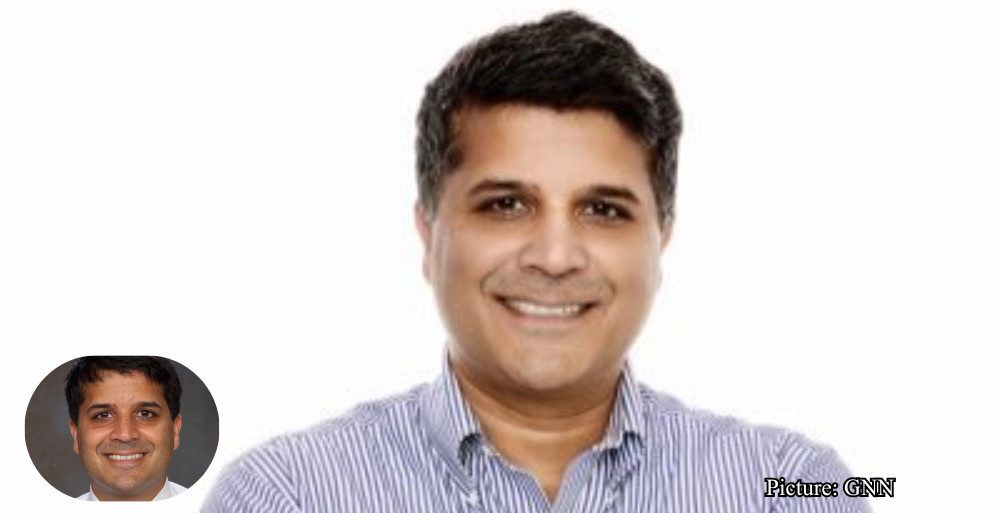
Dr. Ranjit S. Bindra, a distinguished therapeutic radiologist at the Yale School of Medicine, has been elected to the Connecticut Academy of Science and Engineering for 2026. This prestigious induction, alongside seven other Yale colleagues, highlights a transformative era for Connecticut’s biotechnology sector and the university’s continued dominance in translational medical research.
The intersection of academic excellence and regional economic development reached a new milestone this week as the Connecticut Academy of Science and Engineering (CASE) announced its latest cohort of elected members. Among the most prominent names is Dr. Ranjit S. Bindra, the Harvey and Kate Cushing Professor of Therapeutic Radiology and Professor of Pathology at the Yale School of Medicine. His election comes at a pivotal moment when the state of Connecticut is aggressively positioning itself as a global hub for life sciences and specialized medical engineering.
Dr. Bindra, a physician-scientist whose work has bridged the gap between complex laboratory discovery and bedside patient care, was recognized for his “extraordinary contributions to the field of therapeutic radiology and oncology.” His research primarily focuses on identifying novel DNA repair deficiencies in cancer cells and developing targeted therapies to exploit these vulnerabilities. This specific area of study—synthetic lethality—has become a cornerstone of modern oncology, attracting billions of dollars in venture capital and federal research funding over the last five years.
The election to CASE is not merely a local honor; it serves as a bellwether for the scientific priorities of the Northeastern United States. As the 51st annual meeting approaches on May 19, the inclusion of Bindra and seven other Yale faculty members underscores the institution’s role as the primary engine of the state’s intellectual capital. The academy’s selection process is rigorous, requiring nominees to demonstrate not only technical mastery but also a tangible impact on the public welfare of the state and the nation.
Joining Dr. Bindra in the 2026 class are several other Yale luminaries, representing a broad spectrum of expertise across science, technology, engineering, mathematics, and medicine (STEMM). This collective recognition reflects a strategic shift at Yale to integrate its medical school more deeply with its engineering and physical science departments—a move aimed at accelerating the commercialization of medical technologies.
From a political perspective, the growth of the CASE membership and the recognition of scientists like Bindra are critical to Connecticut’s broader economic strategy. For decades, the state’s economy was defined by the insurance and aerospace industries. However, under recent legislative initiatives, there has been a concerted effort to diversify into the high-growth biotech sector. By honoring researchers who hold patents and lead clinical trials, the academy reinforces the state’s narrative as an attractive destination for pharmaceutical giants and nimble startups alike.
Dr. Bindra’s career trajectory is emblematic of this high-stakes environment. Beyond his academic roles, he has been a serial entrepreneur, co-founding several biotechnology companies that aim to bring Yale-developed intellectual property to the global market. His work in therapeutic radiology is particularly relevant in 2026, as the field moves toward highly personalized “precision radiation.” This approach uses genetic sequencing to determine exactly how a patient’s tumor will respond to specific wavelengths and dosages, potentially reducing side effects while increasing survival rates.
The economic implications of Bindra’s work are substantial. The global market for oncology therapeutics is currently valued at hundreds of billions of dollars, with a significant portion of that growth driven by the types of targeted DNA-repair inhibitors that Bindra’s lab investigates. For Connecticut, having a high density of CASE members at Yale provides a “halo effect” that attracts top-tier graduate students and federal grants from the National Institutes of Health (NIH). In the previous fiscal year, Yale received over $500 million in NIH funding, a figure that CASE members disproportionately help to secure.
Furthermore, the induction of eight Yale faculty members highlights the university’s internal culture of mentorship and interdisciplinary collaboration. The Harvey and Kate Cushing Professorship, which Bindra holds, is named after the father of modern neurosurgery, a legacy that Bindra has modernised through his work on brain tumors and high-grade gliomas. His ability to synthesize pathology, radiology, and molecular biology represents the “new guard” of medical researchers who are expected to navigate both the laboratory and the boardroom.
As the state prepares for the induction ceremony on May 19, political leaders in Hartford are expected to use the event to advocate for further investment in STEMM education. The academy serves as a primary advisor to the state government on science-related public policy, and the infusion of new blood from Yale suggests a future focus on genomic medicine and bio-manufacturing.
The broader scientific community views Bindra’s election as a validation of the “Yale Model,” where clinical practice informs basic science. In his role as a therapeutic radiologist, Bindra treats patients daily, an experience that he frequently cites as the primary motivator for his research into rare and difficult-to-treat cancers. This “bench-to-bedside” pipeline is exactly what CASE aims to foster within the borders of Connecticut.
In a statement regarding the new members, the academy noted that the 2026 class represents one of the most diverse groups in its history, not only in terms of scientific discipline but also in terms of the practical applications of their work. For Bindra, the honor is a milestone in a career dedicated to unraveling the fundamental mechanics of cellular life and death. As he prepares to join the state’s most elite scientific body, the eyes of both the medical world and the financial sector will be on the next breakthroughs to emerge from his New Haven laboratory.