




Skip to content
January 17, 2026
  • Indian Roots Power USA’s U-19 World Cup Campaign, Reflecting Cricket’s Growing Global Identity
  • CNN Poll Finds Majority of Americans Say Trump Is Focused on the Wrong Priorities as Economic Anxiety Grows
  • Which City Is Known as the Startup Capital of India? Why Bengaluru Continues to Lead the Nation’s Innovation Boom
  • Bill Gates Begins Formal Wind-Down of Gates Foundation, Sets $9 Billion Budget and Workforce Reductions for 2026

Global Net News

Truth That Shapes Tomorrow: Accurate and Objective

  • Art
  • Bollywood
  • Business
  • Cinema
  • Community
  • Cover
  • Cricket
  • Culture
  • Diaspora
  • Diplomacy
  • Disaster
  • Editorial/Opinion
  • Education
  • Entertainment
  • Environment
  • Family
  • Fashion
  • Finance/Economy
  • Food
  • Girar
  • Health
  • Immigration
  • India
  • Law/Legal
  • Lifestyle
  • Market
  • Media
  • Medicine
  • Money
  • Politics
  • Privacy Policy
  • Profiles
  • Relationship
  • Religion
  • Science
  • section
  • Social Media
  • Spirituality
  • Sports
  • Technology
  • To Advertise With US
  • To Reach Us
  • Tourism
  • Travel
  • Uncategorized
  • USA
  • Video
  • Women
  • World
  • Your Comments
  • Youth
  • Home
  • More
  • Social Media
    • Facebook
    • Instagram
    • Youtube
  • About Us
Subscribe
Random News
Headlines
  • Indian Roots Power USA’s U-19 World Cup Campaign, Reflecting Cricket’s Growing Global Identity

    January 17, 2026January 17, 2026
  • CNN Poll Finds Majority of Americans Say Trump Is Focused on the Wrong Priorities as Economic Anxiety Grows

    January 17, 2026January 17, 2026
  • Which City Is Known as the Startup Capital of India? Why Bengaluru Continues to Lead the Nation’s Innovation Boom

    January 16, 2026January 16, 2026
  • Bill Gates Begins Formal Wind-Down of Gates Foundation, Sets $9 Billion Budget and Workforce Reductions for 2026

    January 16, 2026January 16, 2026
  • First Greenland, Now Iceland? Trump Ally’s Annexation ‘Joke’ Triggers Diplomatic Backlash in Arctic Nation

    January 16, 2026January 16, 2026
  • Good News for Indian Travellers: Germany Announces Visa-Free Transit After Modi–Merz Ahmedabad Meet

    January 16, 2026January 16, 2026
  • Indian Airlines Cancel US Flights as Iran Shuts Airspace, Disrupting Long-Haul Travel

    January 15, 2026January 15, 2026
  • The Art of Being Unbothered: Four Simple Choices That Can Make You Happier This Year

    January 15, 2026January 15, 2026
  • A New U.S. Bill Could Ban Dual Citizenship—What It Means for Travelers and Millions of Americans

    January 15, 2026January 15, 2026
  • Jamie Dimon Warns $38 Trillion U.S. Debt Will Eventually ‘Bite’: “You Can’t Just Keep Borrowing Money Endlessly”

    January 15, 2026January 15, 2026

Cinema

Cinema
Dashavatar Makes History as First Marathi Film to Enter Oscars 2026 Contention List
Cinema
Jana Nayagan Certification Dispute: Censor Board Seeks Supreme Court Hearing Before Any Order Is Passed
Cinema
Cover
Indian Cinema Shines Globally as Kantara: Chapter 1 and Tanvi The Great Qualify for Oscars 2026 Best Picture Race
Cinema
Fear, Faith, and Power Collide in ‘Bha Bha Ba’ — Streaming on ZEE5 Global from January 16
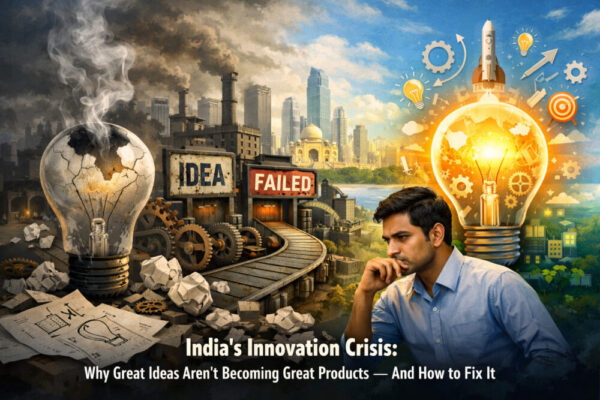
Editorial/Opinion India today stands at a crossroads. The country has world‑class scientific talent, globally respected institutions, and a thriving startup ecosystem. Yet, despite this abundance of intellectual capital, India struggles to convert research into real‑world products at scale. The gap between laboratory breakthroughs and market‑ready technologies—often described as the “valley of death”—remains one of the most persistent structural failures in the nation’s innovation landscape. This challenge is not new, but it has become more urgent as India positions itself as a global manufacturing and technology hub. The problem, as highlighted in a recent analysis, is not a lack of ideas but a lack of alignment. India’s academia is designed to publish, not build. Industry wants ready‑to‑deploy solutions, not prototypes. And investors prefer proven traction over early‑stage risk. The result is a system where promising innovations routinely stall before reaching the market. A System at War With Itself The friction between academia and industry is widely acknowledged. As one founder of a high‑technology Indian company told Swarajya, “We have tried to work with lots of different IITs, and in most cases, there is no strong output that comes from these colleges”. This frustration is echoed across sectors that rely on deep‑tech innovation. The incentives are misaligned at every level. Professors are rewarded for publishing papers, not building products. Startups need rapid, iterative development, not multi‑year research cycles. Government funding often stops at the prototype stage, while private capital enters only after commercial viability is proven. This leaves a dangerous gap—the “valley of death”—where most innovations fail. Dr. Anurag Agrawal of Ashoka University describes this gap bluntly: “India has no dearth of bioscience talent, but translating research into real‑world health solutions remains a major challenge.” He argues that India must “back people, not just projects” and build systems that reward real‑world outcomes, not academic prestige. The TRL 3 → TRL 4 Bottleneck Innovation experts often describe India’s biggest hurdle as the transition from Technology Readiness Level (TRL) 3 to TRL 4—the point where a lab‑tested prototype must be validated in real‑world conditions. According to innovation strategist Babu Mohanan, “India doesn’t suffer from a shortage of ideas — we suffer from a shortage of products.” He adds that most innovations “never make it beyond the lab door” because the ecosystem is not designed to support the messy, expensive, iterative process of commercialization. This is the stage where engineering talent, manufacturing partners, regulatory clarity, and patient capital must converge. In India, they rarely do. When Alignment Happens, India Delivers Despite these structural challenges, India has produced remarkable success stories—proof that the problem is not capability but coordination. One of the most celebrated examples is the work of Prof. Ashok Jhunjhunwala, whose team helped reduce telephone costs from ₹40,000 to ₹10,000 by prioritizing economic feasibility alongside technological innovation. His approach—“put economics before technology”—became a model for frugal innovation and helped accelerate India’s telecom revolution. Another example is the IIT Kanpur ventilator project. At the height of the COVID‑19 crisis, a team of researchers and engineers built a life‑saving ventilator in just 90 days. Their success demonstrated what is possible when urgency, collaboration, and institutional support align. The IIT Madras Research Park stands as a structural example of what India needs more of. With over 900 joint industry‑academia projects completed, it has become a national benchmark for how universities can drive innovation when incentives are aligned and partnerships are intentional. A Broader National Challenge India’s innovation gap is not limited to academia. It is part of a larger structural issue: the country spends just 0.7% of its GDP on research and development, far below global leaders like South Korea (5.2%) and the United States (3.5%). This underinvestment has consequences. Without sustained funding, India cannot build the deep‑tech infrastructure required to compete globally. Amitabh Kant, former CEO of NITI Aayog, argues that India must treat innovation as an endogenous driver of growth—not an afterthought. “We have not yet fully leveraged our innovation potential,” he writes, emphasizing the need for stronger industry‑academia linkages and catalytic public procurement to drive demand for homegrown technologies. The Manufacturing Paradox India’s manufacturing sector illustrates the paradox vividly. Walking through industrial clusters in Tamil Nadu and Karnataka, innovation expert Yogesh Pandit observes a “dichotomy” in Indian industry: entrepreneurs are hardworking, adaptive, and resilient, yet most remain stuck in the “low‑value trap,” competing on cost rather than innovation. This is not due to lack of ambition. It is due to lack of structured pathways that help manufacturers adopt, co‑develop, or scale new technologies emerging from Indian labs. A Civilizational Perspective The report on your page makes a compelling historical point: India was once a civilization of creators. From the Sindhu‑Saraswati era to the Chola empire, India produced goods, technologies, and industries that shaped global trade. The challenge today is not to rediscover talent—it is to rebuild systems that allow talent to flourish. India’s renaissance will not come from isolated breakthroughs. It will come from aligning incentives across academia, industry, and government; from funding the full lifecycle of innovation; and from building institutions that reward product creation, not just publication. The Path Forward Experts across the ecosystem converge on a few key solutions: ✅ 1. Reform academic incentives Reward patents, prototypes, and industry partnerships—not just publications. ✅ 2. Strengthen industry‑academia collaboration Create more research parks, co‑development labs, and shared infrastructure. ✅ 3. Bridge the “valley of death” Establish dedicated TRL 3–7 funding mechanisms and product‑acceleration programs. ✅ 4. Increase national R&D spending Move toward 2% of GDP with a focus on deep‑tech and strategic sectors. ✅ 5. Build a culture of product‑driven innovation Encourage risk‑taking, celebrate product builders, and support long‑term innovation cycles. Conclusion India’s innovation story is not one of failure—it is one of untapped potential. The country has the talent, the ideas, and the ambition. What it needs now is alignment. The sparks are already visible across IITs, research parks, startups, and manufacturing clusters. With the right incentives and sustained support, India can once again become a nation that not only imagines the future but builds it.
  • Editorial/Opinion

India’s Innovation Crisis: Why Great Ideas Aren’t Becoming Great Products — And How to Fix It

Ajay GhoshDecember 21, 2025December 21, 202510 mins

Editorial/Opinion India today stands at a crossroads. The country has world‑class scientific talent, globally respected institutions, and a thriving startup…

Read More
  • Technology

From Small-Town India to Big-Money Texas: How Sridhar Vembu Built Zoho Corporation Into a Global Software Powerhouse

Staff ReporterDecember 21, 2025December 21, 20257 mins

In an industry dominated by venture capital, Silicon Valley hype, and growth-at-all-costs thinking, Zoho Corporation stands apart. Built quietly, profitably,…

Read More
  • Cover
  • Health

WHO Calls Traditional Medicine a ‘Potential Treasure Trove’ as It Plans Global Strategy Backed by Science

Staff ReporterDecember 21, 2025December 21, 20257 mins

GENEVA / NEW DELHI — From herbal remedies prepared by traditional healers in Africa to acupuncture clinics in China and…

Read More
  • Cinema
  • Cover

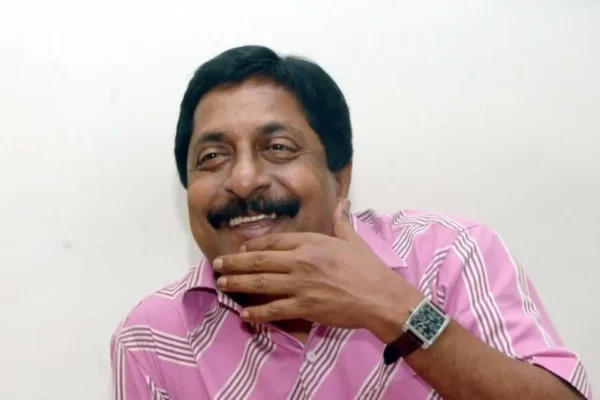
Legendary Malayalam Actor–Filmmaker Sreenivasan Passes Away at 69; Kerala Bids an Emotional Farewell

Staff ReporterDecember 21, 2025December 21, 20256 mins

KOCHI — The Malayalam film industry and the people of Kerala are mourning the loss of one of their most…

Read More
  • Cover
  • World

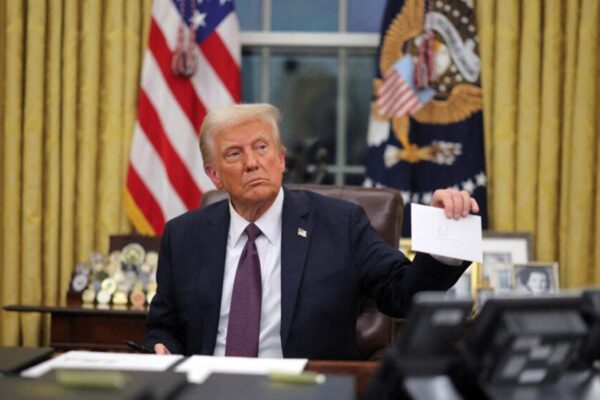
Trump Signs U.S. Defence Law, Urges Alignment of India’s Nuclear Liability Regime With Global Norms

Staff ReporterDecember 21, 2025December 21, 20258 mins

Just days after India’s Parliament cleared sweeping changes to the country’s nuclear liability framework, U.S. President Donald Trump has signed…

Read More
  • Cover
  • India

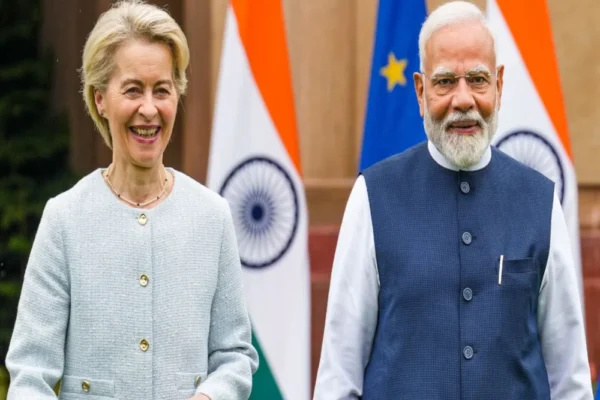
Centre Plans Vande Mataram-Themed Republic Day Celebrations; Top EU Leaders Invited as Chief Guests

Staff ReporterDecember 21, 2025December 21, 20257 mins

NEW DELHI — The Union government is preparing to give India’s 77th Republic Day celebrations a strong cultural and diplomatic…

Read More
  • Cricket

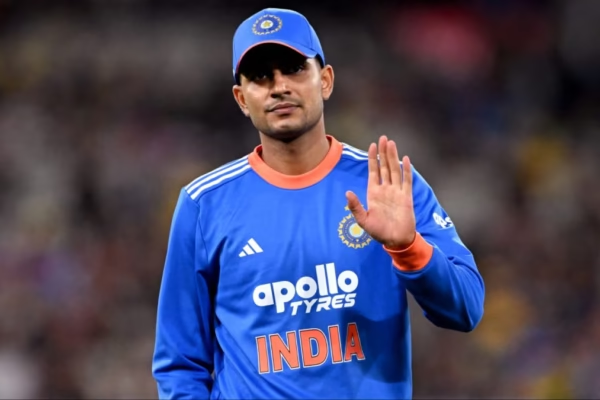
Shubman Gill Dropped From India’s T20 World Cup Squad as Selectors Prioritise Powerplay Impact and Team Balance

Staff ReporterDecember 21, 2025December 21, 20259 mins

NEW DELHI — In one of the most talked-about selection calls ahead of the ICC Men’s T20 World Cup, Indian…

Read More
  • Business

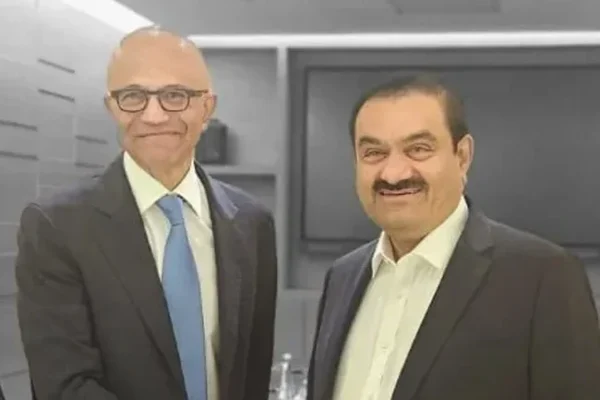
Microsoft CEO Satya Nadella Meets Gautam Adani, Signals Deeper AI Collaboration Amid Global Scrutiny

Staff ReporterDecember 21, 2025December 21, 20258 mins

NEW DELHI / REDMOND — Satya Nadella, Chief Executive Officer of Microsoft, has met Indian industrialist Gautam Adani, chair of…

Read More
  • Immigration

Google and Apple Advise Visa Holders to Avoid Overseas Travel Amid Lengthy U.S. Re-entry Delays

Staff ReporterDecember 21, 2025December 21, 20258 mins

WASHINGTON / SILICON VALLEY — Tech giants Google and Apple have issued internal advisories warning some employees on work visas…

Read More
  • Cover
  • USA

Democrats’ Mississippi Gains Highlight Voting Rights Act’s Power — and the Supreme Court Threat That Could End It

Staff ReporterDecember 21, 2025December 21, 20259 mins

Recent Democratic gains in Mississippi’s legislature have underscored the continuing power of the U.S. Voting Rights Act (VRA) — even…

Read More

Recent Post

Indian Roots Power USA’s U-19 World Cup Campaign, Reflecting Cricket’s Growing Global Identity
CNN Poll Finds Majority of Americans Say Trump Is Focused on the Wrong Priorities as Economic Anxiety Grows
Which City Is Known as the Startup Capital of India? Why Bengaluru Continues to Lead the Nation’s Innovation Boom
Bill Gates Begins Formal Wind-Down of Gates Foundation, Sets $9 Billion Budget and Workforce Reductions for 2026
Global Net News. Developed by. Mariam Info Tech
  • About
  • Contact
  • Privacy
  • Subscribe to Newsletter