







The geopolitical tensions between the United States, Israel, and Iran have escalated into a military conflict, causing significant fluctuations in commodity markets such as oil and gold. However, the stock market has shown an unexpected resilience, seemingly indifferent to the growing instability in the Middle East.
In the intricate dance of global economics, few things are as predictable as the market’s response to geopolitical tensions—especially when they involve oil-rich regions. Historically, conflicts in the Middle East have sent shockwaves through the financial markets, with investors scrambling for safe havens and the price of oil often soaring due to fears of supply disruptions. Yet, in the face of the recent military escalations involving the United States, Israel, and Iran, the stock market’s reaction has been curiously muted. This paradoxical behavior raises questions about the underlying dynamics at play and the evolving nature of global finance.
The current conflict began with a series of aggressive military actions. The United States and Israel launched airstrikes on strategic Iranian targets, prompting a swift and forceful response from Iran. Retaliatory strikes rippled across the Middle East, threatening to destabilize an already volatile region. Predictably, the immediate effect was a spike in oil prices. Brent crude, the international benchmark, surged as investors anticipated potential disruptions to oil flow through the Strait of Hormuz, a critical chokepoint for global oil shipments.
As oil prices climbed, investors sought refuge in traditional safe havens. Gold, often seen as a hedge against geopolitical risk and inflation, saw a significant uptick in demand. The precious metal’s allure lies in its historical role as a store of value during times of uncertainty, and its price movements were in line with expectations. However, the stock market’s response—or lack thereof—has been perplexing.
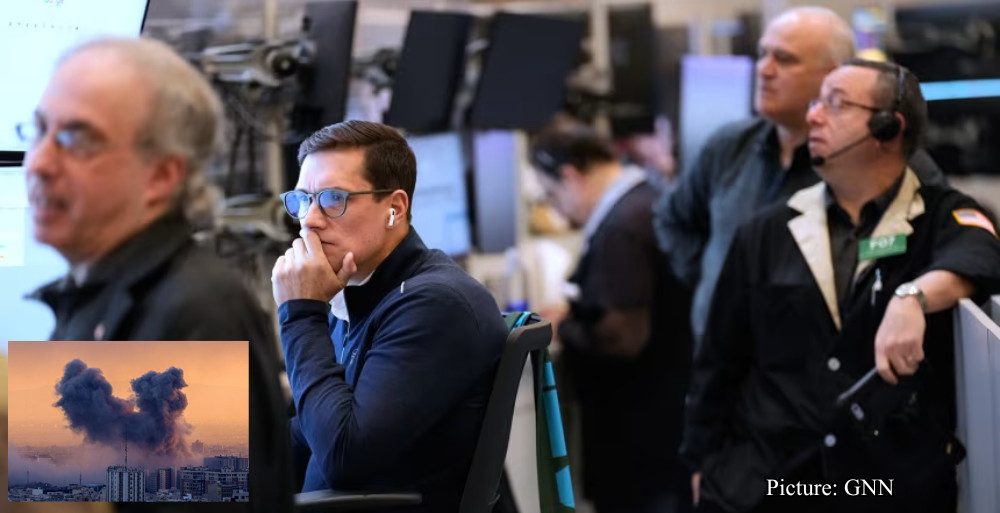
Typically, such geopolitical strife would trigger a sell-off in equities as investors reassess risk and recalibrate their portfolios. Yet, the major indices, including the S&P 500 and the Dow Jones Industrial Average, have shown remarkable stability. This begs the question: Why are stocks seemingly unfazed by the escalating conflict?
One explanation lies in the evolving nature of the global economy and the diversification of risk. Over the past decade, the financial landscape has been reshaped by technological advancements and the rise of new economic powerhouses. The increasing influence of tech giants, whose fortunes are not directly tied to oil prices, has altered the composition of major stock indices. Companies like Apple, Amazon, and Microsoft have become significant market movers, and their business models are less vulnerable to geopolitical shocks centered around oil.
Furthermore, central banks have played a pivotal role in stabilizing markets. The Federal Reserve, in particular, has maintained a dovish stance, signaling its readiness to support the economy through monetary policy measures. This has instilled confidence among investors, who believe that any significant downturn will be met with accommodative policies. The Fed’s influence cannot be overstated, as its actions have historically provided a safety net for equities, encouraging risk-taking even in uncertain times.
Another factor contributing to the stock market’s resilience is the globalization of supply chains and the diversification of energy sources. While the Middle East remains a critical player in the oil market, the rise of shale oil production in the United States has reduced global dependency on Middle Eastern oil. This shift has mitigated the impact of regional conflicts on the global oil supply, dampening the potential for panic-driven market reactions.
Moreover, the financial markets have become adept at pricing in geopolitical risks, thanks to sophisticated algorithms and data analytics. These tools allow investors to quickly assess the implications of geopolitical events and adjust their strategies accordingly. The rise of algorithmic trading has increased market efficiency, enabling a more measured response to crises.
While the stock market’s calm demeanor in the face of escalating tensions might seem counterintuitive, it underscores the complex interplay of factors that influence investor behavior. The interconnectedness of global markets, the diversification of economic power, and the proactive stance of central banks have all contributed to a more resilient financial system.
However, it would be remiss to assume that the current stability is guaranteed to persist. Geopolitical conflicts are inherently unpredictable, and the situation in the Middle East remains fluid. A significant escalation or a disruption in oil supply could still trigger a more pronounced market reaction. Investors must remain vigilant, balancing optimism with caution as they navigate an uncertain landscape.
In conclusion, the stock market’s unusual response to the spiraling conflict between the United States, Israel, and Iran highlights the evolving nature of global finance. While traditional market dynamics still hold sway, new factors have emerged that temper the immediate impact of geopolitical tensions. As the world becomes increasingly interconnected, the ability to adapt and respond to crises will be crucial for investors seeking to safeguard their portfolios in an ever-changing environment.