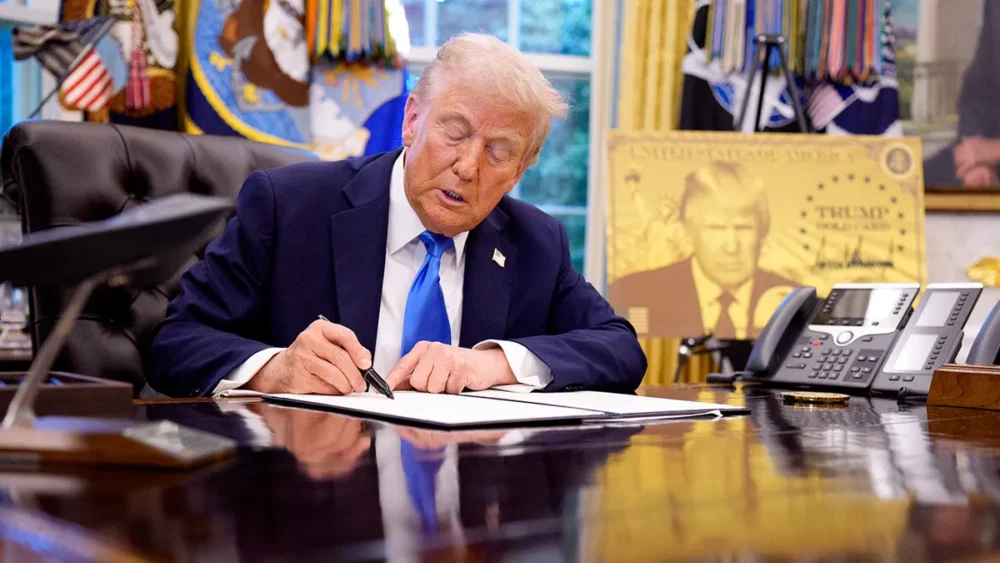








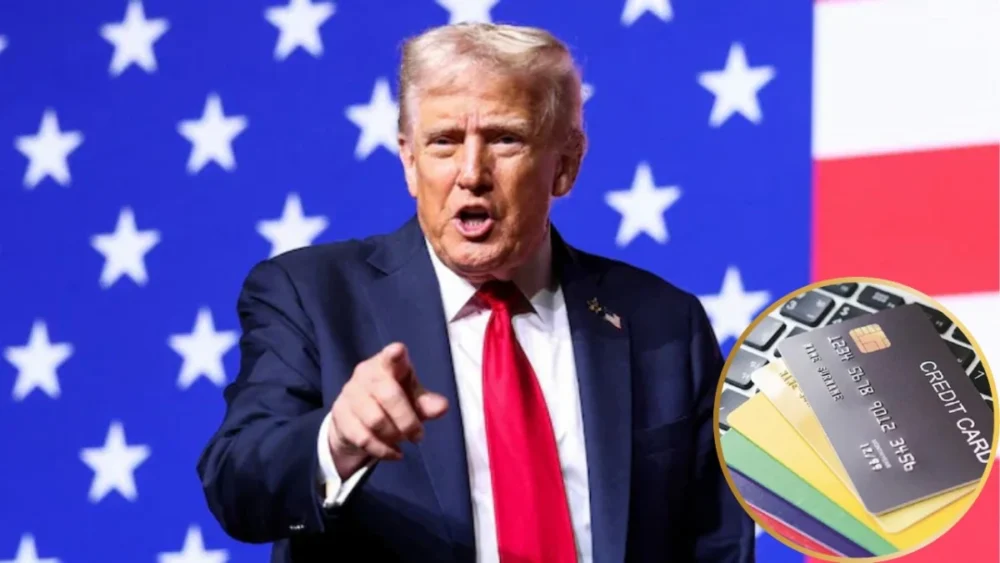
U.S. President Donald Trump has announced plans to temporarily cap credit card interest rates at 10 percent, unveiling a proposal aimed at easing financial pressure on millions of American households struggling with high borrowing costs.
In a statement shared on social media on Friday, Trump said the cap would take effect from January 20 and remain in place for one year. The move revives an idea he had floated during his presidential campaign, positioning it as a direct response to rising consumer frustration over debt and everyday expenses.
“We will no longer let the American public be ripped off by credit card companies charging interest rates of 20 to 30 percent,” Trump said. “This is about fairness and giving people breathing room.”
A Response to Rising Consumer Debt
Credit card interest rates in the United States have climbed steadily over the past decade, driven by higher benchmark rates and aggressive pricing by lenders. According to Federal Reserve data, the average annual percentage rate on credit cards stood at 22.3 percent as of November, nearly double the level recorded in 2013.
Economists say these rates have become a growing burden, particularly for middle- and lower-income households that rely on credit cards to manage rising costs of housing, food, healthcare, and fuel.
“High interest rates on revolving credit trap consumers in a cycle of debt,” said a U.S.-based financial policy analyst. “Any effort to lower those rates, even temporarily, could provide meaningful relief for families living paycheck to paycheck.”
Legal and Political Uncertainty
While the announcement has sparked widespread attention, significant questions remain about how such a cap would be implemented. It is unclear what legal authority the president could use to impose a nationwide interest rate ceiling without explicit approval from Congress.
Historically, regulation of credit card practices has fallen under the purview of the Consumer Financial Protection Bureau (CFPB). However, Trump’s administration has repeatedly criticized the agency, scaled back its funding, and suggested it should be dismantled. In a notable development, acting CFPB Director Russell Vought requested funding for the bureau on the same day Trump made his announcement, underscoring the tension within the administration over financial oversight.
Legal experts note that without congressional backing, a unilateral executive action could face immediate court challenges from the financial industry.
Bipartisan Echoes in Congress
Trump’s proposal closely mirrors legislation already circulating on Capitol Hill. Senator Bernie Sanders of Vermont, an independent, has introduced a bill that would cap credit card interest rates at 10 percent for five years. The proposal has drawn bipartisan support, including from Republican Senator Josh Hawley of Missouri. Similar legislation has also been introduced in the House of Representatives.
“This is an issue that cuts across party lines,” said a congressional aide familiar with the discussions. “Voters on both the left and right are angry about high interest rates and predatory lending practices.”
Despite that support, financial industry groups have long resisted broad interest rate caps, arguing they could restrict access to credit, especially for higher-risk borrowers.
A Populist Turn on Economic Policy
Trump’s announcement is part of a broader series of policy signals this week aimed at addressing cost-of-living concerns, a theme that dominated voter sentiment during the election cycle. Taken together, the moves suggest a more overt embrace of populist economic measures, even as they clash with traditional free-market orthodoxy.
Under existing law, certain protections already exist. The Military Lending Act, for instance, caps interest rates at 36 percent for many loans offered to active-duty service members. Attempts to extend similar protections to the broader population have historically faced fierce opposition from lenders and trade associations.
Supporters of Trump’s proposal argue that a lower cap could force banks to compete on fairer terms, while critics warn it could lead to reduced credit availability or higher fees elsewhere.
What Comes Next
Whether Trump’s proposed cap becomes reality will depend on legal interpretation, congressional response, and potential regulatory action. For now, the announcement has reignited a national debate over consumer protection, financial fairness, and the role of government in regulating lending practices.
“This proposal reflects the political reality of the moment,” said an economist tracking U.S. consumer policy. “The question isn’t whether Americans are angry about high interest rates—they clearly are. The question is whether this idea can survive legal scrutiny and industry pushback.”
As households continue to grapple with elevated debt and persistent inflation pressures, the issue of credit card interest rates is likely to remain at the center of economic and political discourse in the months ahead.