





Economic experts and fund managers surveyed by CNBC remain cautiously optimistic that the Federal Reserve will implement at least one interest rate cut before the end of 2026. This outlook persists despite a significant spike in global oil prices and a resulting uptick in inflation triggered by the third week of U.S. and Israeli military operations in Iran. While the survey participants anticipate that the closure of the Strait of Hormuz will continue to pressure the Consumer Price Index (CPI), the prevailing sentiment suggests that the economic drag caused by high energy costs may ultimately compel the Fed to ease monetary policy to prevent a deeper recession.
WASHINGTON — As the U.S.-led military offensive in Iran enters its third week, the Federal Reserve concluded its two-day policy meeting on Wednesday by maintaining the federal funds rate at its current range of 3.5% to 3.75%. The decision, while widely anticipated, comes at a moment of profound geopolitical and economic instability. According to the latest CNBC Fed Survey, a majority of the 32 respondents—comprising economists, fund managers, and market analysts—believe the central bank still has a window to lower borrowing costs this year, even as the “fog of war” complicates the domestic inflation outlook.
The survey results highlight a stark divergence between professional forecasters and the broader futures market. On average, survey respondents are calling for 1.8 rate cuts in 2026, a notably more dovish projection than the single cut currently priced in by Fed futures. This optimism is rooted in the belief that the current energy shock is a “transitory” supply-side disruption rather than a permanent shift in the inflationary regime.
The Energy Shock: Oil Prices and the Strait of Hormuz
The primary driver of immediate economic concern is the price of crude oil, which has surged since the outbreak of hostilities on February 28, 2026. Survey respondents forecast that oil will average $88 per barrel six months from now. Historically, such spikes have served as a “tax” on consumers, reducing discretionary spending and slowing overall economic momentum.
Data from the survey suggests this price level will result in a 0.5% increase in the Headline Consumer Price Index (CPI) while simultaneously shaving 0.3 percentage points off of U.S. Gross Domestic Product (GDP). The immediate risk centers on the Strait of Hormuz, a critical chokepoint through which roughly 20% of the world’s oil consumption passes. Currently, 44% of respondents believe the Strait will remain closed for less than a month, while 38% fear a prolonged closure of more than 30 days.
“My forecast is contingent on a resumption of oil shipments through the Strait of Hormuz within the next month,” noted Robert Fry, an independent economist. Fry warned that if the waterway remains blocked, his outlook would shift toward a definite recession. Currently, the perceived probability of a recession in the next 12 months has climbed to 31%, up 8 points from previous surveys, though still below the 53% peak seen during the “Liberation Day” trade tensions in April 2025.
Historical Context and the Fed’s “Dual Mandate”
The Federal Reserve’s current position is frequently compared to the oil shocks of the 1970s and the 1990-1991 Gulf War. However, analysts point out a key difference in 2026: the U.S. economy is entering this crisis with interest rates already at a restrictive level and a labor market that has begun to show “cracks,” including 92,000 jobs lost in February.
Steve Blitz, an economist who participated in the survey, argued that the Fed is more likely to react to the economic “weakening” caused by oil prices than to the inflation they produce. “An oil price spike risks more weakening—not inflation,” Blitz stated. “The Fed will be on alert to ease, not tighten. All of that gives [Fed Governor Kevin] Warsh a window to cut in June.”
This perspective aligns with the Fed’s dual mandate to promote maximum employment alongside stable prices. If energy costs act as a brake on growth, the central bank may prioritize supporting the labor market, especially if headline inflation (expected to rise to 2.9% this year) is viewed as a temporary anomaly driven by external shocks.
Systemic Risks: Private Credit and Market Stability
While the war in Iran dominates the headlines, the CNBC survey revealed a burgeoning domestic concern: the stability of the private credit market. As interest rates have remained elevated, the $1.7 trillion private credit industry—which provides loans to mid-sized companies—is facing its first true test of a full credit cycle.
The survey found that 75% of respondents now consider systemic risk in credit markets to be “somewhat elevated,” the highest reading since this specific question was introduced in October. Furthermore, 69% of those surveyed believe that troubles within private credit could lead to broader contagion, potentially dragging down the S&P 500, which is currently projected to end the year at approximately 7,000.
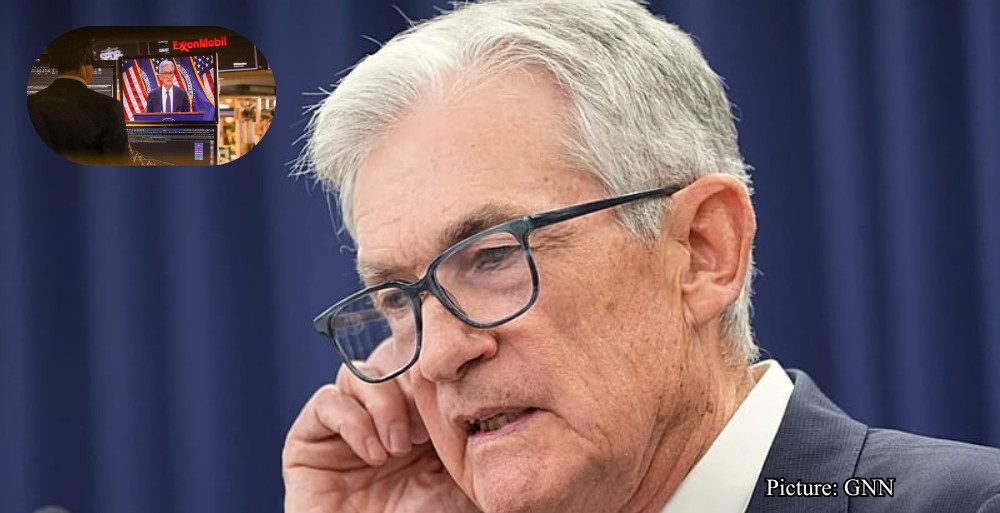
“There are so many variables in play out there that the Fed’s best move is to do nothing right now,” said John Donaldson, director of fixed income at Haverford Trust Co., describing the delicate balancing act facing Fed Chair Jerome Powell. “The odds of any move being the right move are no better than 50-50.”
Looking Ahead: The June Pivot Point
Market participants are now focusing on the June policy meeting as the most likely “pivot point.” Despite the current inflationary pressures, the Fed’s own Summary of Economic Projections (SEP) continues to pencil in at least one rate cut for 2026, signaling that policymakers are willing to “look through” the immediate energy volatility.
However, the path forward remains highly non-linear. If the military conflict escalates or if domestic energy infrastructure faces retaliatory strikes, the “transitory” narrative could crumble. For now, the consensus among the nation’s top financial minds is one of guarded patience, waiting for the “fog of conflict” to clear before the next phase of the American economic cycle begins.