
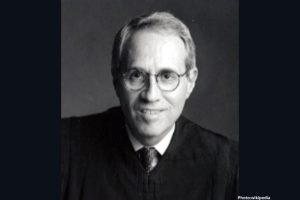



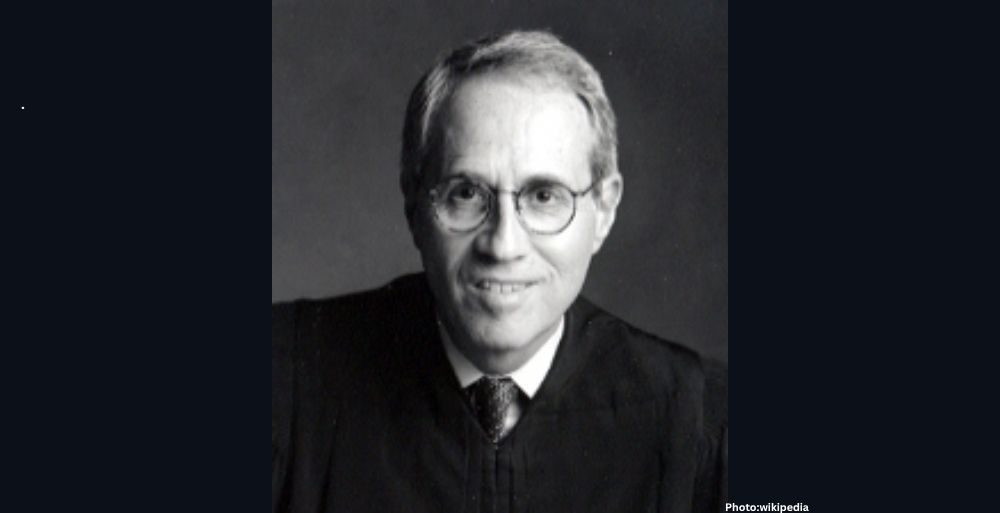
In a landmark ruling for First Amendment protections, U.S. District Judge Paul Friedman has blocked the Department of Defense from enforcing a controversial policy that severely limited journalists’ access to the Pentagon. The decision follows a legal challenge by The New York Times, which argued that the administration’s new credentialing rules—requiring reporters to pledge they would not seek “unauthorized” information—violated constitutional rights to free speech and due process. The court found that the policy, implemented under Defense Secretary Pete Hegseth, lacked clear standards and was being used to facilitate illegal viewpoint discrimination by favoring ideologically aligned outlets over independent media.
WASHINGTON — A federal judge on Friday issued a permanent injunction blocking the Trump administration from enforcing a restrictive press policy at the Pentagon, siding with The New York Times in a case that has become a flashpoint for press freedom during a time of increased military conflict.
U.S. District Judge Paul Friedman ruled that the Department of Defense (DoD) policy, which effectively barred reporters who refused to sign a loyalty-style reporting pledge, violated both the First and Fifth Amendments. The decision mandates the immediate reinstatement of press credentials for seven New York Times journalists and applies to all media organizations previously impacted by the rules.
The Origins of the Press Stand-Off
The legal battle began in late 2025 following a dramatic shift in how the Pentagon managed its press corps. In September and October of that year, Defense Secretary Pete Hegseth introduced a new 21-page credentialing manual. The most contentious provision required journalists to acknowledge that soliciting any information not explicitly authorized for release—including unclassified data—could result in the revocation of their credentials and their being branded a “security risk.”
The response from the established press corps was nearly unanimous resistance. On October 15, 2025, reporters from more than 30 major news organizations, including the Associated Press, Reuters, CNN, and The Washington Post, physically vacated the Pentagon press room. In a scene described by onlookers as somber yet resolute, veteran correspondents packed computer servers and furniture into boxes, refusing to sign a document they argued would turn them into “state-sanctioned stenographers.”
Of the 56 news outlets in the Pentagon Press Association (PPA), only one initially agreed to the terms. In the vacuum left by the exit of legacy media, the Pentagon invited a new “press corps” consisting largely of conservative outlets and social media influencers, such as The Federalist, The Epoch Times, and right-wing activist Laura Loomer.
“Viewpoint Discrimination” and the Tip Line Controversy
A central pillar of Judge Friedman’s ruling was the evidence of inconsistent enforcement, which the court characterized as “undisputed evidence” of viewpoint discrimination. The Times highlighted a specific double standard regarding investigative “tip lines.”
The Pentagon had previously concluded that a tip line operated by The Washington Post violated its policy because it “targeted” military personnel for unauthorized leaks. However, the government raised no such objection to a similar tip line promoted by Laura Loomer, a staunch ally of President Trump.
“The court does not see any meaningful difference between the two tip lines,” Judge Friedman wrote in his opinion. “The problem is that nothing in the Policy explicitly prevents the Department from treating these two nearly identical tip lines differently… The Policy on its face makes any newsgathering and reporting not blessed by the Department a potential basis for the denial, suspension, or revocation of credentials.”
Deep Context: Reporting in a Time of War
The ruling arrives at a particularly sensitive moment for U.S. foreign policy. The judge explicitly noted that the public’s need for independent information is heightened by recent U.S. military “incursions” into Venezuela and the ongoing war with Iran.
“Those who drafted the First Amendment believed that the nation’s security requires a free press and an informed people,” Friedman wrote. “Especially in light of the country’s recent actions… it is more important than ever that the public have access to information from a variety of perspectives.”
Defense Secretary Pete Hegseth has defended the restrictions as “common sense” measures necessary to prevent leaks that could jeopardize operational security. Since the policy’s inception, Hegseth has rarely called on the few legacy reporters allowed into briefings on a temporary basis, often favoring outlets that have publicly supported the administration’s military objectives.
During a hearing earlier this month, Department of Justice attorneys argued that the government has “unfettered discretion” to manage access to secure facilities like the Pentagon. Friedman rejected this, noting that while the building is secure, the government cannot use access as a lever to coerce journalists into abandoning their constitutional role.
Reaction from the Press and the Pentagon
The New York Times lauded the decision as a victory for the American public. “Americans deserve visibility into how their government is being run, and the actions the military is taking in their name and with their tax dollars,” said Times spokesperson Charlie Stadtlander.
The Pentagon Press Association, which represents the journalists who walked out last October, called for the immediate restoration of all member credentials. “This is a great day for freedom of the press,” the PPA said in a statement. “It is also hopefully a learning opportunity for Pentagon leadership, which took extreme steps to limit press access to information in wartime.”
The Pentagon remains defiant. Late Friday, spokesperson Sean Parnell posted on the social media platform X: “We disagree with the decision and are pursuing an immediate appeal.”
Judge Friedman has given the Pentagon exactly one week to file a written report confirming its compliance with his order to reinstate the barred journalists.