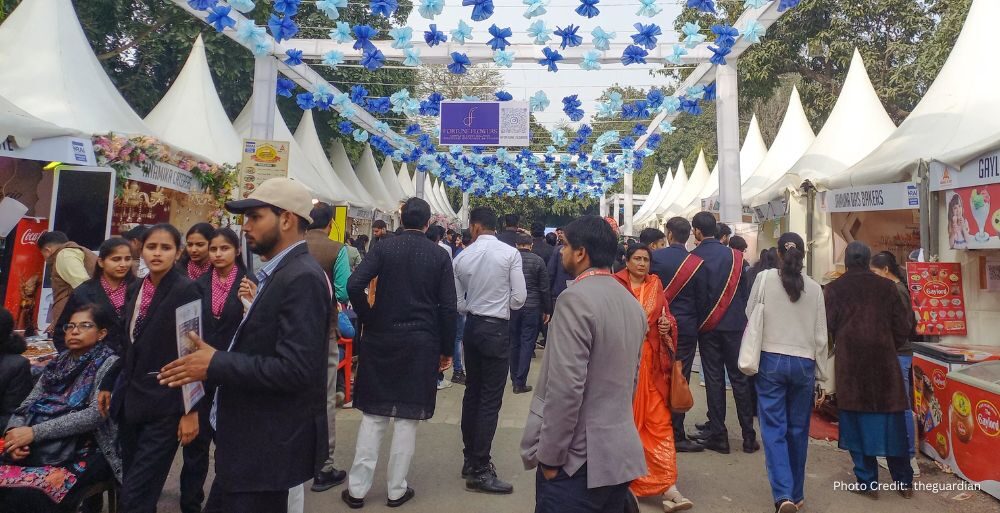









The rise of literature festivals across India has become a significant cultural phenomenon, yet veteran observers note that these events often owe their success more to a carnival atmosphere than to a burgeoning nation of readers. From the sprawling grounds of the Jaipur Literature Festival to smaller regional gatherings in towns like Varanasi, the traditional quietude of a book reading has been replaced by a vibrant mix of music, dance, and celebrity appearances. This evolution reflects a unique intersection of India’s deep-rooted oral storytelling traditions and a modern middle class that increasingly seeks experiential social outings.
Publishers and industry experts point to a stark contrast between the massive crowds at these festivals and the actual sales of English-language books. Pramod Kapoor, the founder of Roli Books, highlights the disconnect by recalling the surprise of sporting legends when told their autobiographies might only see a print run of a few thousand copies. In a nation where cricket stadiums fill with tens of thousands of fans, the average English-language book struggles to sell more than 4,000 units. A sale exceeding 10,000 copies is considered a major commercial success, a statistic that underscores the niche nature of the reading habit in the country.
Social scientists and columnists often describe the lack of a widespread book-buying culture in India as a complex mystery. While the country possesses a rich intellectual history, the transmission of knowledge has historically leaned toward the oral rather than the written word. Epic tales and religious scriptures are often passed down through generations via recitation and performance, potentially bypassing the need for physical texts. Observers note that even in affluent households, books are frequently treated as decorative items rather than objects of active engagement, with leather-bound volumes serving as symbols of status rather than tools for education.
The modern literature festival addresses this gap by transforming the act of engaging with an author into a multifaceted spectacle. By incorporating handicraft sales, fashion shows, and gourmet food stalls, organizers ensure that the events appeal to a broad demographic that might otherwise find a purely literary discussion intimidating or dull. In Varanasi, the Banaras Lit Fest exemplifies this \”masala\” mix, where serious debates on the future of the printed word compete with mime shows, stand-up comedy, and live performances by Grammy-winning instrumentalists.
Educational leaders involved in these festivals acknowledge that variety is essential to capture the attention of the younger generation. The goal is often to lure students in with the promise of celebrity selfies and a festival vibe, with the hope that a chance encounter with an author’s ideas might spark a lifelong interest in reading. For many families, these festivals provide a free or affordable alternative to a typical weekend trip to a shopping mall, offering a prestigious cultural setting that allows attendees to feel connected to a wider intellectual world.
However, some industry insiders remain skeptical about whether this \”spectacle\” translates into deep literary engagement. There is a growing concern that the festival culture encourages a preference for neatly packaged, simplified content over works of lasting depth. Critics argue that the rise of mobile data consumption, fueled by short-form videos and gaming, has further eroded the leisure time that might have once been dedicated to reading. The result is often a \”cool\” social experience where the book remains in the background, serving more as a prop for social media than a subject of rigorous study.
Despite these challenges, the festivals provide a crucial platform for regional languages, which represent the true heart of Indian literature. While English remains the language of the elite and the primary tool for national and international reach, the majority of Indians think, dream, and create in regional tongues such as Hindi, Gujarati, Tamil, and Bengali. Information regarding sales in these languages is notoriously difficult to track, yet anecdotal evidence suggests a vibrant local scene where authors exert significant social and political influence.
The journey of Banu Mushtaq, a feminist writer who spent decades writing in Kannada, illustrates the transformative power of translation and festival exposure. Despite a distinguished career in her home state of Karnataka, her work remained largely unknown to the broader Indian public until it was translated into English. Following this transition, her acclaim spread rapidly, culminating in international recognition. This suggests that while regional literature is thriving in isolation, it requires the bridge of the English language to reach the global stage and the national festival circuit.
International authors visiting these festivals often note a sense of \”democratization\” taking place. Venues that would have been dismissed a decade ago are now hosting major intellectual gatherings, bringing diverse voices to the forefront. The atmosphere, though loud and occasionally chaotic, reflects a preference for communal hubbub over the hushed, decorous settings favored in Western literary circles. For many young attendees, the noise and the crowds are not distractions but essential components of a shared cultural identity.
As the number of festivals continues to grow, the long-term impact on India’s reading habits remains to be seen. Supporters of the trend argue that any event that puts people in the vicinity of culture and away from their digital screens is a net positive. Even if only a small percentage of the thousands of attendees leave with a new book or a fresh perspective, organizers believe the effort is justified. The hope persists that the seeds planted during these vibrant winter festivals will eventually germinate, fostering a new generation that values the written word as much as the spectacle surrounding it.
Cultural Spectacle Drives Popularity of Literature Festivals Across Modern India