









In a historic decision that marks the end of an era for American public media, the Corporation for Public Broadcasting (CPB) has voted to dissolve itself, effectively bringing to a close a federally supported institution that has played a central role in funding and shaping public broadcasting for more than five decades.
The decision was taken on Monday by CPB’s board of directors, concluding a months-long wind-down process that began after Congress voted last summer to eliminate federal funding for the organization. Created in 1967, CPB has served as the primary conduit for federal support to public media outlets, including PBS, NPR, and hundreds of local public television and radio stations across the United States.
Rather than continuing as a dormant or symbolic entity, the board chose to fully shutter operations, citing concerns that a defunded organization would be vulnerable to political pressure and further attacks. CPB leadership framed the dissolution as an act of institutional protection rather than surrender.
“CPB’s final act would be to protect the integrity of the public media system and the democratic values by dissolving, rather than allowing the organization to remain defunded and vulnerable to additional attacks,” said Patricia Harrison, CPB’s president and chief executive officer, in a statement following the vote.
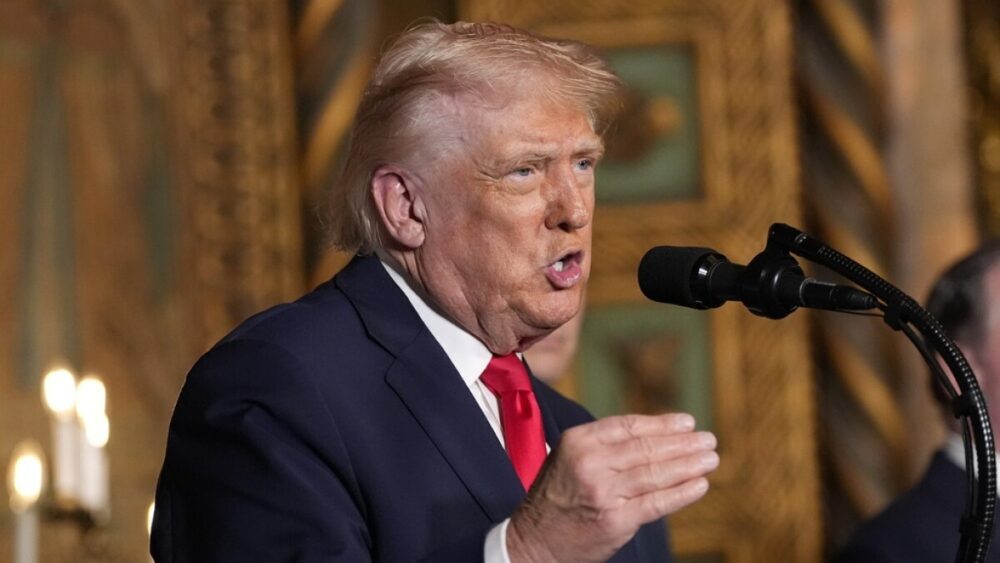
The move comes amid longstanding political tensions surrounding public broadcasting. Republican lawmakers have, for years, accused public media—particularly its news programming—of harboring a liberal bias. While these criticisms have been voiced across multiple administrations, they translated into decisive legislative action only during the second administration of President Donald Trump, when Republicans held full control of Congress.
The defunding of CPB marked one of the most significant shifts in federal media policy in decades, fundamentally altering the financial structure of public broadcasting. For many smaller and rural stations that rely heavily on federal support, the loss of CPB funding has had immediate and far-reaching consequences.
Ruby Calvert, chair of CPB’s board of directors, described the defunding as deeply damaging to the public media ecosystem but emphasized that the mission of public broadcasting itself remains resilient.
“The federal defunding of public media has been devastating,” Calvert said. “Even at this moment, I am convinced that public media will survive, and that a new Congress will address public media’s role in our country because it is critical to our children’s education, our history, culture and democracy to do so.”
Supporters of CPB argue that the organization has long played a nonpartisan role in strengthening civic life by funding educational programming, children’s content, cultural preservation, and local journalism—particularly in communities underserved by commercial media. Programs supported by CPB have historically reached millions of Americans with educational resources, emergency alerts, and coverage of local affairs.
Despite its dissolution, CPB is taking steps to preserve its legacy and ensure that decades of public broadcasting history are not lost. The organization confirmed that it will continue to financially support the American Archive of Public Broadcasting, a major initiative dedicated to preserving historic radio and television content. Additionally, CPB is working with the University of Maryland to maintain its institutional records, safeguarding documentation of its role in American media history.
Media analysts note that while CPB’s closure removes a key pillar of federal support, public broadcasting entities may increasingly turn to philanthropic funding, state support, and audience contributions to sustain operations. However, critics warn that such a shift could widen disparities between well-resourced stations and those serving smaller or economically disadvantaged communities.
The dissolution of CPB represents more than the end of an organization—it signals a broader debate about the role of public media in American democracy, the limits of government involvement in journalism, and the future of educational and cultural programming in an increasingly polarized political environment.
As CPB closes its doors, the question now facing lawmakers, broadcasters, and the public is whether a new framework will emerge to support public media—or whether this decision marks a permanent retreat from a model that has shaped American broadcasting for nearly six decades.