

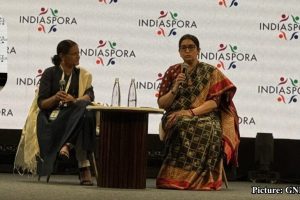








At the Indiaspora Forum 2026, Gurudev Sri Sri Ravi Shankar introduced the concept of ‘Absolute Intelligence’ as a means to address loneliness and enhance creativity, highlighting the growing global crisis of isolation.
On March 24, 2026, Gurudev Sri Sri Ravi Shankar, a prominent global humanitarian and spiritual leader, delivered a keynote address at the Indiaspora Forum held at the JW Marriott Hotel and Convention Centre in Bengaluru. In his speech, he emphasized the necessity of what he termed “Absolute Intelligence” to help individuals forge deeper connections with themselves, which he believes is critical in combating loneliness and fostering creativity.
Ravi Shankar’s remarks come in the context of a troubling global trend. He cited research indicating that approximately 47% of the U.S. population experiences feelings of loneliness. He also referenced the establishment of a Loneliness Ministry in the United Kingdom, underlining that this issue is increasingly being recognized in India as well. “We need to find solutions for the current day problem of stress, depression, and loneliness,” he stated. “What India can offer is beyond the wildest imagination of the world.”
Global Meditation Initiatives
During his address, Gurudev Ravi Shankar also spoke about the declaration of World Meditation Day, set to take place on December 6, 2024. This initiative, which has garnered participation from 192 nations, was requested by the UN Secretary-General, marking a significant global acknowledgment of the importance of meditation. He noted that countries like Mexico and Liechtenstein led the effort, with India joining later. “We graciously took over and took the due credit since these are India’s techniques,” he explained, emphasizing the historical roots of meditation in Indian culture.
Furthermore, he discussed the increasing popularity of mindfulness, suggesting that it is a derivative of meditation and has gained traction globally as a more accessible term. He reflected on the historical aversion that existed towards meditation, suggesting that mindfulness is often seen as a less intimidating approach. “Mindfulness is just a byproduct of meditation,” he asserted, noting that its practices often include breathing exercises and relaxation techniques.
Scientific Insights on Meditation
Gurudev Ravi Shankar supported his arguments with scientific research, claiming that studies have identified over 100 benefits of meditation for human well-being. He referred to a study from the University of Oslo, which investigated the effects of meditation on gene expression. According to him, around 300 genes become inactive in individuals who practice meditation, which he claims can positively affect issues such as heart disease, cholesterol levels, and blood sugar.
In discussing India’s potential contributions to global well-being, he highlighted various cultural exports, including tourism, jewelry, cuisine, ayurveda, yoga, spirituality, and meditation. Particularly, he drew attention to India’s diverse culinary heritage, stating that many traditional dishes from regions like Tamil Nadu, Hyderabad, and Tripura remain largely unknown outside the country.
Challenges of Modern Attention Spans
Ravi Shankar expressed concern regarding the declining human attention span, which he indicated has dramatically decreased from about 30 to 40 minutes in the past to as little as 30 to 35 seconds today. He stated, “We are in a state of uncertainty and crisis around the world. How can we steer our life to make it meaningful?” He reiterated the importance of greater mental presence and advocated for meditation as a means of achieving relaxation and clarity. He cautioned against unscientific relaxation techniques promoted by some applications, suggesting they could lead to fatigue rather than rejuvenation.
Discussion with Smriti Irani
In a parallel session, former Indian cabinet minister Smriti Irani participated in a discussion alongside Shoba Vishwanathan, Indiaspora’s Executive Vice President and Chief Community Engagement Officer. Irani shared insights about her initiative aimed at empowering 100,000 women entrepreneurs across 300 Indian cities. This program, developed in partnership with the British Council and professional organizations, focuses on enhancing English language skills and providing formalization support.
She also highlighted a collaboration with the National Stock Exchange to identify 200 women-owned businesses for valuation and potential listing, fostering pathways to the Indian stock market. Irani noted that the initiative is self-funded, emphasizing financial empowerment for women to afford legal and healthcare services. “Women invest 40 percent of their earnings in family health and education,” she emphasized, reflecting her commitment to holistic economic independence.
Irani urged diaspora members to invest in small Indian businesses, particularly those led by women innovators, to address existing capital gaps. She emphasized the importance of mentorship and support networks for women, encouraging the community to cultivate environments that empower rather than seek universal approval. “Understanding contract negotiation empowers individuals to secure fair profits and avoid being short-changed by profit-driven companies,” Irani concluded.